
Gogic: Law amendments returned to parliamentary procedure following strong EU reactions
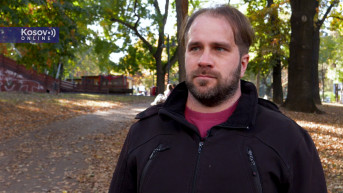
Political analyst Ognjen Gogic told Kosovo Online that strong reactions from the international community, particularly the European Union, are the main reason why amendments to the Law on Specialist Chambers are being returned to parliamentary procedure. He said the least problematic scenario for the Albanian public is for the Democratic Party of Kosovo (PDK), which initiated the adoption of the legislation, to request that it be returned to the Kosovo Assembly.
“At least six times, the European Union has told the authorities in Pristina that these legal amendments are unacceptable and contrary to Kosovo's international obligations towards the EU. This is, in fact, the main reason why the law is now being returned to parliamentary procedure. It was clear to everyone that this would cause problems in relations with the EU, which would not agree to Kosovo's international obligations being undermined in this way,” Gogic explained.
He said there had been a possibility that MPs, particularly those from the Democratic League of Kosovo who did not vote for the amendments, could appeal to the Constitutional Court, or that the ombudsman could do so.
“Both scenarios would have led them to face strong hostility from the Albanian public in Kosovo. So a compromise was found: the amendments are being returned to the Assembly at the request of the PDK, with the president, who is linked to the PDK, carrying out the move,” Gogic said, noting that in this case the party had “eaten humble pie.”
Gogic explained that Kosovo Assembly members themselves were aware that they were violating certain constitutional provisions when they adopted the amendments to the Law on Specialist Chambers under an expedited procedure, without respecting the required process between the two readings.
“However, these are not the reasons the Kosovo president is giving for returning the law to parliamentary procedure. In her explanation, she actually stated that she was returning it at the request of the PDK, which wants to amend the law further and make it easier to implement in practice,” he said, adding that Justina Shiroka Pula had not used the appropriate procedure in this case.
According to Gogic, if the president exercises her right to a suspensive veto, she should state her objections to the law so that MPs can then address them.
“But she cannot do that when a party that previously proposed the amendments changes its mind and wants to make further changes. The question here, in fact, is which procedure will be used to consider them at all. If the PDK or other parties now propose additional amendments, then it is no longer the same law,” he explained.
Gogic also said he did not expect new protests following the return of the amendments to parliamentary procedure, as the PDK had orchestrated the demonstrations held after the verdict in The Hague and those that accompanied the work of the Kosovo Assembly.
“This is an open secret in Kosovo. The KLA veterans' association is an offshoot of the PDK, and the students who protested are the PDK's youth wing. In other words, the protests were directed exclusively by the PDK, particularly on the night when the amendments and the vote on the Kosovo president took place. Now there is no one to stir up protests,” he stressed.
Gogic reiterated that this was a political compromise reached among all sides under EU pressure, with the PDK agreeing to take responsibility for any public backlash that might follow.
“So we should expect this to drag on. There will probably be a strategy of delay, with the issue kept under consideration in the Assembly for as long as possible, allowing tensions to ease and the subject to fade from public attention to some extent. Then, when the amendments eventually reach the agenda, some cosmetic changes may be adopted, and in the end nothing may come of it,” he concluded.


0 comments