
Amendments to the laws on citizenship and property: Granting rights to the Albanians from southern Serbia or depriving rights of the Serbs in Kosovo?
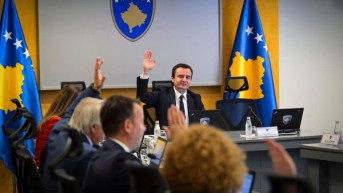
The recent interventions by the Kosovo Government in legislation have taken a step towards easing procedures for obtaining citizenship and acquiring property in Kosovo for the Albanians from Presevo, Medvedja, and Bujanovac. Some view these changes as examples of positive discrimination, while others warn of the political background behind these legal-administrative alterations.
The Security Commission today adopted the Draft Law on Citizenship of Kosovo, and Kosovo Prime Minister Albin Kurti previously stated that it "specifically facilitates obtaining documents for individuals with permanent residence permits in exceptional circumstances, including the Albanians from Presevo, Medvedja, and Bujanovac who have been living in Kosovo for many years". Recently, the Kosovo Government approved amendments to the Law on Property Rights of Foreign Nationals in Kosovo, enabling Albanians from these three municipalities in Serbia to acquire property rights in Kosovo.
Given the complexity of the relationships in the Serbia-Kosovo-Albanians from the southern Serbia triangle, it's challenging for any decision by the Government in Pristina to be viewed one-dimensionally, without the political context in which it is made. Will granting rights to one group – the Albanians from southern Serbia - impact the lives and enjoyment of the same rights for the other group – the Serbs in Kosovo?
Unlike the Albanians who are the beneficiaries of administrative and legal facilitations, the Serbs in Kosovo remain concerned and face these legal provisions as if standing before Chekhov's gun, which, as the Russian writer predicts, will surely go off in the third act, if it was hung on the wall in the first.
Zeljko Sain, a correspondent for "Politika" from Skopje, tells Kosovo Online that all of Pristina's moves, including the adoption of the Draft Law on Citizenship and amendments to the Law on Property Rights, are counterproductive compared to what was outlined in the Brussels Agreement, which aims to achieve the normalization of relations between Belgrade and Pristina.
"If these are exceptional circumstances, then there is a discriminatory connotation. If these are ordinary matters, then we cannot qualify. However, this cannot have the true significance of obtaining citizenship when the goals of the Brussels Agreement have not yet been achieved," Sain points out.
According to him, when citizenship is acquired and such parliamentary power is obtained by individuals – allowing them to decide and express themselves – it takes on a different form of democracy.
"However, the situation in Kosovo and Metohija is specific, and it needs to be viewed from other perspectives – within the framework of those global interests, it is a question of who allows and what happens in Kosovo," Sain says.
Naim Leo Besiri, the Executive Director of the Institute for European Affairs, assesses for Kosovo Online that Belgrade and Pristina often engage in disputes through discriminatory decisions that target a specific nationality.
"A law that defines frameworks in a way that grants certain rights to citizens of another country of a specific nationality can be considered discriminatory. However, here it seems that the authorities in Belgrade and Pristina often engage in disputes precisely over discriminatory decisions that will target a specific nation, namely, the one with a national prefix that is less favored by that government," Besiri said for Kosovo Online.
According to his words, the Serbian Government discriminates against the Albanians living in Serbia in certain ways, "to which we then have a response of another nationalism from Pristina, where they adopt certain laws that enable Albanians certain rights, with the explanation that they want to enable the Albanians from Serbia to live better, considering that discriminatory decisions prevent them from doing so".
He adds that realizing property rights for citizens of Serbian Albanian origin in Kosovo can be a kind of economic incentive, given that a significant portion of the diaspora living worldwide sends a considerable amount of money to their families to survive, or those who have more funds to invest.
On one hand, he notes, it seems like nationalistic bickering between Belgrade and Pristina, but on the other hand, it might be considered that these policies, even though they sound discriminatory, could allow certain individuals to settle in Kosovo if they desire to no longer live in Serbia.
As he emphasizes, policies of the Kosovo Government that facilitate easier acquisition of citizenship should be a completely normal thing.
"However, when it is politicized in a context where the Kosovo Government simultaneously asks Brussels to exclude passports issued by the Coordination Directorate from visa liberalization, that is certainly something that does not contribute to reconciliation. There is no problem with citizens of Kosovo having dual citizenship and both Kosovo and Serbian passports; it would provide double the opportunities. Whether they will make use of them is another question, but there is a greater possibility that you will be able to find a job, and travel more, and that is certainly in line with what has been happening in recent years, which is the policy of the Open Balkan Initiative," Besiri stated.
The Serbs fear that such a move could jeopardize them by increasing the number of Albanians, Ivan Nikolic from the NGO "Communication for Society Development" assessed for Kosovo Online, adding that it was difficult to say whether these laws would affect a change in the demographic structure in Kosovo.
"What's interesting is how people in the Serbian community perceive this and what message they receive from the government in Pristina. Opinions within the community are divided. Most believe it's another move that could jeopardize the Serbian population by increasing the number of Albanians. On the other hand, there's a push for the acceptance of Serbian passports for the visa liberalization process. It's difficult to discuss this topic without concrete and measurable data. I believe it will be more interesting after some time passes and we have exact figures on the number of Albanians from the Presevo Valley who have obtained Kosovo documents, the number of Albanians who left Kosovo after visa liberalization, and ultimately, the census itself will be an indicator. For members of the Serbian community, this is yet another move that endangers them," Nikolic said.
Commenting on the amendment and supplement to the Law on Property Rights of Foreign Nationals in Kosovo, Nikolic adds that these are mainly people who have been in Kosovo for a long time.
"I don't believe the situation on the ground will drastically change demographically or that a large number of Albanians from the Presevo Valley will buy property here in Kosovo. These are mostly people who have been here for a long time and already have their lives here. From the perspective of the Serbian community, the government's move can be interpreted as aiming for what Kurti informally and formally talked about in the pre-election campaign, even mentioning Greater Albania, something the Serbian community strongly fears," Nikolic said.
By adopting laws that grant only Albanians from Medvedja, Bujanovac, and Presevo the right to Kosovo citizenship and property acquisition in Kosovo, the Kosovo government is clearly attempting to interfere in Serbia's internal affairs and, in some way, draw parallels between northern Kosovo and Presevo, Medvedja, and Bujanovac, the President of the Albanian National Council in Serbia, Demo Berisha, assessed for Kosovo Online.
"This is another in a series of activities by the Government of Albin Kurti in which he seeks to directly interfere in Serbia's internal affairs because, by singling out only one group, specifically Albanians from the areas of the three municipalities in the 'Presevo Valley', it's a direct incursion and disorientation of citizens. In any case, it constitutes discrimination because it prevents anyone from any municipality in central Serbia from buying land or acquiring citizenship," Berisha said.
It's widely known, he emphasized, that in 1999, a certain number of citizens from those areas remained to live in Kosovo, and until this moment, they haven't been able to resolve issues regarding residence, employment, or were in some unregulated status. On one hand, they lived in Kosovo, and on the other hand, they used documents from central Serbia, such as IDs, passports, and other documents, Berisha clarified.
"Albin Kurti, with such decisions, wants to have a direct impact on a portion of the population living in these three municipalities to create some parallel between the north and the 'Presevo Valley'. Therefore, he's attempting to incite incidental situations and create dissatisfaction among citizens," the President of the Albanian National Council in Serbia warned.
He believes that Albin Kurti is additionally bothered and exerted by the fact that, despite all the pressures, the Serbian community demonstrates unity and openness to democratic processes, as evidenced by the collection of signatures for the removal of the mayors in four municipalities in northern Kosovo.
"The Serbian community has shown discipline and democracy in collecting signatures in a short period because they didn't resort to riots. This stability of the Serbian community bothers him. With these laws, he's trying to create space to maneuver and exert mild pressure. He uses all the methods that come to mind to simply push out the Serbian community from Kosovo," Berisha evaluated.
However, as he says, the international community will not react in this case, just as it doesn't react to other issues.
"The international community will mildly or not at all comment, invoking restraint and saying that we should wait while the dialogue is ongoing. This allows him to slowly implement his project of cleansing Kosovo of Serbs through a calm stream," he emphasized.
Berisha notes that approving the purchase of land in Kosovo only for Albanians, pressuring Serbs, and meddling in the internal affairs of neighboring countries are part of Albin Kurti's ultimate goal – creating a "Greater Albania".
"We had the opportunity to see this when the new Prime Minister of North Macedonia, Talat Xhaferi, was elected. Ali Ahmeti's statement on the matter was that the Albanians' dream in North Macedonia had already been achieved and that now we should work on eliminating the borders between Macedonia and Albania and Kosovo, which indicates that it fits into Albin Kurti's plan to create Greater Albania," Berisha concluded.


0 comments