
American missiles are arriving in Pristina, accelerating the process of forming the Kosovo Army - is there a reason for concern?
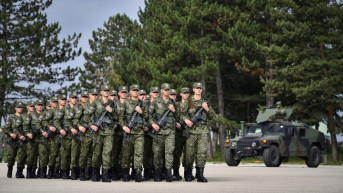
Never before has there been a larger budget for the KSF, with the rapid acquisition of armored vehicles, drones, Turkish anti-tank systems "Omtas"... and now approval from the US for the purchase of "Javelins" worth $75 million. Pristina has marked 2028 as the year when, according to the KSF plan, it will officially transform into the Kosovo Army, but at the current pace, this transformation could occur earlier and Kosovo Online interlocutors emphasize that such a decision sends a message to both Belgrade and Pristina, and it could lead to a further escalation of the situation.
President of Serbia, Aleksandar Vucic, stated that “the decision by the US State Department to approve the sale of anti-tank missiles to Kosovo is a great disappointment but that Serbia, together with the US, will work to preserve Serbian-American relations“.
The aforementioned decision by Washington to approve the sale of "Javelins" to Kosovo has raised significant concerns in Belgrade and among certain American politicians. Congresswoman Claudia Tenney, chairing the Serbian Caucus, stated that the State Department's agreement to send "Javelin" missiles to Kosovo was incredibly provocative, especially amid increased tensions in the Western Balkans pointing out that this decision only added fuel to the fire and increased the likelihood of a new conflict.
On the other hand, the State Department told Kosovo Online that "the sale of Javelin anti-tank missiles to Kosovo supports the goals of US foreign policy and national security by improving Kosovo's security without changing the basic military balance in the region".
Military analyst Vlade Radulovic says that the decision by the State Department to approve Kosovo's purchase of "Javelin" missiles is not a novelty when viewed from the perspective of the US support for Pristina. However, he finds the timing interesting.
"On the one hand, I don't see anything new; it's clear that the US supports Pristina on its path to independence. From that perspective, there is no novelty; they have trained together and participated in military exercises, and American instructors have trained KSF members, supporting them. From that perspective, there is no novelty, but the timing in which all this is happening is interesting", Radulovic notes for Kosovo Online.
As he adds, the essence lies in Pristina's argument for requesting this weaponry.
"The essence is in Pristina's argument that the US should make a decisive move, which came after the events in Banjska, in the north of Kosovo, following the graffiti 'when the army returns to Kosovo', and as the climax, everything that happened in Banja Luka - the Night Wolves, Putin's pictures, Russian flags. The question is whether this is essentially just a package that Pristina was packaging and sending to America, pointing fingers at Belgrade as if it were a Russian outpost preparing for some kind of aggression, threatening and attacking Kosovo. The accumulation of all this may have led to the point where the US gave the green light", Radulovic states.
When it comes to "Javelin" missiles, as Radulovic explains, it is primarily a modern anti-tank system with a successful range of about two and a half kilometers, and there are versions where the range reaches just over four kilometers.
It is a tandem warhead with the ability to penetrate armor thickness of about 800 millimeters, Radulovic adds, noting that in this way, the United States aligns itself with other countries that have supported the strengthening of the Kosovo Security Force on the path to becoming what Pristina wants to create: de facto and de jure the Kosovo Army.
"The US has supported Pristina before, even helping with the procurement of Humvee vehicles, a little over 50 vehicles, but so far there has been no talk in this format of more complex systems, in that segment of incapacitating the opponent", he notes.
As he adds, earlier, or to date, what has been delivered to Pristina the most, and the country that has worked the most with Pristina in this field, is Turkey. This includes anti-tank systems and various wheeled platforms, i.e., armored transporters, and light tactical vehicles.
"I mean, there were also mortar guns, machine guns, sniper rifles, and many other things that have been delivered in the previous period. Germany and Great Britain have also helped, and now, with this Javelin system, the US is taking a step further by sending Pristina this type of weaponry alongside vehicles", he said.
Speaking about the procedure and the potential time when this weaponry could arrive in Kosovo, Radulovic says he does not want to speculate on that.
"For now, the green light has been given by the United States, and we are waiting for Congress. Once Congress approves, we can expect more concrete steps, i.e., the beginning of delivery to Pristina, and when that will happen remains to be seen. This year is an election year in the US, and I see that in Pristina, they hope it will happen in the near future, whether it will or not, I wouldn't speculate. The procedure is not complicated; it remains to be resolved at the congressional level, and then the mechanisms for concretizing and delivering these systems will be set in motion", Radulovic explained.
The President of the Foreign Affairs Committee of the parliamentary group Alternative for Germany (AfD) in the Bundestag, Petr Bystron, emphasizes to Kosovo Online that the decision of the United States to sell Javelin anti-tank missiles to Kosovo represents a new level of escalation, noting that Ukraine is the best example of how "weapons for peace" actually work.
"I sincerely wonder why the Americans are supplying such heavy weaponry to an entity like Kosovo. It is a crisis-ridden region, a creation established by violating international law and the integrity of the former Yugoslavia. I consider this to be a further step towards escalation", Bystron said to Kosovo Online in response to the question of whether the US decision, as presented, contributes to stability.
In response to the assertion that the West claims Russian President Vladimir Putin wants to destabilize the Western Balkans, Bystron ironically remarked that "Putin is so evil and destabilizes the Balkans by convincing the Americans to supply weapons, and that the Russian President is behind it all".
When asked why Germany remained silent regarding the arming of Kosovo, he replied that it reflected a disregard for international agreements.
"Already, the police of the so-called Kosovo are equipped to walk around with long guns. This is already a paramilitary formation. What was promised in the agreements, that they are only security and police forces, is not respected; instead, there is a further step in arming", Bystron criticized.
Predrag Petrovic from the Belgrade Center for Security Policy (BCSP) stated today for Kosovo Online that by approving Kosovo's request to purchase Javelin anti-tank missiles, Washington was sending a clear message that it supported the consolidation of Kosovo's independence and that they could count on American military assistance.
The expert notes that the Javelin system is a type of modern anti-tank equipment, assessing that it will significantly enhance the capabilities of the KSF.
"These are very modern anti-tank missile systems, and it would certainly enhance the capabilities of the Kosovo military. The Kosovo military has already procured Bayraktars, and with this package of equipment, they will have a very strong deterrent force primarily directed towards Serbia and any potential, as they say, return of the Serbian Army to Kosovo and attempts to annex a part of Kosovo", Petrovic pointed out.
According to him, the future delivery of military equipment to Kosovo should be viewed exclusively as a warning to Belgrade and an alert that "they should not play or think about any potential future military operations".
"Washington is primarily sending a message to Belgrade not to dare to attempt military intervention, especially in northern Kosovo, because it will face very modern systems effective in tank combat. Additionally, Washington is sending a message to Pristina that it firmly stands behind the consolidation of Kosovo's independence and can count on military assistance", Petrovic concluded.
The US Defense Security Cooperation Agency stated that, in addition to the 246 FGM-148F Javelin missiles and 24 launchers to be delivered to Kosovo, various types of training would be provided, with an estimated total cost of $75 million.



0 comments