
Another American "specialist" for the Balkans: What does the appointment of James O'Brien bring?
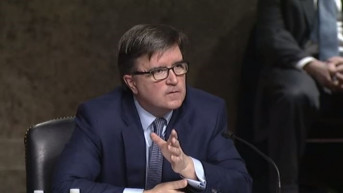
Another former member of Bill Clinton's administration will soon "return" to the Balkans, as it is certain that James O'Brien will be appointed Assistant Secretary of State for European and Eurasian Affairs, replacing Karen Donfried in that position. The interlocutors of Kosovo Online still do not believe that Washington's policy will change drastically in relation to Belgrade and Pristina, although, as they say, the US could "put more pressure on Serbia and Kosovo" in the coming period.
Ivan Vujacic, the former ambassador of Serbia in Washington emphasizes for Kosovo Online that the appointment of James O'Brien does not represent any change in US policy towards us.
"We look at it more from our point of view, and whenever something like that happens, such an appointment, if a person served in the Balkans, we think that it represents some kind of turn in US policy, and that is not true. He came to a very responsible position instead of Karen Donfried. He is a man who is very familiar with our region, he has been part of the establishment since the time of Madeleine Albright, with whom he collaborated for a very long time, and at one point he also worked on a constitutional solution for Kosovo within Serbia. He is well acquainted with our history. and the conflict that occurred and represents one of those people from the Clinton administration since Joe Biden is relying on the old Staff, which can be seen with the return of Christopher Hill. In terms of American politics in this region, it is a deeply complex process and it cannot be changed unless the White House itself gives instructions for such a thing. So I don't expect any changes, O’Brien came to the position of assistant secretary of state for European and Eurasian affairs, and we are only a small part of that," Vujacic says.
Analyst Blerim Burjani says for Kosovo Online that things are not going as planned by the EU and the US, given that the Ohrid agreement is not respected by both parties in the dialogue.
"The appointment of O'Brien may mean that it is necessary to change the image of the dialogue as it is now and that the US will be stricter towards the parties, especially towards Serbia, which always mentions crisis, war, and conflict. In fact, Serbia is only interested in conflict, but not a solution to the situation, however, I don't think there will be much change in US policy towards Kosovo and Serbia. US policy towards Serbia and Kosovo will therefore be stricter, or face sanctions. Washington may ask Serbia to impose sanctions against Russia, in the end, otherwise, sanctions could be imposed on Belgrade. It is much easier with Kosovo because it will agree to some kind of the Community of Serb-majority Municipalities and that will be the end of the pressure on Kosovo, while on the other hand, Vucic will not comply with anything from the Ohrid Agreement, because for Belgrade, this agreement does not exist, but only an interest in forming the CSM. If Serbia does not agree to some kind of CSM, it means that the US can ask the Serbs from Kosovo to be co-constructive and to cooperate with the Kosovo authorities in order to form some kind of CSM," Burjani says.

Diplomat Zoran Milivojevc says that it is obvious that the West, led by the US, wants to accelerate the dynamics of resolving issues in the region.
"This was also seen in the last statements of Derek Chollet and Gabriel Escobar. The West wants to create a clean situation in the region based on the European plan, which is a binding document for the US and the EU and for Pristina and Belgrade. O'Brien, Hill, and the others vetted personnel who know the region well, which shows the interest of the American administration in this region," Milivojevic analyzes for Blic.
He expects that Serbia will now be under even greater pressure because, as he says, American policy will persist in its concept of resolving all unresolved issues as soon as possible.
"Washington provides a new dynamic in the realization of strategic interests. In the region, they give priority to the Kosovo issue because they believe that solving that issue will make it easier to deal with the situation in Bosnia and Herzegovina," Milivojevic concludes.
Aleksandar Popov, director of the Center for Regionalism, expects that O'Brien, as a stronger authority than Escobar, will turn the situation around in Kosovo.
"Until now, things in Kosovo have gone from bad to worse. If they continue like this, I don't think the situation will be resolved even in the next 20 years. They probably judged in Washington that things are not going at the pace they expected. Not everything is going well for Ukraine either according to the plan, they will probably block one critical point," Popov points out for Blic.
As he says, both O'Brien and Hill know the region well.
"Now the question is whether, like in the nineties when Richard Holbrooke played the biggest role, he will take more energetic actions and be more on the ground in discussions with representatives of both sides. It is necessary to show both Belgrade and Pristina more concretely what consequences they will face if they do not comply with the agreement. This is the only way to expect some results regarding the resolution of the Kosovo issue," Popov concludes.



0 comments