
What are the chances of realizing the US and EU plan to end the dialogue between Belgrade and Pristina by the end of the year?
The US and the EU wish for the end of the dialogue between Belgrade and Pristina by the end of the year, but the interlocutors of Kosovo Online warn that in the current circumstances, it is difficult to expect such a thing, and that if the Donors' Conference announced by Brussels takes place after the Ohrid Agreement, many things will be better known.
Diplomat Zoran Milivojevic believes that in the current circumstances in Kosovo, it is very difficult to talk about deadlines for the end of the dialogue, primarily because the two sides do not give up their initial diametrically opposed positions on the status of that territory - Belgrade does not accept either 'de facto' or 'de jure’ recognition, while Pristina is exclusively interested in independence.
"In such circumstances, it is not realistic to talk about deadlines, on the other hand, there is a lot of pressure and due to geopolitical interests and reasons, we see that now in the latest resolution of the European Parliament and not only in the Resolution, we see that Brussels' position is that Serbia's European integration and progress in that regard, are now conditioned with sanctions against Russia and the Ukrainian issue," Milivojevic said.
He assesses that the dialogue is entering a cycle where "we will witness more pressure and attempts to impose solutions than we will be in a situation where acceptable solutions are reached in a normal political dialogue and we enter into a process of normalization of relations."
By the end of the year, if of course there is goodwill on both sides, says Milivojevic, there could be a solution to some life issues.
"To make a solution for humanitarian issues, about some life issues related to people in these areas and to clear up the story about the functioning in the north of Kosovo and Metohija," Milivojevic stated.
If the Pristina side, he warns, remains in the position of appointing its new mayors on May 28 and starts exercising power on those bases, there is a possibility of a new crisis and a process of new escalations and conflicts, which, he says, lead to extreme uncertainty.
"There is no talk of any dialogue and something that would lead to a political solution," Milivojevic says.
When asked when the end of the dialogue could be expected, Milivojevic said that it mostly depended on "what one means by the end of the dialogue".
According to him, Serbia is in favor of dialogue and believes that the Kosovo issue can only be resolved by political means in accordance with international law, bearing in mind Resolution 12 44.
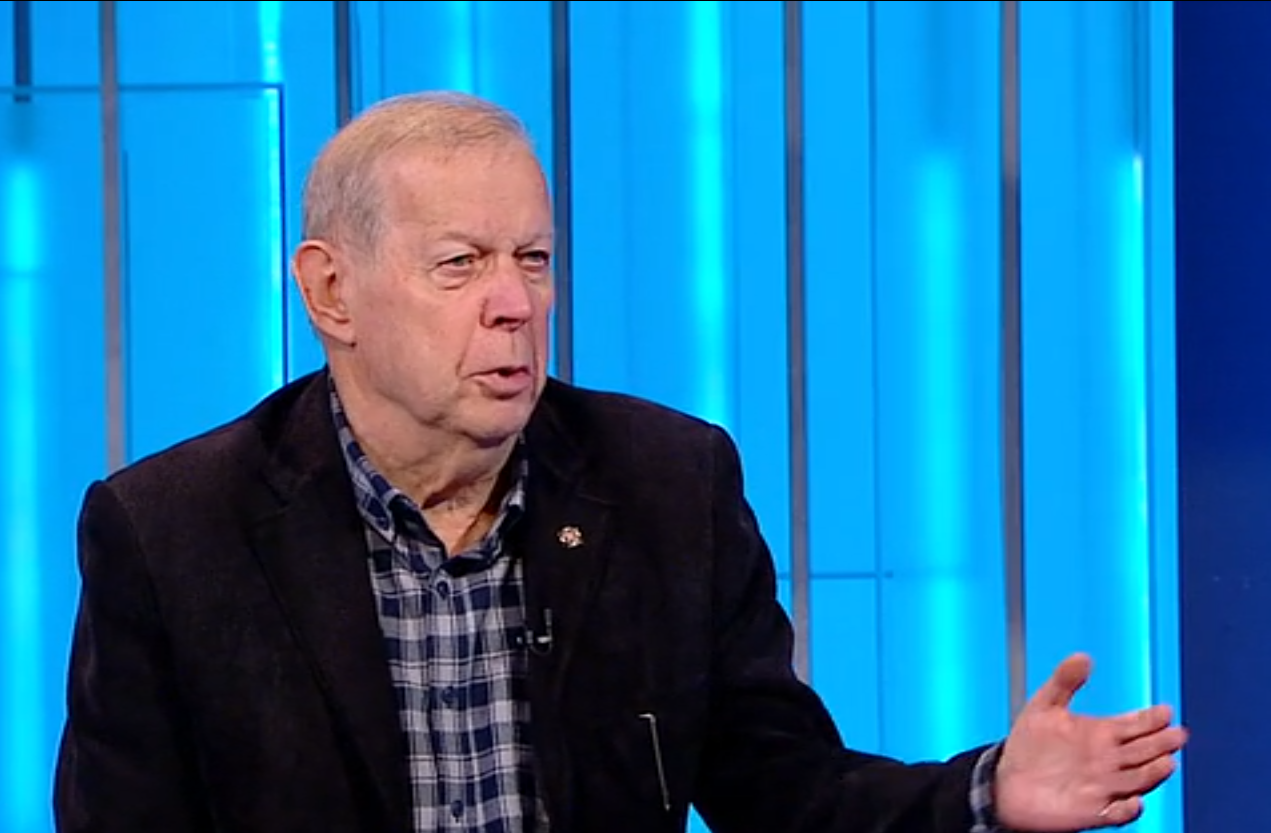
"Serbia is ready to discuss normalization and a solution that would include a compromise, acceptable to both sides and in favor of normal life in these areas. So, all the questions related to that, starting from the economy, all of that can be put on the agenda, all possible life issues. Therefore, Serbia starts from that and will not recognize independence. The other side insists exclusively on independence. Talking about some deadlines has absolutely no meaning and basis," Milivojevic said.
One could not, he clarified, talk about deadlines when the dialogue was not generally approached in a constructive way with goodwill to seek solutions within political possibilities and political measures based on normalization.
According to his words, the status of Kosovo can only be resolved at the end of a normalization process, which should be at the forefront.
However, he estimates that the two sides are far from normalizing relations if Pristina's behavior is taken into account.
"Deadlines do not come into consideration because the approach is different, they imply under the final solution and agreement that Serbia recognizes independent Kosovo. Serbia approaches the agreements that it is an integral part of the state of Serbia and that it is ready to discuss and seek political means within the framework of international law. Because there is no agreement on both sides about what the ultimate goal is. Then the only possibility for peace to reign here and for us to be as peaceful as possible is to go through dialogue toward a political environment that would lead us to a compromise. As you can see, we are far from normalization when we see how Kurti is behaving and when we see the positions from which that government acts," Milivojevic concludes.
Journalist and writer, Idro Seferi, points out that the results of the dialogue will be known in two months, when it will be seen whether and under what conditions the Donors’ Conference for Serbia and Kosovo will be held.
As announced, the EU would organize a Donors’ Conference within 150 days, after the dialogue in Ohrid, in order to establish an investment and financial aid package for Kosovo and Serbia. Aid would not be granted before the EU determined that all provisions of the Agreement had been fully implemented.
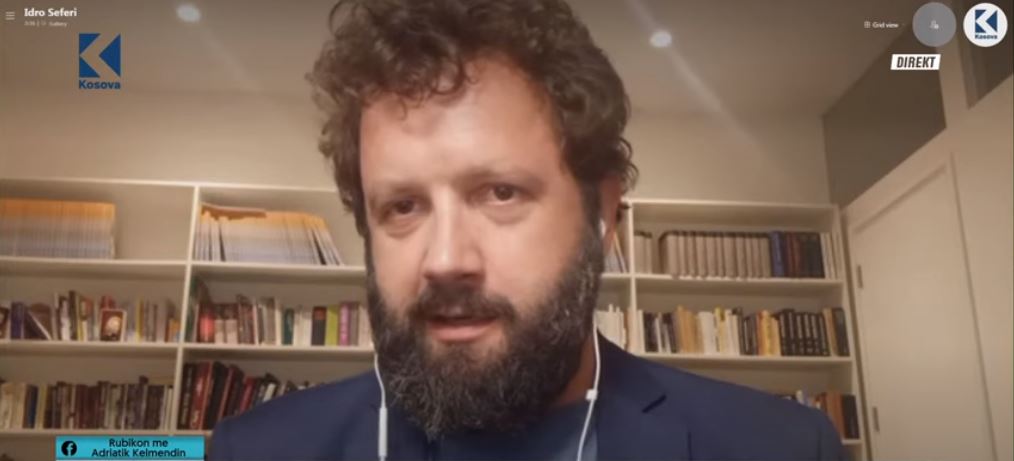
"It all depends on the next two months, that is, on whether and under what circumstances there will be a Donors’ Conference that should be held in mid-August, if the Donors’ Conference takes place, it means that by then the issues of the Community of Serb-majority Municipalities and other issues that are in the plan and open, and that means that the situation on the ground has changed," Seferi said.
If that does not happen, Seferi doubts that there will be any progress in the dialogue process and that more meetings will be necessary in order to raise the, for now, unresolved issues.
He estimates that the parties will try to postpone some items from the agreement as much as possible and that at the previous meeting in Brussels, "only one small success was achieved on the Declaration on the Missing Persons, which is primarily a humanitarian issue."
Serious topics are now on the agenda, Seferi pointed out and expressed his belief that raising these issues would not be so easy, but the international community would "push" the parties towards a solution.
"My assessment is that there will be more delays because everything indicates that there is no great will to move forward, but the parties are forced. It is a good thing that the EU will evaluate the parties separately and based on the inhibition or progress the parties will experience some consequences," he said.
The journalist says that the final conclusion of the dialogue can be expected in five or ten years, but that the goal of the negotiations is to reach reconciliation between the parties and coexistence in Kosovo now.
"The dialogue, regardless of what happens, maybe in some other forms, maybe not even in Brussels, will have to continue and I believe that all things will be resolved in the next five or ten years," he states.
It is enough to do a few things to create a positive atmosphere on the ground, the journalist believes, stressing that it is important for the beginning that the Serbs, without tensions and legally, return to the institutions in the north, as well as to possibly repeat the elections in the north.
He also concludes that concrete steps such as the construction of a railway, the establishment of an airline between Belgrade and Pristina, and the possibility of recognizing diplomas and permits for the free movement and performances of athletes would also contribute to the reconciliation of the parties.
Slobodan Zecevic from the Institute for European Studies assesses that it is absurd to expect, given the actual situation, that the US and EU plan to end the dialogue between Belgrade and Pristina by the end of the year will be implemented.
"I say that because I think that in the meantime the 'Community of Albanian Municipalities' was created, not the Community of Serb-majority Municipalities, with people who do not enjoy the trust of the Serbs, but only a small minority of Albanians and they are directly managed from Pristina. Another problem is that free elections would have to be held, which would be an overture for the Community of Serb-majority Municipalities," Zecevic said.
A new problem appeared Zecevic points out, when the Albanian side started saying that "that nothing will be done" from the Brussels Agreement and that it will not implement it.
Pristina, as he points out, simply does not want the CSM, especially not the one provided for by the Brussels Agreement and which the Management Team only transferred from that document to its draft of the Statute.
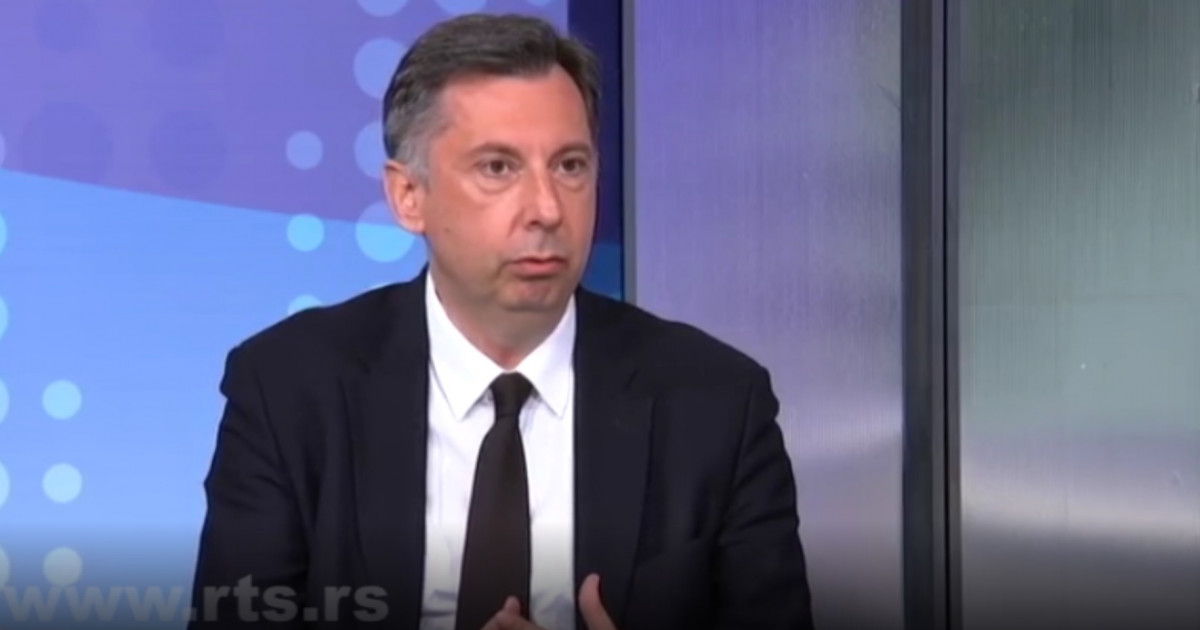
"So it was just transferred from the Brussels agreement. Albin Kurti and his ruling team said that there was nothing to it. If we see these circumstances, the creation of 'Albanian municipalities' plus this situation related to the political position of the Albanians, according to which they do not want to apply the Brussels Agreement, then the question arises as to how this could be realized without huge changes in Kosovo among the Albanians,” Zecevic said.
Speaking about the dialogue in the context of the West, Zecevic reminds that the position of the US, based on the statements of their representatives, was that they wanted the formation of the CSM and that now if they stick to it, they are expected to call on Pristina to do it.
"If the Management Team is dissolved, if nothing happens regarding the Statute, then I don't know what else the Americans could do except to put pressure on Pristina to implement the Brussels Agreement," he said.
However, Zecevic assesses that the US is clearly not doing this in full capacity, but only gives a principled position that the CSM should be formed and that what was agreed upon in previous years should be implemented.
The Albanians, he points out, do not bear any consequences for what they do not want to apply, on the contrary, they receive encouragement that they will be admitted to international organizations and that their visas will be revoked.
Zecevic points out that the Albanian side has no motive for now, they are not afraid of anything and there is no threat from the West that if they do not implement what they have signed, they will suffer the consequences.
"I don't see what the EU and the US are planning to do specifically when it comes to all of this, whether they want to introduce some kind of sanctions, or they want to withhold some kind of aid, or they intend to politically influence Kosovo to change that policy and political structures. It is healthy to say that the agreements from the past should be changed, the Brussels Agreement, establishing the CSM, that is a principled position, but if it does not become a political action, then it means nothing," Zecevic said.
Speaking about the potential deadlines for ending the dialogue between Belgrade and Pristina, Zecevic warns that the process is about to collapse under these circumstances in terms of ending the dialogue without an agreement.
He believes that the parties are now closer to such a development of events than to a successful conclusion of the dialogue between Belgrade and Pristina.
"Our and Albanian representatives can meet in Brussels indefinitely, but what the purpose of the dialogue is if the Albanians do not want to implement all this, then the dialogue is over and practically dead. Then a new situation arises and we will see in which direction it will develop, probably in a very negative way. Therefore, the dialogue with Kurti's position is over and he is gone," Zecevic concluded.

0 comments