
Are direct negotiations between Belgrade and Pristina possible?
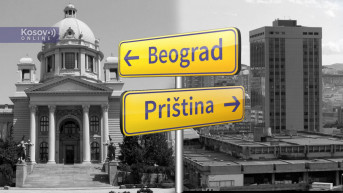
Mistrust and the lack of willingness to reach an agreement are the main obstacles preventing direct negotiations between the two key actors, Belgrade and Pristina, at this moment. This is how analysts assess the possibility of resolving open issues through dialogue without a mediator. This option has been discussed before, with the argument that the international community should allow Serbs and Albanians to try to resolve the problem on their own. However, given the current circumstances, experts interviewed by Kosovo Online question whether such talks would yield any results.
Written by: Dusica Radeka Djordjevic
Negotiations have taken place with mediators in Vienna, Brussels, Washington, and Berlin—through formal dialogue rounds, working dinners, and both technical and political discussions—for more than two decades. Occasionally, the idea of direct negotiations has been considered. Now, similar suggestions are emerging again.
Former U.S. diplomat James Hooper believes that Kosovo must make a strategic decision—whether it can secure a better agreement by negotiating directly with Serbia or if it will achieve a more favorable deal with the involvement of the United States. According to Hooper, if the U.S. gets involved, there is either an advantage or a risk of an imposed solution.
Hooper argues that, as long as Kosovo's relationship with the United States remains strained, U.S. involvement will not be beneficial for Kosovo. He also suggests that Kosovo could achieve smaller but highly important objectives through direct negotiations with Serbia.
"It is entirely possible for Kosovo to have a relationship with Serbia—not as friends, but as neighbors. The only way to achieve this is for Kosovo’s leadership to establish a communication channel with Mr. Vucic," Hooper stated in an interview with RFE/RL.
However, political scientist Ognjen Gogic told Kosovo Online that the question of whether negotiations between Belgrade and Pristina should take place directly, with a mediator, or at an international conference is more a matter of technique and form rather than substance, as the two sides remain significantly apart, with neither demonstrating a willingness to engage in direct talks or reach an agreement.
"The idea of direct negotiations between Belgrade and Pristina is a thought experiment, much like speculations about an international conference. If Belgrade and Pristina had been capable of negotiating directly, there would have been no need for mediation and the internationalization of the issue. We have even seen situations where representatives of Belgrade and Pristina refused to meet even in the presence of mediators, let alone directly," Gogic explained.
Gogic believes that the idea of direct negotiations has no foundation in the interests and expectations of the parties involved, nor in past experience, which has shown that even mediators struggle to facilitate discussions—let alone that the parties could engage in direct dialogue themselves.
"If one were to argue that direct negotiations are a better solution than mediation, this would imply that the European Union and the United States are somehow an obstacle to reaching an agreement. That does not seem to be the case. Rather, they have played a role in attempting to bring the sides closer together, though they have not succeeded. It certainly cannot be said that the Americans or Europeans have created discord or made an agreement between Belgrade and Pristina even more distant than it already is. Therefore, there is no basis to claim that direct negotiations would be more effective and efficient in reaching a solution than mediation," Gogic stated.
Aleksandar Sljuka, a researcher at the NGO New Social Initiative, told Kosovo Online that direct negotiations between Belgrade and Pristina are currently not feasible. He believes that the purpose of promoting such ideas may be to "muddy the waters"—that is, to encourage stakeholders to think differently and potentially lead to a new format of dialogue.
"At this moment, when trust in the dialogue process is perhaps at a historic low, it is highly unrealistic to expect any direct negotiations, especially considering that even the EU-mediated talks either barely exist or fail to produce the desired results," Sljuka said.
He added that discussions about direct negotiations might be aimed at gauging the reactions of Belgrade and Pristina. If both sides ignore the topic, as they have so far, nothing will change. However, if either side reacts, it would signal a lack of confidence in the EU-facilitated dialogue.
Hypothetically, in the case of direct negotiations, Sljuka noted that Belgrade and Pristina would need to be connected through a third party—a state that both sides trust. The initial discussions could focus on economic issues, similar to the Washington Agreement, avoiding politically sensitive status-related questions.
"I believe that agreements on trade, energy, and transportation infrastructure would be the easiest to reach. Political issues, however, would require decisive pressure from external actors. We see that the United States, under the administration of Donald Trump, exerted significant pressure on various stakeholders. Currently, Zelensky is in the spotlight, but in the future, it could be someone else. Whether such solutions are sustainable in the long run remains to be seen, but this could be a way to break the current stagnation in the EU-led dialogue," Sljuka concluded.
Regarding the possibility of a "communication channel" between Kosovo's leadership and Serbian President Aleksandar Vucic, which Hooper believes could improve relations, Sljuka acknowledges that while such a channel could be beneficial, it is not realistic.
"It could be useful in terms of reaching certain agreements and building personal relationships—similar to how Vucic has established ties with Viktor Orbán in Hungary and Edi Rama in Albania, despite those being completely different contexts. However, such an approach would generally be unproductive because it lacks structure. These are personal relationships, meaning the agreements would also be personal, and they might not hold if, for example, there is a change in government in Serbia and Vucic is no longer president. A future administration could annul them, making them neither long-term nor sustainable," Sljuka explained.
Political analyst Rahman Paçarizi also does not believe direct dialogue between Pristina and Belgrade is possible, arguing that such a format would not be productive.
In his view, U.S. involvement in the dialogue is essential, as the European Union has not proven to be a force capable of compelling both sides to reach an agreement. He also considers direct negotiations unrealistic because Serbia does not recognize Kosovo.
"If one side does not recognize the other, then the dialogue is not equal, and the two sides are not on equal footing—making negotiations impossible. Furthermore, the history between Serbia and Kosovo does not provide a favorable context for reaching an agreement between them," Paçarizi told Kosovo Online.
However, he believes that if the United States were to act as a mediator, an agreement could be more likely.
"This was already demonstrated five years ago during the Washington meeting mediated by Donald Trump, where a significant agreement was reached that centered on the economy, ensuring mutual benefits from American investments and paving the way for some form of agreement. I believe that is the only way an agreement between Kosovo and Serbia could be achieved," Paçarizi stated.



0 comments