
Sljuka: Direct negotiations unrealistic as trust between sides is at a historic low
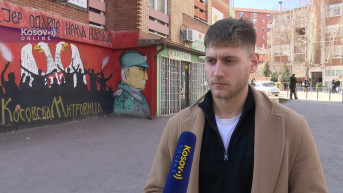
Aleksandar Sljuka, a member of the NGO New Social Initiative, told Kosovo Online that direct negotiations between Belgrade and Pristina are currently not feasible. He believes that the idea of proposing such talks might serve to "muddy the waters"—to provoke different thinking among stakeholders and ultimately lead to a different format of dialogue.
Former U.S. diplomat James Hooper stated in an interview with RFE that Kosovo could achieve smaller but highly important goals through direct negotiations with Serbia. However, Sljuka pointed out that in many similar cases in the Balkans, agreements were not reached without mediators when there was significant mistrust between the parties involved.
"At this moment, when mistrust in the dialogue is perhaps at a historic low, it is highly unrealistic to expect any direct negotiations. Even the current talks mediated by the European Union are either practically nonexistent or fail to produce the desired results," Sljuka said.
He added that the discussion about direct negotiations might be an attempt to gauge the reactions of Belgrade and Pristina. If both sides ignore the topic as they have so far, nothing will change. However, if one side reacts, it could signal a lack of confidence in the EU-mediated dialogue.
"Since this proposal comes from a former U.S. diplomat, it might also be an attempt to bring the United States into the process and send a message that the EU has not done a good job, that the current approach is leading nowhere, and that a new format is needed—whether through direct negotiations or some form of shuttle diplomacy, similar to what we saw in the context of the Dayton Agreement in 1995," Sljuka explained.
Hypothetically, if direct negotiations were to take place, Sljuka suggested that an external actor—a country trusted by both sides—would need to facilitate them. He noted that initial discussions could focus on economic issues, as was the case with the Washington Agreement, to avoid being burdened by political and status-related questions.
"I believe it would be easiest to reach agreements on trade, energy, and transport and infrastructure communications. Political issues, on the other hand, would require decisive pressure from foreign actors. We have seen how the Trump administration exerted exceptional pressure on various stakeholders. Currently, the spotlight is on Zelensky, but in the future, it could be someone else. Whether such solutions are long-term and sustainable remains to be seen, but this could be a way out of the current apathy surrounding the EU-led dialogue," Sljuka said.
Hooper also suggested that Kosovo could have relations with Serbia that are not those of friends but of neighbors, and that the only way to achieve this is for Kosovo’s leadership to establish direct communication with Serbian President Aleksandar Vucic.
Commenting on this, Sljuka acknowledged that while such a development could be beneficial, it is not realistic.
"It could be useful in terms of reaching agreements and building personal relationships, similar to how Vucic has developed ties with Viktor Orbán in Hungary or Edi Rama in Albania in completely different circumstances. However, in general, such an approach would be unproductive because it does not provide institutional structure. These would be personal relationships, meaning the agreements would also be personal and could easily be overturned if, for example, there were a change in government in Serbia and Vucic was no longer president. A future administration could nullify them, making them neither long-term nor sustainable," Sljuka concluded.


0 comments