
Are the messages from Skopje an announcement of thawing in the dialogue or a continuation of the status quo?
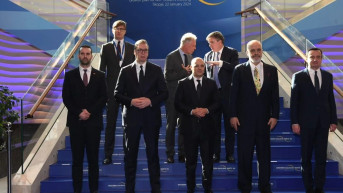
Leaders of the Western Balkans gathered in Skopje to discuss the economy and send positive messages about cooperation and regional development. However, behind the scenes of the meetings, which included European representatives and Assistant Secretary of State for European and Eurasian Affairs James O'Brien from the United States, the main topic was the relationship between Belgrade and Pristina. Interlocutors of Kosovo Online agree that the talks, prompted by the EU's plan for the growth of the Western Balkans worth six billion euros, are important because there has been no progress in the dialogue for months. Still, they add that such forums, even with officials from Brussels and Washington, are unlikely to lead to significant progress in the negotiations.
The meeting in Skopje was preceded by the decision of the authorities in Pristina to ban financial transactions with Serbia, effectively 'expelling' the dinar from Kosovo. Both Kosovo Serbs and official Belgrade regarded this move as a dangerous threat to the survival of the Serbs and a potential new blockade regarding the continuation of the dialogue.
President of Serbia Aleksandar Vucic held discussions in Skopje, especially with the US diplomat O'Brien, who, after the meeting with regional leaders, stated that Serbia and Kosovo must implement the Ohrid Agreement.
On the other hand, Kosovo Prime Minister Albin Kurti requested that Kosovo's EU membership process be separated from the process of normalizing relations with Serbia. This move was interpreted as another attempt to avoid fulfilling obligations from the dialogue, particularly concerning the formation of the Community of Serb-majority Municipalities.
Representatives of the EU and the US in Skopje were clear - the use of funds from the €6 billion EU package for the Western Balkans, concerning Belgrade and Pristina, will largely depend on their readiness to implement the agreed upon measures and be constructive in the normalization process.
On the one hand, the EU presented a 'carrot' in the form of significant financial assistance, and on the other hand, there is the 'stick' - those funds will not be accessible to those who obstruct the dialogue.
The task of 'wielding the stick' in Skopje fell to O'Brien, according to Aleksandar Mitic, a research associate at the Institute for International Politics and Economics. He says for Kosovo Online that the meeting of regional leaders in Skopje was more than just a meeting dedicated to the EU's plan for the growth of the Western Balkans and that O'Brien's presence was solely in the function of pressuring the dialogue between Belgrade and Pristina.
"It is clear that the meeting in Skopje was more than just a meeting focused solely on the EU's plan for growth; it was another meeting where the direct focus was on the dialogue process between Belgrade and Pristina. The use of funds from this plan, especially in the case of Belgrade, will depend on the implementation of the Ohrid Agreement," Mitic said.
He adds that this is another instrument of pressure on Belgrade and is potentially dangerous.
This is about a financial carrot, but potentially also a stick. Because of this conditioning and the fact that if Belgrade does not use these funds, other countries will, as the funds are intended for all countries in the region, including Kosovo, although it is not a state. It is clear that this is a new way of pressuring Belgrade to accept and implement elements of the Franco-German plan to renounce Kosovo, which is quite unacceptable, and I am afraid that we must not fall into the trap of viewing this entire process related to the EU growth plan as separate from the pressure on Belgrade regarding Kosovo," Mitic says.
As he emphasizes, the presence of James O'Brien was solely in the function of pressure regarding the dialogue between Belgrade and Pristina, considering that the EU is the one offering the carrot.
"O'Brien practically wielded the stick under the coat, and the fact is that this is not the first time that the US and officials from the US State Department have appeared at meetings exclusively related to regional integrations and relations with the EU. It is clear that O'Brien was here primarily to pressure Belgrade, and to a lesser extent, Pristina also," he says.
In response to the question of whether Kurti's call to separate Kosovo's European integration from the normalization of relations with Serbia is an indication that he will continue to block the dialogue, Mitic says that his policy is clear.
"He is trying, by provoking various hybrid crises and putting pressure on the Serbian population in Kosovo, to exert pressure on Belgrade, to constantly put Belgrade on the defensive, and then, through some alleged compromises later, to gradually gain what he wants, legalization and legitimization of his policy primarily in northern Kosovo," Mitic adds.
Associate Professor at the Faculty of Political Sciences, Milan Krstic, stated for Kosovo Online that Kurti would prefer to join the EU without fulfilling any of his promises to the Serbs.
"This is Kurti's clear maximalist radical agenda, from which he essentially does not deviate, so it is not a novelty, although I think he will not succeed. On the other hand, the fact is that Kurti was given more leniency than necessary in the previous period. Until Banjska, the pressure was solely on him, and after Banjska, that pressure was evenly distributed between Belgrade and Pristina," Krstic emphasized.
He added that, regarding Belgrade, one of the current priorities should definitely be the factual position of the Serbs in Kosovo and Metohija, which would be seriously jeopardized in the event of discontinuing payment transactions.
"This is truly an option that no one dared to raise in the past 25 years, or, let's be specific, since 2008 and the unilateral declaration of Kosovo's independence because the repercussions are known. They can indeed lead to the effective prevention of a normal life for a large number of the Serbs in Kosovo and Metohija, to a humanitarian crisis," our interlocutor said.
As he emphasized, he sincerely hoped that international actors would be aware of this and exert the pressure they could still exert on Albin Kurti not to resort to such a solution.
"I'm afraid he will persist as he has been persistent in his intentions so far and will try to implement it from February 1," Krstic emphasized.
Political analyst from Pristina, Leart Hoxha, also considers it challenging to back down from the decision to ban the dinar in Kosovo. He states that after the decision of the Central Bank of Kosovo to discontinue payment transactions with Serbia, nothing can be done, and the citizens of Kosovo will have to use the official currency in use since 2002, the euro.
Hoxha for Kosovo Online also points out that the meetings in Skopje are important because it was evident that there has been no progress in the dialogue in recent months.
"In addition to the pressure coming directly from Brussels, the fact that Assistant US Secretary of State James O'Brien and the leaders of Balkan countries were present in Skopje proves that Kosovo and Serbia, although having problems between them, are seen within a broader context of greater regional integration. The identification of these issues as reasons why other countries in the Balkans cannot progress toward the European Union means that pressure will also come from the Balkans, and that is an additional reason why Kosovo and Serbia should work faster on some more permanent if not some final, agreement," Hoxha said.
Although O'Brien called for the implementation of the Ohrid Agreement after the summit in Skopje, Hoxha emphasizes that there is no concrete pressure. He stated that what had not been publicly said was much more important.
"The European Union has prepared six billion euros for the Balkans, but Balkan countries are more interested in quarreling among themselves and blaming each other than working together on projects that would enable them to turn those six billion into eight or spend EU money in two instead of three years. So, if the European Union has money, it can use that financial pressure. It is very important that James O'Brien was there, and even more important is what was not said at public meetings and conferences but at informal dinners or meetings with the Americans. Since the EU has six billion but has no way to force Balkan countries to cooperate with each other to spend those six billion for the benefit of their citizens," Hoxha believes.
The ban on the dinar in Kosovo, Hoxha sees as the next significant obstacle in the dialogue.
"However, bringing back the dinar is very difficult to implement; the decision of the Central Bank would have to be violated, and thereby, the law publicly breached. I think, based on what we saw with license plates or personal documents, it will take a few months, but in the end, the citizens of Kosovo, whether the Serbs, the Albanians, or any others, will have to deal with the official currency of this country," Hoxha emphasized.
Speaking about the integration of Western Balkan countries, Hoxha said that the position of Kosovo's Prime Minister Albin Kurti was that "the more work is done on the integration of Balkan countries with each other, the more it distances or delays the process of integrating the Balkans into the European Union".
"It is true that for many years, there has been talk of the possibility of Balkan countries joining the European Union as a package, just as it is a fact that countries in this process cannot progress equally. This means roughly that Bosnia, Kosovo, and Serbia are literally delaying the integration process for North Macedonia, Montenegro, and Albania, which are implementing reforms more quickly. If this process is based on waiting for the entire Balkans to be ready for the EU, then all countries will 'get stuck' in these Balkan forums, and initiatives. And if they cannot demonstrate that they can cooperate with each other, it is unlikely that anyone will give them a chance to cooperate with Sweden, Finland, and other EU countries if they are unable to jointly undertake a good project or something beneficial for their citizens," Hoxha emphasized.
Political scientist Dimitrije Milic is somewhat more optimistic regarding the outcomes of the meeting of Western Balkan leaders in Skopje. Milic believes that "there could be a slow thaw in the dialogue, probably from May this year," considering that, as he assesses, a certain part of the EU's diplomatic capacities will be directed towards that goal.
Milic assesses that the talks with representatives of the US and the EU held on the sidelines of the official meeting of regional leaders in Skopje are of utmost importance for the normalization of relations between Belgrade and Pristina.
"The meeting was dedicated to economic topics and the question of how Western Balkan countries can achieve higher growth rates and boost their economy with European assistance concerning reforms and direct financial aid tied to the dynamics of reforms. We receive assistance in line with implementing reforms. So, that emerged as the central message of the gathering rather than the issue of resolving relations between Belgrade and Pristina," Milic said for Kosovo Online.
He assessed that the most useful aspect for Serbia was President Vucic's meeting with O'Brien, who is a new member of the US administration and an important figure dealing with the Western Balkans.
O'Brien will be particularly influential if the US Democratic Party retains its mandate, including the current president, in November this year and remains in power for the next four years, Milic emphasizes.
"Nevertheless, the central message of the Western Balkan leaders' meeting relates to economic issues and the ongoing rapprochement between the Western Balkans and the EU," Milic says.
Commenting on Pristina's announcement to cut off payment transactions with Serbia, Milic believes that the meeting between O'Brien and Vucic in Skopje and Davos will yield results in this matter.
He expressed confidence that discussions between Belgrade and Washington on this issue will continue, and the US will make efforts to prevent a new crisis.
"That is a question about which I expect more discussions between Belgrade and Washington in terms of how to overcome the mentioned crisis, given that it is extremely important for Washington that the Serbian community in Kosovo has a clearly defined position because it is a guarantor of stability throughout the Western Balkans," Milic said.
He points out that it is not in the interest of the US for this region to be unstable, emphasizing that it is only a matter of form in which the problems will be resolved.
"So far, for some issues, the US has been much more effective than other Western countries, primarily European ones such as Germany and France. So, Mr. O'Brien is the best interlocutor on this topic because it is quite difficult to reach some higher circles of US foreign policy, such as Secretary of State Antony Blinken or the president or vice president, unless the crisis is extreme, or close to a state of war. When it comes to Blinken, he is quite focused on the issue of Ukraine, relations with China, and the Middle East. So, O'Brien is the most important interlocutor with whom one can currently talk from this region given the major crises in the world," Milic said.
Asked to comment on Kurti's message to separate Kosovo's European integration from the normalization process with Belgrade and whether this can be interpreted as a Kosovo Prime Minister's announcement to continue blocking the dialogue, Milic believes that this initiative will not bear fruit given that, as he says, the EU has conditioned these two processes for both Serbia and Kosovo.
He emphasizes that Kurti is trying to implement this idea to avoid forming the CSM.
"I think the idea is to enable Pristina, from their perspective, to proceed with European integrations, initiate negotiations, and obtain candidate status, while on the other hand, not implementing the CSM. The CSM is the most problematic aspect for Pristina in the normalization of relations between Belgrade and Pristina. If it is integrated within the framework of negotiation chapters, then you cannot avoid implementing it if you want to progress in the sphere of European integration. So, in that sense, I think that is Kurti's wish, which, of course, I think is not realistic. Brussels has not without reason decided to link the implementation of the points of the Ohrid Agreement to the negotiation process, precisely to avoid such political games by Western Balkan political actors," Milic concluded.


0 comments