
Avatar modeled after an actress becomes part of the Albanian cabinet: Courage, humor, or prevention of corruption?
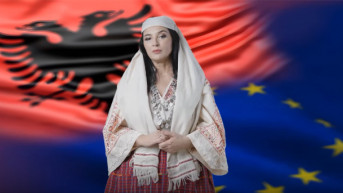
Albanian Prime Minister Edi Rama’s decision to appoint a virtual minister, Diella (“the Sun” in Albanian), responsible for public procurement in the new government, has recently attracted significant public attention, not only in Albania but worldwide.
By: Dragana Vucicevic
Alongside numerous questions about her future work, which even we could not get answers to, her appointment has been met with humor, and many media outlets speculated whose avatar she is, i.e., whose face Diella borrowed while dressed in traditional Albanian attire.
An investigation quickly revealed that the avatar is based on the likeness of actress Anila Bisha, known for her roles in older Albanian films.
Interlocutors of Kosovo Online agree that this is the first case in the world of an AI avatar becoming part of a government cabinet, and that it is also a very bold move – entrusting a computer program with such an important role as handling tender documentation worth millions of dollars.
Artificial intelligence and IT expert, director of the company “Impact Education,” Said Dulevic, told Kosovo Online that he is skeptical about claims that Diella will make Albanian tenders 100% incorruptible and the process 100% transparent.
“Presenting it this way, it sounds too good to be true, and even the US might envy us, as we are the first country to implement this innovation. But as an expert in the field, I want to know what her database is, where she gets her instructions, and how the companies receiving awards are selected. Will this be based on open AI, such as ChatGPT, or on a database whose creation we do not know? That is the doubt I have, and I believe everyone knowledgeable in this field shares it. The problem is that no one is providing explanations,” Dulevic said.
According to him, the new ministry, or this type of AI use, is essentially nothing more than a computer program created by a staff member or a few programmers.
“I have said before that if this initiative were based on open AI, like ChatGPT, Google’s Gemini, or Perplexity, which are international companies with globally known databases, I would agree. I would be the first to congratulate this initiative and call it an achievement for our country. I saw this on social media circulating worldwide. This news is everywhere in international media, but when you read people’s comments, it is clear there’s a lot of humor, and we don’t like being the subject of jokes. I hope we will see transparency in the coming weeks, and if this system works as intended, why not become the first country to serve as a positive example,” Dulevic concluded.
For Albanian analyst Ben Andoni, the process is welcome but unrealistic.
“From a protocol perspective, appointing a virtual minister is impossible, and this is something new in Rama’s government. On the other hand, final decisions on public procurement are made by officials who sign off on them. I think this innovation concerns documentation more than actual decision-making, but even here, there is a major handicap. The way documentation is presented and entered into Minister Diella’s algorithm will show us whether this process, this algorithm, can be manipulated. For foreign opinion and media, this is news, but Albania has problems with internet access, AI perception, and it is impossible that with our society and business climate we can make an extraordinary leap. This development is welcome, but it is unachievable,” Andoni said.
Before her ministerial role, Diella worked as a virtual assistant on the e-Albania platform, offering citizens multiple services. According to Rama, she has processed over one million requests and issued more than 36,000 digitally sealed documents.
However, her “appearance” in parliament was not well-received. After Rama introduced her as part of his cabinet and handed her the floor, the opposition reacted with outrage.
Her speech drew strong objections from the Democrats, with the fiercest clash occurring between MP Klevis Balliu and Prime Minister Rama. After several warnings, Parliament Speaker Niko Peleshi took the floor from Balliu.
Even a recess did not calm tensions. Despite the speaker’s call to continue with the agenda, the situation escalated – the opposition threw books from their desks at the speaker and the new cabinet members, all in the presence of the diplomatic corps.
Thus, the parliamentary session in which Rama’s fourth government was formed, and the first with a virtual minister, lasted just over 25 minutes.


0 comments