
Should EU Reorganization worry the Western Balkans?
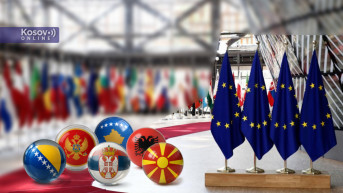
Increasing efficiency and reducing administrative costs. These are the two key motives for which the European Commission plans to launch a comprehensive reorganization as early as next year. Regardless of the fact that these plans do not directly concern the Western Balkans, interlocutors of Kosovo Online believe that the consequences of these reforms could also be reflected in the region.
Written by: Djordje Barovic
From the European Commission they state that the goal of the reorganization is the establishment of a “modern and efficient public administration capable of implementing political priorities,” while at the same time adapting to the new reality of unpredictability, reducing complexity and costs.
According to that plan, already by the end of 2026 the European Commission plans to abolish “unnecessary procedures” and encourage “joint work.”
This task has been assigned to the European Commissioner for Budget and Administration Piotr Serafin, and the formal start of the review, the formation of high-level working groups, is planned for the end of this or the beginning of next year.
As Politico reports, citing EC officials, alternative models are being considered that include the possibility of merging departments.
The European Commission, chaired by Ursula von der Leyen, employs around 32,000 people in the daily administrative work of the EU.
Von der Leyen, in her recent annual “State of the Union” address before the European Parliament, emphasized that only a united and reunified Europe can be an independent Europe.
She also conveyed that the future of the Western Balkans, Ukraine, and Moldova is in the EU.
For analysts, there are many unknowns as to how the reorganization of the European Commission will help or hinder the region in that expected “future.”
Bureaucratic reform
Researcher of the Institute for European Studies Petar Curcic believes that it is a “bureaucratic reform” so that the EU can respond more efficiently to current challenges.
In a conversation for Kosovo Online, Curcic says that the reorganization of the European Commission will not affect the processes related to the admission of new members to the EU.
“I think these are separate tracks. Primarily because the European Union gradually set its enlargement agenda for the Western Balkans, since 1997, and especially in 2003. So, enlargement will depend primarily on the bilateral and multilateral relations of the Western Balkan countries with individual EU member states and with the EU as a separate organization,” says Curcic.
Hence, he is convinced that the announced reforms within the EU can have a positive effect on the Western Balkans.
“It may have a good effect in the sense that the system of applying, approving, and implementing some joint projects will be more efficient. In that sense, it will have a certain, but very indirect, impact,” Curcic believes.
He is convinced that even after the reforms are completed, the region will remain on the EU’s priority agenda.
“The Western Balkans has its place in the foreign policy priority agenda. It will certainly remain within the administration, it will have its place, but it is not a large department. Of about 30,000 bureaucrats in Brussels, only a small part is dedicated to our region,” this researcher specifies.
He adds that regardless of the reorganization within the EU, the key guidelines when it comes to the Western Balkans will still be given by the most powerful members of the Union, where, as he points out, “European policy is shaped.”
He primarily refers to Germany, France, and Italy.
“They have traditionally been interested in this region. Their diplomats will continue to deal with this region, and the EU certainly has its wider decision-making mechanism. Here we are also talking about agriculture, transport, communications, digitalization,” Curcic notes.
He explains that for the EU the current priority is “strengthening bureaucratization” as a “response” to current challenges.
“And that is the broader context, to somehow make its administration appear efficient in the eyes of the public, and on the other hand to show that it wants to modernize,” says Curcic.
On the decision about reorganization within the EU, he adds, reforms within the American administration initiated by Donald Trump probably had an influence. But he emphasizes that such “voices” could be heard earlier as well.
“Undoubtedly, those voices originated indigenously from within the EU, from various opposition but systemic parties within the European Parliament, as well as from member states themselves, which of course are trying to adapt to these circumstances. This is a bureaucratic reform that will not significantly affect the systems and decision-making in the foreign or internal policy of the EU,” Curcic emphasizes.
“Tightening” of criteria
Political analyst Nexhmedin Spahiu also does not expect that the Western Balkans could have direct consequences from the planned reorganization of the EU, but he points out that these reforms could indirectly further “tighten” the criteria for admission to the Union.
“I do not believe there will be direct consequences for the Balkans, but indirect ones are possible since some of the criteria may be tightened, and the Western Balkan countries already struggle to meet those standards for the European community,” Spahiu tells Kosovo Online.
He is convinced that of all the imagined reforms that the EU is planning, those related to environmental protection will be the most difficult in the Balkans.
“In the Western Balkans we do not have an ear for environmental protection, especially in Kosovo which is the worst in that respect. But other countries are not that far from it either. This can influence the process of EU accession to become more complicated,” this analyst emphasizes.
He adds that environmental protection is good for all countries in the region, but the failure to respect EU criteria negatively affects the accession process.
Spahiu is convinced that in the framework of EU reforms the good news will be if the efficiency of European institutions is improved.
“If the administration becomes more efficient and faster, that could have a positive effect also for the Balkans,” Spahiu believes.
Asked how much the countries of the Western Balkans should fear whether this process will jeopardize their path to the EU, Spahiu does not have a clear answer.
“It may, but it may not,” this analyst emphasizes.
A more efficient administration
Analyst from Skopje Petar Arsovski says that any “faster and more efficient” European administration suits the Western Balkans, but expresses concern that the reform process could slow communication with the region.
“Any change in the administration of the European Union that will make it faster and more efficient is basically favorable for the Western Balkans, because communication regarding the development plan, accession negotiations and ongoing issues would be faster and more efficient. The dilemma is how long this reorganization will last,” Arsovski tells Kosovo Online.
Nevertheless, he has the concern that this process could slow down the Western Balkans on the path to the EU.
“Following previous examples of the European Union and their introspective phase, it may happen that this process of reorganization will last much longer than the commissioner predicts, and in the meantime, while this process lasts, communication with the Western Balkans will slow down,” Arsovski emphasizes.
He ironically notes that North Macedonia therefore should not worry too much, since in its case, he stresses, “the accession process is already prolonged.”
“We have nothing to fear, because our accession process is in any case prolonged, for our own reasons. At the moment, that process is blocked because we cannot hold the second intergovernmental conference and this process does not affect us. Perhaps the countries that are in active negotiations, Albania and Montenegro, should fear more,” this analyst emphasizes.
He is convinced that the reform process within the EU cannot bring anything bad for the Western Balkans.
The problem, he stresses, is the “limbo” while this process is not completed.
“There are no bad changes if the ultimate goal of the administration is to be more efficient and faster. The problem is only if that limbo while the reforms are not completed lasts so long that it becomes an obstacle to the communication of the European Commission with the Western Balkans. The EU often enters a phase in which they say ‘let us first reorganize, and then we will continue to work.’ That process of reorganization can last so long that it will affect essential communication with the Commission,” Arsovski believes.
Slowing of integration
On the other hand, lecturer at the Mediterranean University in Tirana and the University of Vienna Dritan
Hoti believes that the announced reforms within the EU could produce a “temporary slowing down of integrations in the block of Western Balkan countries.”
“If there is a reduction, it means that there may be a temporary slowing down of the integration process in the block of Western Balkan countries. That would be somewhat contradictory. On the one hand, a united Europe says that it aims to accelerate the integration of Western Balkan countries starting from geopolitical imperatives, especially because of the war between Russia and Ukraine and the impact this war has on the European continent, with the main impact on Central Europe and the Balkans, which are traditional areas of vital interests of Russian foreign policy,” Hoti points out in a conversation for Kosovo Online.
He primarily sees the reforms in the light of strengthening the Union’s military capacities.
“Perhaps there is pressure from right-wing forces in the EU, but now priority is given to military readiness. Military preparedness has increased in Europe and in that context there will be a reduction of bureaucratic costs, giving priority to military-type investments related to strengthening national armies, which in part has to do with increasing collective European security,” Hoti believes.
He reminds that the process of reconstruction, the reduction of technical and bureaucratic staff within EU institutions, has been happening since the beginning of the formation of the Union, but that it is not yet clear whether this latest one will “affect” the staff engaged in the “technical-legal processes of integration” of candidate states for EU membership.
“Reducing the number of employees could lead to temporary slowdowns and the question is what will be done with the staff of some bodies that make up the main apparatus of the EU. That remains to be seen,” Hoti specifies.
He adds that if within the EU there is a “strategy and will,” then reforms could contribute to accelerated membership of candidates from the Western Balkans.
“If there is a strategy and will to have an accelerated integration process ‘in block,’ taking into account the current geopolitical imperative related to the war between Russia and Ukraine, it may be feasible for our countries to be in the EU by 2029 or 2030,” Hoti emphasizes.
He adds that candidate states must still meet the “legal, social, economic and institutional criteria,” but that in that case there will not be an “uncompromising stance of the EU” on enlargement.
He stresses that the “geopolitical imperative” has always been a key motive in the EU enlargement process.
“The most important element for EU enlargement has always been the geopolitical imperative, as an incentive for the integration of certain countries of former communist Europe into the European Union. This imperative is even more important today,” Hoti conveys.
As a second key moment he sees the combination of the “will and motivation” of the Western Balkan candidate states themselves for the earliest possible EU membership, which implies avoiding “deep social and political upheavals” that would slow down that process.
The solution, he concludes, lies in “symmetry.”
“There must be some kind of symmetry, some kind of cooperation or ‘two-way chemistry,’” he specifies.


0 comments