
Edi Rama’s fourth cabinet and the road to the EU – Will Albania achieve its goal by 2030?
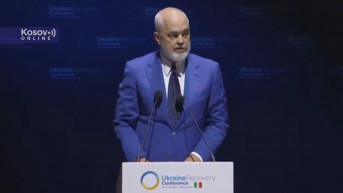
After the constitution of the new session of Albania’s parliament, Edi Rama will, as previously announced, present his fourth cabinet in the new mandate on September 11. On that day, at the meeting of the Socialist Party’s Council, key positions such as Deputy Prime Minister, Speaker of Parliament, and parliamentary group leader will also be announced.
Written by: Dragana Vucicevic
By winning the parliamentary elections on May 11 this year, Edi Rama achieved what no one else in Albanian pluralism has accomplished. A record-holder with three consecutive governing mandates, he secured a fourth success and 16 years in power – something only Enver Hoxha and his “iron” prime minister Mehmet Shehu had managed before.
With over 52 percent of the vote and 83 out of 140 parliamentary seats, Rama achieved a historic victory, expanding his parliamentary majority compared to the previous elections.
Rama’s rule, uninterrupted since 2013, has marked the last twelve years of the country’s political, economic, and social life. During this period, as Albania’s longest-serving prime minister in the post-socialist era, he has managed to consolidate power and cement his party’s dominance, but he has also been at the center of numerous controversies and political conflicts.
His mandates have been characterized by ambitious urban development projects and infrastructure investments, the process of European integration, and efforts at judicial reform, but also by accusations of authoritarian governance, corruption, and the erosion of institutions.
Although weakened over time, the opposition has repeatedly resorted to radical forms of street protest, boycotting parliamentary work with incidents such as setting fire to parliamentary furniture and throwing smoke bombs, reflecting the deep polarization of Albanian society. Nevertheless, with such a majority in parliament, Kosovo Online’s interlocutors agree that the re-elected prime minister will easily confirm the composition of his new cabinet—though its exact shape remains speculation.
Gerta Zaimi, editor-in-chief of the online platform of Albanian television Klan and researcher at the Center for Strategic International Studies, told Kosovo Online that no one currently knows exactly who the new ministers in Rama’s cabinet will be, and that one can only speculate. She believes that this time
Prime Minister Rama will need younger cadres to help him on the path toward the EU. She expects the cabinet to include more technical figures capable of dialogue and negotiations with EU partners, and fewer chosen simply to satisfy political appetites.
“When you ask me this question, since I am partly ‘Italian,’ having lived in Italy for many years, I can say what the pros and cons are of a government chosen by the will of one person. The positive side is that greater stability is created because the prime minister has a united party and there are fewer ‘wishes to be satisfied’ within the party. One of the problems of parties in Europe, especially left-wing parties, has been the existence of many factions within them. It is true that factions are pluralism within parties, but they can also generate instability. In this case, we lack pluralism within the ruling party, but we have stability, which is positive for the government, especially for one seen as on the verge of achieving European integration. I see this as something helpful,” she explains.
As a negative aspect of the lack of intra-party pluralism, she points out that there are fewer opportunities for new ideas or debate within the party.
“This is undoubtedly a minus. Moreover, in our country the government is formed by a single party, not a coalition, so it seems natural that the prime minister decides on ministers. If there were a coalition of winning parties, as is currently the case in Italy, ministers would undoubtedly be distributed according to the wishes and ‘appetites’ of the coalition parties. We don’t have that panorama. In fact, we are at a moment when the opposition is very weak. So, whether we like it or not, this is the central figure who will appoint the government,” Zaimi concludes.
The process of Albania’s accession to the EU gained its strongest momentum precisely during Rama’s tenure, with the May parliamentary elections won under the slogan “Albania 2030 in the EU, only with Edi.”
From obtaining candidate status in 2014 to the opening of negotiation chapters after 2022, Albania has made visible progress in aligning its institutions and legislation with European standards. This period has been marked by judicial reforms, infrastructure investments, and strong diplomatic efforts to make the country part of the European community. Still, despite the government’s optimistic deadlines, challenges such as corruption, political polarization, and weak institutions remain serious obstacles to full membership, some analysts warn.
Albanian journalist, political analyst, PhD in communication sciences, host of the talk show Hard Talk on the “Fjala” media group, and lecturer at the Faculty of History and Philology at the University of Tirana, Roland Çafoku, told Kosovo Online that it is almost certain Albania will join the EU by 2029, or by 2030 at the latest, stressing that the country has never been closer—but offering a different view from many analysts or politicians.
“Albania was ready to join the EU many years ago, and I can even say that in 1995 and 1996 we were not only the first country in the Western Balkans, but the closest in the entire East to membership. However, it was partly our fault, but especially the fault of the European Union, that we did not join. When I speak of our mistakes, we must admit we committed many, because of the events of 1997, and other periods, some foreseen, some unforeseen. So, we are guilty in this respect, but at the same time we are not the only culprits in this story. There are many cases when we met the conditions and the EU said it was not ready. They said they were unable to manage the countries that had joined before us, let alone deal with Albania. In this sense, I blame the EU more than Albania, which has the most pro-Western people in all of Eastern Europe and beyond,” he said.
Explaining how it was possible that a country so committed to the EU still did not join, he pointed to anti-Albanian attitudes.
“We know what happened; there are anti-Albanian stances, and in that regard I do not blame Mr. Rama, Mr. Berisha, Mr. Meta, Mr. Nano, or Mr. Majko. All Albanian prime ministers have laid stones on our path to the EU, with their good and bad sides, and if Albania one day joins, they will all deserve credit for it,” Çafoku argued.
In its nearly 113 years of statehood, Albania has had 33 prime ministers, and only Edi Rama has managed to secure four consecutive mandates (2013, 2017, 2021, and 2025), making him the longest-serving prime minister in the country’s post-socialist history. Twice he carried out major cabinet reshuffles and dismissed ministers. During his terms, several ministers and mayors, and even his deputy, came under investigation, were detained, or convicted for abuse of office, corruption, and financial misconduct.
This fourth mandate is an opportunity for Prime Minister Rama to leave a lasting mark on Albania’s political landscape. His ability to implement necessary reforms and achieve EU accession goals will be crucial both for his political legacy and for the country’s future.

0 comments