
British policy in Kosovo: From the "American aircraft carrier" to the branding of "global Britain"
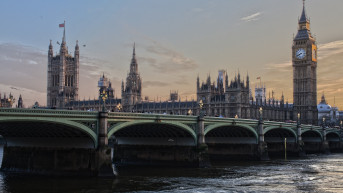
"There are no permanent friends and no permanent enemies, there are only permanent interests," said Winston Churchill, one of the greatest statesmen of the 20th century. Today's British politics should also be seen in this opportunistic key, say Kosovo online interlocutors, emphasizing that the former imperial power is trying in every way to maintain relevance in Europe, among other things, as a "subcontractor of American geopolitical works in Kosovo".
Great Britain took the baton from Germany in lobbying for Kosovo's entry into the Council of Europe, Serbian President Aleksandar Vucic emphasized recently.
Although the vote on Pristina's membership in the CE has been abandoned for the time being, there is no doubt that London will not give up its interests, that is, American interests, so easily, bearing in mind that since leaving the EU, Washington has become much closer to it than Brussels.
Whether because of the old glory, the aura of the USA or financial power, the role of Great Britain in the geopolitical games in Kosovo and beyond is still not secondary, as many estimated it would be after Brexit.
Moreover, the fact that Britain left the EU does not speak of its weakness, but of its power, one of our interlocutors points out.
Kosovo is an American project in which Great Britain participates from the first day as a "subcontractor of American geopolitical works", online journalist Sinisa Ljepojevic says about Kosovo, adding that Britain is trying to gain a place in the wider geopolitical game through Kosovo.
The Ukrainian war and the crisis served for America to completely occupy not only the EU, but the whole of Europe and put it in vassal status, so the policy of Great Britain should be viewed in that context, according to our interlocutor, a long-time correspondent of Tanjug from London.
"America has the characteristic of a coward that he usually won't say what he thinks, but leaves it to others and in that sense Britain is in that function. However, within political Britain it is not exactly as it is written in the media, there are already some conversations in which admit that what is being done with Kosovo will not bring any solution and that simply what has been done for years is not working and that a new model of policy towards Kosovo must be found," says Ljepojevic.
He adds that Serbia should not prematurely accept some solutions offered by the West.
"Britain is part of those who propose it, however, one of Britain's goals is to undermine EU policy, which means that in the EU itself, above all in key countries such as Germany and France, that there are some kind of reservations and different views that Britain in the name of America, he wants to demolish, threaten and find his own place there," he explains.
According to his words, Britain derives energy from relations with America "to create the illusion of its power".
"You as a vassal and a servant cannot have power, therefore there is no real power there. In America several men of authority appeared who explained that Britain could only follow what was happening in the world and could no longer influence In this sense, the British skill in maintaining the appearance of its power is always interesting," notes Ljepojević and adds that in this context, Britain tries to be part of every problem, because he believes that "if you are part of the problem, you end up as a loser in that game, you are part of a solution".
When it comes to possible influence on Commonwealth countries that have not recognized the self-proclaimed independence of Kosovo, he says that Britain's influence on those countries is quite small, because "Britain no longer has instruments to influence Commonwealth countries and is satisfied with established economic ties".
The British in Kosovo are guided by US policy and to the greatest extent follow the American interest, assesses for Kosovo online and journalist Filip Rodic and adds that there is also a centuries-old rivalry between Britain and Germany, which is also reflected in the territory of Kosovo.
As he states, things happened in waves where the Germans and the English fought over who would have more influence in the area of Kosovo, with the English generally following and representing the American interests in their interests.
"What is said about Great Britain, that it has actually been the 'American aircraft carrier' for the last 50 years, and not something else, I think that is also true when it comes to the Republic of Macedonia," Rodic believes.
According to him, the fact that Britain left the EU shows its power, not the opposite.
"So, that it was powerful enough to leave the EU, and secondly, that it is powerful enough to maintain its status after leaving the EU. They are looking to preserve and strengthen their interests around the world, including Kosovo," Rodić believes.
"As for the influence of Great Britain, I think it is, as in centuries past, based mostly on their scheming and on their intelligence work and behind the scenes. There is a saying attributed to Mahatma Gandhi, that when you see two fish that arguing at the bottom of the ocean, that there is a British submarine somewhere. That is their modus operandi, unlike, for example, the German one, which seems much more open and concrete. So Britain still has a strong influence in the world, even though its power is constantly declining from '45, she is still a member of the UN Security Council. She has a very big influence on her former colonies, on the Commonwealth countries, if not only with her behind-the-scenes actions, then also with the money that Britain has at its disposal, which is huge and significant," Rodic says.
When it comes to supporting Kosovo for membership in the Council of Europe, he states that Germany and France "which were the most vocal advocates of the idea of the so-called membership of Kosovo in the Council of Europe, have apparently recanted lately".
"Because voices are heard from Germany, France, Italy that the so-called Kosovo should not be admitted to membership before certain conditions are met, first of all the CSM, which is more or less a cosmetic matter. It is so much a crossing over of their own red lines, that, even though they don't want to, they have to set some conditions. And in that situation, Great Britain appears very conveniently as someone who will take the baton of lobbying for that membership, because it puts much less emphasis on morality in politics, much more brutally in fulfilling their interests, so the fact that they are taking the lead is not surprising in any way. And yet they are just a cover for the USA," concludes Rodic.
The principles on which London's policy towards Kosovo is based are opportunistic and it suits them to have an Anglophile government in Pristina, because Great Britain, especially after leaving the EU, is trying to maintain its importance on the continent and its status as the most important American ally in Europe, he says for Kosovo Online journalist Srdjan Garcevic.
"Britain functions as a kind of spoiler in Europe, as a power that tries to control the chaos on the continent and thus their rather strong support for Kurti, although also for some other regional actors. It is there to somehow contain and rein in perhaps the interests of Germany, a country that is economically much more important in Europe, and France, a country that has relative parity with Britain in terms of its global position in Europe, so that somehow it could use the instability there in order to secure better concessions for its other strategic questions", emphasizes our interlocutor.
Regarding whether Britain lives on old glory and on what basis it is spreading its influence in this region today, Garcevic reminds that it is "very important old glory".
"Britain again has a very important role, firstly because of its proximity to America, it is one of the few countries that was not conquered during the Second World War and which still managed to have some sovereignty. Second, due to its importance in the world of trade and economy, it it can very easily help, conditionally speaking, the local elites, specifically perhaps the Self-Determination Movement, or some other actors, for example the Bosniaks in the Balkans, either by giving them certain funds, as well as access to the big table, whether it is the UN, or the American establishment itself or about things like the Council of Europe," explains Garcevic.
As he states, with Boris Johnson and the exit from the EU, the British wanted to launch the brand of "global Britain" and to position themselves as a kind of Singapore around which other countries will gather. Nevertheless, he assesses that it "did not go the most successfully", and that because of this, Britain's influence on the countries of the Commonwealth or the EU countries that did not recognize Kosovo is weak.
According to him, Alicia Kearns does not represent London's official policy towards Kosovo, but she is certainly useful to the British establishment "to see how far it can go and how it can be controlled".
"This is a person who has been embroiled in quite a few scandals herself, one of her aides was almost found to have been a spy for China, so she obviously has some important position in their foreign policy establishment, so maybe the Chinese wanted to they have a spy there. But I wouldn't say that she is a spokesperson for Britain, I would rather say that she is the sharp part of the spear that is trying to make some kind of breakthrough and see how Serbia will react," explains our interlocutor.



comments