
Raseta: I don't believe that Britain can bring new recognitions to Kosovo, Cameron's statement intended for the public in Pristina

Analyst Dragoslav Raseta from "New Third Way" believes that the visit of the UK Foreign Secretary David Cameron to Kosovo should demonstrate that London is one of the most important allies of Pristina in the diplomatic arena and firmly stands by Kosovo.
Raseta notes that Great Britain is one of the most important allies of Kosovo.
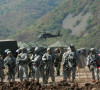
"I think Pristina was strategically chosen for the visit because a large number of British troops are now stationed in Kosovo. We had 400, and in October, an additional 200 members of British forces were added. I think this is a PR operation to strengthen Cameron's position as Foreign Secretary because he will spend some time with British troops, and at the same time, it is a sign to show that Great Britain, as one of perhaps the most important allies of Kosovo in the diplomatic arena, continues to firmly stand by it. Of course, it is also a way to demonstrate a kind of deterrence against Russian influence that exists in the Western Balkans", Raseta said.
He adds that he does not believe that Britain can bring about new recognitions for Kosovo, just as it was not the goal of the United States, but rather the efforts were focused on the dialogue.
"These were more diplomatic efforts focused on achieving any progress in technical talks and negotiations on the normalization of relations between Belgrade and Pristina. Except for the recognition by Israel, we have not had any new recognitions, but when you come as a guest, it is desirable to have some statement for the domestic audience, not just for your strategic goals", Raseta explains.
Raseta believes that Great Britain, along with Turkey, is Kosovo's largest partner in terms of security.
"When it comes to the security sphere or Kosovo Security Forces, Britain, along with Turkey, is Kosovo's largest partner. In the past year and a half, there has been a rapid modernization of Kosovo's forces, transforming them into a formation that is more similar to a conventional army, not just the police and security forces needed for maintaining internal law and order, but for some more sophisticated operations. I think that Britain, especially after the events in Banjska and, let's say, the departure of negotiations from the track since the United States has taken a somewhat more critical stance towards Pristina, I think that Britain has assumed that position where the current Government of Albin Kurti relies more on it than it did in the past", he said.
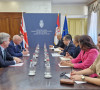
Regarding the announcement that Cameron will meet with Bishop Teodosije of Raska and Prizren, Raseta says that such a meeting could be expected.
"Currently, the political leadership in northern Kosovo is too toxic for Western diplomats after the events in Banjska and the investigation that has started but is not proceeding at an accelerated pace in terms of resolution and determining responsibility for the events in Banjska. I think it is wiser to have such a meeting with an organization that has good relations with KFOR, and KFOR, which is a guarantor of peace and stability, especially now for the Serbian cultural-historical heritage", Raseta stated.
He adds that he is not surprised by the reactions coming from Belgrade condemning Cameron's statement that Britain will work on new recognitions of Kosovo.
"I wouldn't say it's surprising, especially if we look at the task of our Minister of Foreign Affairs Ivica Dacic, which was precisely to work on various derecognitions. So, having a statement that threatens to undermine some progress you have made in the past half-decade is certainly an expected statement. As for the consequences of these recognitions and derecognitions, they do not have excessive consequences because, when it comes to the big five, it is hard to expect that Russia or China will recognize Kosovo, or conversely, that France, America, or Great Britain will derecognize Kosovo. I don't think there will be much progress there, primarily because we see that the EU and Washington are focused on achieving normalization of relations and continuing the agreement reached in Ohrid", Raseta concluded.


comments