
Can the peace achieved in the South Caucasus be replicated in the Western Balkans?
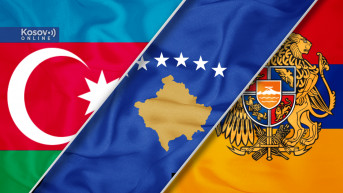
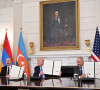
"Today, we are writing a great new chapter in history," stated Azerbaijani President Ilham Aliyev on Friday, after signing a peace agreement with Armenian Prime Minister Nikol Pashinyan at the White House, in the presence of U.S. President Donald Trump. This agreement ended the forty-year war over Nagorno-Karabakh. Despite apparent similarities, the conflict in the South Caucasus nonetheless differs from that over Kosovo. The common denominator, experts told Kosovo Online, could be greater U.S. engagement in achieving an agreement between Belgrade and Pristina.
Written by: Djordje Barovic
"They have suffered for so many years, many have tried to find a solution — the European Union, the Russians — it never happened. But with this agreement, we have finally managed to make peace," Trump said at the signing ceremony.
The Azerbaijan–Armenia peace agreement was welcomed by both Belgrade and Pristina. Middle East political analyst and Kosovo Online columnist Habib al Hadi offered what he described as “a broader perspective” on the “somewhat surprising peace agreement between Yerevan and Baku.”
He is convinced that this agreement could “undo or at least complicate previous plans by Western strategists to integrate Armenia into Euro-Atlantic structures by opening its ‘security umbrella’.”
He noted that the agreement was signed amid heightened tensions between Moscow and Baku over suspicions that Azerbaijan is being used as a conduit for Ukrainian military operations against Russia.
"On the other hand, the position of Baku and Yerevan is important for the development of the Middle Eastern confrontation. Tel Aviv counts on Azerbaijan’s alliance in the conflict with Iran, given that Israel’s military assistance left Baku deeply indebted during the 2023 attack on Nagorno-Karabakh. Added to this are the interests of Turkey, Azerbaijan’s undisputed partner. Therefore, the consequences of the agreement will need to be analyzed and will be felt throughout the Caucasus, the Middle East, Europe, and Russia," Hadi asserted.
He emphasized that the peace agreement between Azerbaijan and Armenia will be concluded immediately after the Armenian constitution is amended to remove all references to the formerly disputed territory of Nagorno-Karabakh.
Although they are separated by some 3,000 kilometers, the connection between the South Caucasus and the Western Balkans — between Azerbaijan’s Nagorno-Karabakh and Kosovo — was established soon after Kosovo’s international recognition began.
Kosovo’s declaration of independence on 17 February 2008 triggered extensive debate over possible implications for the Nagorno-Karabakh conflict. Some statements, including by Armenians, suggested it completely changed the situation in the South Caucasus, while others — including from Azerbaijani and some Western governments — argued that it was not applicable to territorial disputes there.
For Kosovo Online’s interlocutors, all similarities between the two cases are superficial, but they do demonstrate that the new U.S. administration is prepared to tackle “frozen conflicts” around the world.
Although U.S. President Donald Trump, even during the signing of the Azerbaijan–Armenia peace agreement, did not fail to stress his role in preventing a war between Serbia and Kosovo, this issue, they note, remains low on his list of priorities at present.
Apparent Similarities and Acceptable Solutions
Experienced Serbian diplomat and former FR Yugoslavia Ambassador to Azerbaijan, Darko Tanaskovic, told Kosovo Online that the peace agreement between the two countries was possible only after the military reintegration of Nagorno-Karabakh, and that the conflict bears only superficial resemblance to the Kosovo case — meaning no “quick solutions” should be expected.
Tanaskovic is confident that, just as the U.S. mediated the peace agreement between Azerbaijan and Armenia, it will at some point also become involved in resolving the Kosovo issue.
"The U.S. role, without questioning their fundamental position of having recognized Kosovo’s self-proclaimed independence, could be less biased in the sense that it would be more pragmatic, more rational, in line with the business logic that Trump usually applies: to see what each party gains and loses in any eventual agreement. However, I am not sure that the U.S. administration, even under Trump, could accept our reason above all reasons — that Kosovo is for us what Nagorno-Karabakh is for Armenians: from the standpoint of history, tradition, and national values," Tanaskovic said.
He added that the reason for a more pragmatic U.S. approach to Kosovo lies in the fact that Trump “has no special ideological affection for Albanians.”
"He will certainly insist on what was mentioned in the letter by the two congresswomen, and which has been called into question — mutual recognition of the two states. But only at the very end of the road. I do not think it is realistic to expect any quick solution of this kind, because between Azerbaijan and Armenia everything was settled — settled on the battlefield," Tanaskovic said.
He pointed out that the U.S. became involved in the peace settlement between Azerbaijan and Armenia only when all the details of the agreement between the two countries had been prepared.
"In our case, I think the administration will be more pragmatic, not emotionally or ideologically inclined toward either Pristina or Belgrade, as was shown during Trump’s first term. But that will not make it easier to reach a solution acceptable to us," Tanaskovic believes.
Asked why the U.S. president, even during the signing ceremony of the Azerbaijan–Armenia peace agreement, highlighted that he had “prevented a war between Serbia and Kosovo,” the former diplomat said that all of Trump’s statements should be “listened to carefully” and described this one as “enigmatic.”
"It is not entirely clear what he meant and what kind of war, because all informed actors in the international community, as well as here, claimed that there were absolutely no ideas about starting any kind of war at this time, especially from Serbia. I think that he meant in a general sense that he prevented a war, and to make it sound more effective, he tied it to the present moment," Tanaskovic observed.
Commenting on the Azerbaijan–Armenia peace agreement, Tanaskovic said it was the result of the “military reintegration” of Nagorno-Karabakh and the diminishing of Russian influence.
"Clearly, this peace became possible the moment Azerbaijan achieved its goals, that is, when it militarily reintegrated territory which it reasonably considered to be its own under international law. At that point, Armenia had little say in the matter," Tanaskovic stressed.
One reason, he noted, is that Armenia lost Russian support.
"Armenia lost Russia’s backing for a number of reasons, but in my view, even with stronger Russian support, it could not have avoided this outcome, especially as Russia is, as we know, preoccupied with a major war," Tanaskovic explained.
Asked how similar the Azerbaijan–Armenia conflict is to the Kosovo issue, Tanaskovic said, “There are not as many similarities as some might think.”
"There is little similarity. First, in terms of international law, there is none at all. Armenia occupied part of Azerbaijan’s territory, whereas in our case Kosovo and Metohija was taken from Serbia. It would be reasonable for peace to mean the return of that territory to Serbia — which is currently unimaginable," Tanaskovic stated.
As a possible “new element,” he sees stronger U.S. engagement in the Belgrade–Pristina negotiations.
"The only new thing that could play a certain role is greater U.S. engagement, with President Trump. But we have yet to see how that will manifest with regard to Kosovo and Metohija," the former diplomat said.
He explained that, despite “apparent similarities,” the differences between the two cases are considerable.
"The key point is that, in terms of international law, Armenia occupied part of Azerbaijan, and that country had every right to demand its return," Tanaskovic said.
He recalled that in 1999, when he presented his credentials as FR Yugoslavia’s ambassador to Azerbaijan, then-President Heydar Aliyev (father of the current President Ilham Aliyev) explained in detail the national strategy for returning the territories of Nagorno-Karabakh within the framework of territorial sovereignty and integrity.
"Among other things, he told me that one must always have strong and effective international connections and at least one ally ready to decisively help at the crucial moment, and that there must be complete national unity regarding that goal. Here the differences are great, even though our cause regarding Kosovo and Metohija is absolutely indisputable in terms of international law — it has been violated, and no one cares anymore," Tanaskovic said.
By contrast, he added, Serbia does not have, as Azerbaijan does, an ally like Turkey, which at the decisive moment — when geopolitical circumstances permitted — played a crucial role in helping Azerbaijan militarily take Nagorno-Karabakh.
"Nor do we have the necessary national unity to achieve such a goal. That is where all similarities end, and where the major and essential differences begin," Tanaskovic emphasized.
Different Dimensions
For Prishtina-based political analyst Bljerim Canaj, the question of Nagorno-Karabakh in the Azerbaijan–Armenia dispute and that of Kosovo are “different dimensions” of problems, and therefore of solutions.
"It is different. If we look at history, Kosovo became independent due to the breakup of Yugoslavia. Kosovo was part of a federation, and we cannot view it as the same case as Nagorno-Karabakh and Azerbaijan. These are not the same things," Canaj told Kosovo Online.
He acknowledged some similarities, but only in that the U.S. mediated the signing of the Washington Agreement in 2020.
Everything else, he repeated, is different.
"The ideas and dimensions in relation to Kosovo are different," the analyst specified.
In his view, the Kosovo issue will be resolved because both the U.S. and the EU see it the same way.
"It is not in the EU’s interest to have a problem in Europe. The same goes for America. On the Kosovo–Serbia dialogue, they are now on the same path, with the same idea. All they want is an agreement after which there will no longer be the problems we — and the EU and America — have now. That is why they are of one mind," Canaj concluded.
U.S. “Reshaping of Relations”
Commenting on the Azerbaijan–Armenia peace agreement, historian Stefan Radojkovic stressed that in the “reshaping of international relations” tensions ease in regions where the U.S., for its own interests, shows primary engagement.
"The same can be said of the Serbia–Pristina talks, and now the Armenia–Azerbaijan negotiations, where the U.S. administration has stepped in as mediator," Radojkovic told Kosovo Online.
He sees the current impasse in the Belgrade–Pristina dialogue as an attempt by both sides to have Washington serve as “guarantor of the stability and survival” of such an agreement.
However, Radojkovic cautioned against illusions that the new U.S. administration will be an “impartial mediator” in the dialogue.
"One cannot expect the U.S. to be an impartial actor, but it will expect cooperation from both opposing sides. Even if they prefer or have more understanding for Pristina, it is no longer a blank-cheque support," he emphasized.
He noted that relations between Washington and Pristina have already cooled, and that the current caretaker government led by Albin Kurti has “significant opponents in the Trump administration.”
"It is known that relations have to some extent 'cooled' due to the failure to implement various decisions or agreements that were signed or verbally agreed in previous years. With that in mind, we cannot expect Washington to be on Belgrade’s side, but on the other hand, we can expect a more balanced approach in this dialogue between Serbia and Pristina," Radojkovic said.
Commenting on Trump’s assertion, made during the signing of the Azerbaijan–Armenia peace agreement, that he had prevented “a war between Serbia and Kosovo,” Radojkovic described the U.S. president as known for making imprecise statements.
"He is simply such a 'colorful' personality who likes to make bombastic statements to enhance his own importance — primarily for his base, voters belonging to the MAGA movement," Radojkovic concluded.
On the South Caucasus peace agreement signed under the auspices of the White House, Radojkovic said that in many elements it resembles the Washington Agreement signed by Belgrade and Pristina in 2020.
"This is quite reminiscent of such an agreement, which will apparently lead to the stabilization of relations between Armenia and Azerbaijan, but also to greater U.S. influence in the South Caucasus and, naturally, greater influence in the Balkans, at least regarding relations between Serbia and Pristina," Radojkovic specified.
He explained that U.S. President Donald Trump also managed to insert an element of his “business mentality” into the Azerbaijan–Armenia peace agreement.
"He negotiated the opening of a corridor that should connect Azerbaijan’s exclave of Nakhchivan via Armenian territory. And that is an important component of the agreement," the analyst observed.
Asked how far the Azerbaijan–Armenia conflict can be linked to the Kosovo crisis, Radojkovic said that a more accurate comparison would be with the civil war in Croatia, in which one of the parties was the rebellious Serb entity within Croatia, supported by the then-FRY, i.e., Serbia.
"In that sense, the conflict between Nagorno-Karabakh and Azerbaijan, which was supported by Armenia, is a similarity. Of course, these conflicts cannot be compared in duration, but the dynamics and actors are quite similar, although in this case in the Balkans much shorter," Radojkovic said.
He stressed that the “absolute winner” of the war in the South Caucasus was Azerbaijan.
"It cemented its 2023 victory over the forces of Nagorno-Karabakh and, in a way, legalized the exodus of the Armenian population from Nagorno-Karabakh, or the 'Republic of Artsakh,' as they called it. Armenia is now left to try to secure its survival, given that certain signals have been sent from Baku that there could be moves to separate parts of Armenia itself in order to link Azerbaijan with Nakhchivan," Radojkovic said.
He added that in such a situation, “Armenia did what it had to do.”
"Surrounded on all sides essentially by adversaries — Turkey and Azerbaijan — it needed the involvement of an external power that it believed could guarantee its survival, and that was the United States," Radojkovic explained.


comments