
Career choices – young people in the region follow the labor market, avoid trades, and seek work–life balance
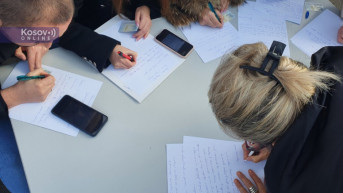
Young people in the Western Balkans, when choosing a profession, follow labor market trends. They opt for IT, technology, as well as construction, architecture, and medical faculties, but they also find vocational secondary education interesting because it is linked to industry. Trades, however, attract little interest. In addition to good earnings, an increasingly important factor for them is achieving a balance between work and private life—this is the prevailing mindset of the new generations now choosing their professional paths when regional data and experiences are considered together.
Written by: Darko Savanovic
At the top of the list of desirable faculties are new technologies, followed by engineering and then medical fields. Professions related to human resources are also gaining popularity, with psychology studies increasingly in demand in recent years.
Vocational secondary education is also appealing because it is connected to the economy. There is a shortage of skilled tradespeople across the region, and their earnings are generally above average. Nevertheless, young people are not particularly drawn to such occupations. What appeals to them more is something else—a balance between private and professional life.
New generations bring something new to the labor market
New generations in Serbia have introduced many changes to the labor market, notes Tatjana Vidakovic from Infostud, adding that young people closely follow trends and employer demand.
“From this, we see strong interest in information technologies and enrollment in technical faculties. Professions related to human resources are on the rise, which is why we’ve seen significant interest in psychology studies in recent years. Medicine and dentistry have always been among the top choices, as well as economics and law. The Faculty of Architecture is also very popular. These are faculties that fill their quotas very quickly, often in the first enrollment round,” Vidakovic told Kosovo Online.
On the other hand, she points out a significant shortage of tradespeople in the labor market, while young people remain uninterested in such jobs despite salaries that are often multiple times higher than the national average.
Young people want to align their jobs with their private lives, and besides solid pay, they also value social responsibility and the company’s image.
“A work–life balance is extremely important. That’s why they often choose companies that offer remote or hybrid work options—partly from the workplace and partly from home. How they spend and use their free time is also very important to them,” Vidakovic said.
According to her, although financial considerations dominate in times of economic crisis, new generations also care about interpersonal relations, the nature and culture of the company, the types of projects they will work on, the scope of their work, and their opportunities for advancement.
Work–life balance is also important to young people in North Macedonia
According to career counselor Katerina Zlatanovska Popova, new generations in North Macedonia are changing their approach when choosing professions and workplaces, and are increasingly open to the possibility of living in their home country while working for foreign employers.
“Young people’s thinking is changing—they are now interested in where they can have a better life, but not necessarily by leaving the country. They look at overall quality of life. Which profession will allow them to achieve a work–life balance? That is very important to the new generations,” Zlatanovska
Popova told Kosovo Online.
She also notes that young people are increasingly open to the idea of staying in their country while working for employers abroad.
“They are beginning to recognize the benefits of staying where their friends and families are, while exploring opportunities to work for clients and employers outside the country. New generations have the privilege of considering such options—instead of emigrating, they can live in North Macedonia, work for foreign companies, and earn higher salaries,” she said.
When asked whether labor market needs are aligned with the education system, she responded that significant progress has been made and that there is a positive trend in vocational education, although much still needs to be done.
People should go to work with satisfaction
Young people in Albania are no exception. Most want to study new technologies, while medical sciences also remain highly popular.
“We know that technology is a priority today because it offers strong employment opportunities, and there is high demand in the labor market. This encourages young people to choose this field. However, medical sciences are not lagging behind,” said Arjana Muçaj, a professor at the University of Tirana, for Kosovo Online.
She noted, however, that statistics show a decline in the number of doctors in Albania, as many leave the country, along with a noticeable shortage of nurses.
“Demand in the labor market, both domestically and abroad, is constantly growing. These are the two main fields where university quotas are fully filled, and demand remains very high. Dentistry is also in demand,” Muçaj added.
She also observed increased interest in engineering fields, with civil engineering becoming more attractive due to the “construction boom” in Albania. On the other hand, social sciences, once popular among young people, are now declining—except for economics and law, which remain in demand.
She pointed out that the state in Albania prioritizes vocational schools to enable faster entry into the labor market, but interest remains low due to wages and poor treatment by employers.
She cited tourism as an example.
“We see shortcomings among business owners in tourism in how they treat employees, in all aspects. Working conditions are not satisfactory. I would say that jobs in tourism are not particularly popular among young people, despite their willingness to work,” Muçaj noted.
According to her, most young people who complete vocational tourism schools in Albania tend to move to neighboring Greece.
“Greece has a strong tradition in tourism, which is why young people leave after completing vocational education. While we often speak of high salaries in tourism today, exploitation of young workers in these jobs also leads to dissatisfaction. People should go to work with satisfaction, and that depends not only on pay but also on other working conditions,” Muçaj concluded.
Demand for vocational education remains high in Kosovo
On the labor market in Kosovo, the highest demand continues to be for people with vocational secondary education, says Shpetim Kaludra from the Kosovo Employment Agency.
“The total number of job seekers registered with public employment services by the end of last year was 65,488. Of that number, 33,954 were women and 31,534 were men, reflecting a higher share of women in the structure of the unemployed,” Kaludra told Kosovo Online.
According to him, last year’s data show that the highest demand in the labor market remains for people with vocational secondary education.
“This category recorded an increase of 6.8 percent compared to 2024, reflecting the market’s orientation toward technical and vocational profiles. In terms of employment rates, the highest levels were recorded among those with master’s degrees (8.2 percent), bachelor’s degrees (7.7 percent), and secondary education (6.9 percent), while the lowest employment rate was among the unskilled (2.2 percent),” Kaludra said.
He added that those with lower qualifications face the greatest difficulties in finding employment. The higher the level of skills and expertise, the easier it is to secure a job—and vice versa.
Kaludra also noted that the Employment Agency primarily cooperates with the Ministry of Education, and less so directly with schools.



0 comments