
The CBK decision a barrier to aid for the most vulnerable: Humanitarian catastrophe looming in Kosovo
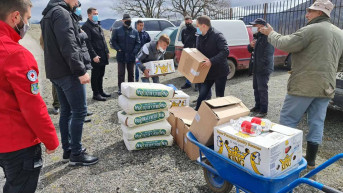
Happiness is not in what we receive, but in what we give, teach the greatest spiritual religions. But what will happen when what we give does not reach those who need it? The decision of the Central Bank of Kosovo to suspend payment transactions with Serbia will most severely affect the poorest citizens in Kosovo who rely on donations and aid from Serbia, interlocutors of Kosovo Online say, warning that it could cause a humanitarian catastrophe.
Humanity and kindness are the most beautiful and valuable characteristics of a human being. Driven by sincere desire, numerous humanitarian organizations from Serbia and the region have been providing support for years to families with social needs, seriously ill children, helpless individuals, schools, kindergartens, and young people eager for knowledge to remain and survive in Kosovo. With the decision of the CBK to suspend payment transactions with Serbia, their work will be hindered, and the most affected will be the beneficiaries themselves.
Secretary of the Red Cross Kosovo Polje, Jovica Mitrovic, warns that due to the political decisions of Pristina, some regular distributions have already been postponed indefinitely, and they will turn to the International Committee for assistance.
"Honestly, it is very difficult to contemplate and mentally adjust to the situations that reach all of us living in Kosovo and Metohija. If you consider the situation, we have been living in uncertainty for 24 years in a very challenging environment to which one somewhat adapts. Considering that the Red Cross has the most contact points with beneficiaries and the people, every organization in its environment, this decision has shaken all citizens, including me personally as a human being and as the leader of this organization, the Red Cross Kosovo Polje. We are simply stunned. As usual, this measure will affect the people who are socially vulnerable and the poorest the most," Mitrovic said.
He pointed out that younger people might adapt, expressing hope that Serbia would find ways to help citizens. However, he questions what will happen to the Red Cross beneficiaries.
"The Red Cross Kosovo Polje has around 220 families who are beneficiaries of our humanitarian aid. We were supposed to conduct a regular distribution in December to our beneficiaries here in Kosovo and Metohija. Due to some political decisions of the Kosovo authorities, we were advised not to carry out distribution for the time being until we have a discussion with the Committee. These days, Committee delegates are visiting our organizations in the northern part; I expect them to visit our organizations south of the Ibar these days because we are one family, the Committee is the top of the Red Cross, and we will seek the freedom to do our job and fulfill our purpose, to exclusively engage in humanitarian work while political bodies and politicians should do their job," Mitrovic said.
It is sad, he emphasizes, that political decisions affect social cases.
"How will an older person living in Ugljare or Bresje, or anywhere else, who is alone and over 60, 70, or 80 years old, go and buy medicine when they need it? There's a situation where people have gotten used to the lack of medicine and the lack of quality food from Serbia, and now the dinar is also threatened. As a younger person, I wonder where this is going," Mitrovic said.
According to him, the decision to abolish the dinar is a disgrace for the international community.
"This is a great disgrace for the world community and Europe, unable to provide something elemental to a person. What does a person need, health and a little money, without which there is no life? I don't know how all of this will function, and we are in great uncertainty, awaiting the outcome from our Committee. After all, the International Committee is the pinnacle of our organizations, and we will ask the Committee for help to enable us to function normally in the field as we have for these 24 years," Mitrovic concluded.
The humanitarian organization "Serbian Solidarity" conducts 95 percent of its activities in Kosovo. One form of assistance is scholarships for young people from enclaves, and Director Branko Antic says that due to the decision of the Central Bank of Kosovo to ban payment transactions in dinars, they will now have a major problem in withdrawing the tuition fees sent to them by his organization.
"One of the ways we aid our people in remaining and surviving in their ancestral homes is by providing scholarships to our young heroes from enclaves in Kosovo. We aim to assist their parents and them in their desire and hope to stay and thrive for the betterment of their education, purchasing school supplies, computers, literature, and travel. We sponsor talented students and athletes, as well as children from large families and socially disadvantaged families," Antic said.
He added that their organization supported 23 scholarship recipients, to whom they transferred funds through the Postal Savings Bank.
"It will be difficult for parents to withdraw these scholarships that we, as an organization, disburse. Since we have parents throughout the entire territory of Kosovo, whose children come from Strpce, Sirinicka Zupa, Gorazdevac, Osojane – imagine the distance they have to travel to withdraw dinars. The temporary Kosovo authorities continue their institutional terror in this manner. When you deprive our people down there of their means of living, they are compelled to consider other matters, including relocation, God forbid," our interlocutor emphasized.
He pointed out that they would face challenges in their operations and usual activities because their room for maneuvering and assisting our people would be limited.
"In any action we undertake, we transfer funds to our people in dinar-denominated accounts. Now, if someone from our population living in our southern province goes to open an account at a foreign bank located there, they will be asked the reason for opening the account. They will have to say whether it's a pension, a social benefit, our scholarship, or some humanitarian aid. They will be asked where they receive it from, and when they find out it's from the Republic of Serbia, they'll say they don't have payment transactions. All of this poses a problem, primarily for our people. Like the state, we will find a way to transfer funds. Just as the state found a way to transfer dinars, when one method wasn't possible, they used another. We heard yesterday how they managed to do it," Antic said.
Regarding their plans due to the situation with the dinar, he emphasized that they had initially approached the Government of the Republic of Serbia, primarily the Ministry of Finance, the Office for Kosovo and Metohija, and the National Bank of Serbia.
"We have reached out to all of them, as well as the banks that operated there, to see how we can proceed with our operations and what we can do, to receive advice and guidance on the procedure. We are awaiting responses in the coming days to determine how and through which channels we can continue to assist our people in Kosovo and Metohija," Antic concluded.
The decision of the Central Bank of Kosovo to abolish the dinar will also impact the work of the Committee for Aid to Kosovo and Metohija, which channels a significant portion of its funds through bank accounts, specifically via the Postal Savings Bank, which has branches in Kosovo. Milorad Arlov, the President of this humanitarian organization, says for Kosovo Online that he is concerned about the fate of over 60,000 Serbs who will be affected by Pristina's unilateral decision and he hopes that reason will prevail.
"This is just the beginning, and now we are thinking about the stance and position of that bank through which we built the daily center, through which we procured many things in Kosovo and Metohija, such as gift packages for Serbian children in Kosovo and Metohija, and everything else our committee has been doing for 16 years. I must tell you that in Republika Srpska, we have our mark, not the dinar. For us, the dinar is also foreign currency, and we deposit everything through our banks in the Postal Savings Bank in Serbia," Arlov said.
He emphasized that their work would likely be greatly impeded since the CBK's decision was new and they had not yet operated under this new system. However, he is more concerned about the situation of over 60,000 Serbs who receive monthly incomes.
"Pensions, salaries, education, healthcare, various scholarships, people working in local governments... How will they receive their salaries, and how will their existence in Kosovo and Metohija be jeopardized? I assess that this is a unilateral, somewhat accelerated decision by Pristina. I don't like the way they want to introduce it and eliminate the dinar in a repressive manner, infiltrating institutions without notice, requests, or giving deadlines for people to adapt to a new system. I see no reason why the dinar should not remain a means of payment as it has been in Kosovo and Metohija. Especially when there is a large number of dinar users who receive salaries and pensions and have their livelihood funded by the Republic of Serbia," the humanitarian worker emphasized.
He pointed out that his organization also faced other operational problems.
"I have been banned from entering Kosovo and Metohija for over three and a half years. This is an old problem I face, and I believe we will now have funding problems because everything we do there is through bank transfers. We have built a system, and that's how we have helped many families. We have given over 25,000 gift packages to children in Kosovo and Metohija. This is an unenviable situation for the Serbs; it's not just what has been pressing the Serbs in Kosovo and Metohija in recent years. The problem is unilateral decisions without dialogue between Pristina and Belgrade," Arlov noted.
He also commented on the UN Security Council meeting dedicated to Kosovo.
"Serbia and President Vucic have made great efforts to acquaint the world with the problems of Serbs in Kosovo and Metohija, and that has been done, but personally, I expected more from the Security Council. I expected some official, binding decision, however, that did not happen. I am also sorry that the issue of the ban on entering Kosovo and Metohija was not raised, not only for me but for many other humanitarian workers and association presidents. However, I must also say that I am pleasantly surprised by Caroline Ziadeh's sincere report, which pointed out the consequences of the dinar ban, and I hereby ask her to raise the issue of freedom of movement for all of us who want to come to Kosovo and Metohija at some point," Arlov said.
He adds that he has a feeling that Albin Kurti's ideas are not driven by democratic motives but by "pure revenge towards Serbia".
"If he continues down that path, if that personal motive is not overcome, there will never be peace in Kosovo and Metohija. Personal motives should not be the driving force behind creating something that everyone in Kosovo and Metohija does not accept," Arlov warns.



comments