
Citizens of the region on the same mission: Boycotting retail chains for fairer prices
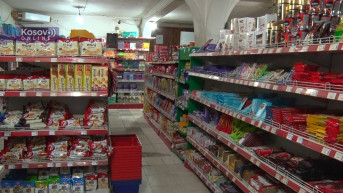
Calls to boycott major retail chains have been met with varying degrees of public response across the region in recent weeks, as citizens express their dissatisfaction with high prices—particularly of food products. Speaking to Kosovo Online from Pristina, Belgrade, Tirana, and Skopje, interviewees pointed out that public trust in price formation and free trade has been eroded, and that the boycott is seen as a means to fight for fairer prices. While no significant changes have occurred yet, people remain cautiously hopeful that prices will drop—though not drastically.
Written by: Dusica Radeka Djordjevic
Although some believe that food prices in Kosovo are not the highest in the region, citizens of Pristina still consider them expensive.
"It's quite expensive, but I hope things will improve. A boycott could influence prices," said Aden Bislimi from Pristina to Kosovo Online reporters.
Shoppers in Skopje remain skeptical. Even if prices do drop, one local woman believes the reductions will be insignificant.
"Prices have gone down by one or two denars. What difference does that make?" she said with frustration.
Kosovo Online reporters compared the prices of a 100-gram Milka Oreo chocolate bar across the region, revealing that it is most expensive in Belgrade.
In Skopje, the price ranges from 65 denars (1.06 EUR) to 1.45 EUR, in Kosovo from 1.19 EUR to 1.79 EUR, while in major retail chains in Belgrade, it costs between 219.99 RSD (1.87 EUR) and 249.99 RSD (2.13 EUR)—twice as expensive as in Skopje!
Experts believe that the boycott should also lead to answers regarding who is responsible for driving up prices.
In Serbia, the Efektiva Consumer Protection Association yesterday called for a new seven-day boycott—this time targeting the Mercator retail chain, which includes Idea and Roda stores. Last week, the boycott was aimed at the Delhaize chain.
Who will give in first—the consumers or the retailers? And how long will the retail chain boycotts in Serbia last? Dejan Gavrilović from Efektiva says it's difficult to predict. However, he told Kosovo Online that it is evident that citizens are becoming increasingly aware that they must respect both themselves and their money, as food and household products in Serbia are significantly more expensive than in developed European countries.
"It is absurd that some products made in Serbia are cheaper in neighboring countries or even in Scandinavia. For example, water bottled in Serbia is cheaper in Malta, despite high transportation costs," says Gavrilović.
He explains that while retailers have the right to make a profit, the purpose of the boycott is to fight for fairer prices.
"When you hear that a retail chain made 65 million euros in profit in a year and has a 45% profit margin, it is clear that there is room for price reductions. People simply no longer want to pay these prices, and it wasn’t difficult to persuade them to join this type of protest. Of course, we would all like retailers to come to their senses, but they are not the only issue here—their suppliers and manufacturers are likely part of the problem as well," Gavrilović emphasizes.
Ideally, he says, the boycott should be as short as possible, ensuring that neither consumers nor retailers suffer losses, but rather that both sides benefit.
"If food prices decrease, I am certain that retail chains will not incur losses—consumers will simply be able to buy more for the same amount of money," he explains.
He adds that the Efektiva association has studied consumer movements across Europe, where consumer awareness is at a much higher level. However, he points out that the system is different there, with far greater respect for consumer rights.
In Albania, according to Granit Sokolaj, founder and executive director of the Alert Consumer Protection Center in Tirana, there was almost no public reaction to the call for a boycott of major supermarket chains. This is despite the fact that, as he assesses, price increases in Albania are felt even more strongly than in Kosovo or North Macedonia.
Sokolaj explains that price hikes—both globally and in Albania—began with the COVID-19 pandemic in 2020, followed by the impact of the armed conflict in Eastern Europe.
"Although we cannot expect prices to return to pre-2020 levels, the decrease in prices is either nonexistent or very minimal. I’m talking about food, hygiene products, and so on... and this has affected the wallets of Albanians," says Sokolaj.
He explains that his center initiated the boycott of large retail chains in Albania after it began in Croatia, North Macedonia, and Kosovo. February 16 was designated as the date to launch the boycott, but on that day, the stores of large supermarket chains were still full.
"The response on social media was also very lukewarm. I am very disappointed by this fact; I am sorry for the Albanian wallets, for our money. My slogan was 'be the master of your wallet or your family’s economy'. I see that there is almost no reaction," Sokolaj observes.
He adds that he hopes citizens' awareness will increase, but he notes that this will take a considerable amount of time.
Analyst and member of the Board of Directors of Heidelberg University in Skopje, Siniša Naumoski, told Kosovo Online that the boycott of large retail chains is a good symbolic message and symbolic pressure on consumers to show that they are the largest factor in the business of retail trade in commercial goods and food products.
He believes that the boycott will yield results in uncovering the issues that are driving up prices.
Naumoski points out that public trust in price formation and free trade has been eroded, as consumers are buying the same product at different prices in different cities, and that the same product might be sold in Skopje at a different price. This will, however, be justified by the argument that retail prices in free trade are determined freely.
He adds that the government has gathered statistics on certain undemocratic and unethical associations in the field of price-setting, but questions whether supermarkets are truly the main cause of high prices. The right measures, he says, would focus on uncovering who is the price multiplier, and it may be necessary to take a step back, examine the profit margins, and investigate how retail prices are formed.
"In my opinion, and as state authorities have said, or some have already pointed out, the highest profit margin lies with those who link goods from the producer and deliver them to the final consumer through the market, that is, with distributors. There are three key players in the entire chain, and the last is the supermarket. We should pay attention to who ultimately bears the greatest burden of all this. The greatest burden is borne by citizens as consumers, and on the other hand, food producers, who are in the most difficult situation because they supply products to production plants at the lowest price. The production plants supply them with a reasonable, justified margin to distributors, and that's when profit margins start to rise," notes our interlocutor.
He points out that it is noticeable that the revenue of a group of the ten largest supermarkets in North Macedonia has grown since COVID-19, compared to the period before the pandemic.
"Net profit is rising. We started with around 10 million euros before the pandemic, and now we are at around 38 to 40 million euros for the ten largest supermarkets. This shows that the discontent of the population during this period is not accidental. The effect will be felt through certain policies that should be triggered by this discontent, as well as through the implementation of state measures that the regulator will take in this area," Naumoski concludes.

0 comments