
Real estate price surge in the region: Where is the most expensive square meter in the Western Balkans?
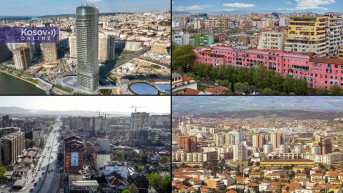
Apartments in Albania have become 15% more expensive, in some parts of Skopje the square meter price has increased by 40%, while in Kosovo a hectare of land can cost up to half a million euros. Serbia, despite still being the most desirable destination for real estate purchases, is experiencing a "European trend" of a five percent increase. Prices will continue to rise this year, sources tell Kosovo Online.
Written by: Arsenije Vuckovic
Experts in the real estate trade highlight several reasons for the rising prices in the Western Balkans, key among them being a shortage of labor and increasing construction costs.
This is most noticeable in Albania where prices have risen by 15%.
Diaspora as the "Engine"
Gjergj Stefa, a shareholder at the "C21 Irg" real estate agency in Tirana, says that this figure should be taken with caution as it exclusively pertains to Tirana, while coastal parts of Albania may experience a dramatic spike in land and property prices after joining the EU.
"It’s about an average price increase, according to a specialized study in central parts of the city. Prices do not increase in Albanian cities just because people are moving to Tirana. There are neighborhoods in Tirana where prices are rising very slowly, and I’m talking about upper floors of buildings without elevators. Of course, there are areas in the middle ring of Tirana where, due to many factors, such as tourism growth, lack of hotels... I wouldn’t say prices have increased by 15%, but due to the influence of the international market, prices unfortunately are rising," Stefa tells Kosovo Online. Real estate agencies in Albania are not happy about this.
"However, the market operates independently of our wishes. It is influenced by increased income, improved building quality, rising construction costs, increased rental possibilities, and the fact that apartments are being turned from residential spaces into business opportunities. This inevitably leads to an increase in apartment prices. I hope, but am not convinced, that the price increase will slow down and that properties will become affordable for people, and that there won’t be a price difference between those in the region and those globally," Stefa believes.
Real estate in Albania is mostly purchased by the diaspora, hence it is also referred to as the "engine of the economy" for this country.
"Albanians living abroad and investing in Albania are a very important part of the 'real estate transaction pie.' This has its pros and cons. The good thing is that it’s the 'engine of the economy,' bringing in significant income, mostly in euros. This was also one of the reasons why the value of the euro dropped last year," explains Stefa.
According to 2023 data, more than 3,500 citizens living abroad have purchased at least one property in Albania.
"This includes entrepreneurial contracts, apartments bought with ownership titles, apartments bought for parents, and investment apartments. This is also a way to 'unload' some money. I’ll give you a concrete case. I had a client who lived in the USA and had a budget of $250,000. With this money, he bought two apartments in Tirana, in one of the best parts of the capital. I asked him why he didn’t buy an apartment in the USA. He replied that Albanians still have a strong connection to their homeland and think that they might return one day," says Stefa.
He warns that this also creates serious controversy.
"I have clients who live in Tirana and find it difficult to pay rent of 40,000 lek per month for an apartment, and I have clients who live abroad who say that $125,000 is not a problem because they can save up to buy an apartment in five years. And this doesn’t happen in the region. People from the region who emigrate do not invest as much in their country as Albanians do," emphasizes Stefa.
Foreigners are also buying real estate in Albania, and this expert says that it is mainly Czechs and Poles purchasing properties on the beach in Durrës, where supply is still good and relatively cheap.
"Western Europe will start buying properties in Albania along the Ionian Sea coast, from Dhërmi to Jale, and this will become noticeable by 2030, when construction in that area is completed, certified, and placed under mortgage," reveals Stefa.
He specifies that foreigners do not buy apartments that are not yet built due to guarantees and bank-related documentation.
"After 2030, with Albania's accession to the European Union, the southern coast will, unfortunately, become unattainable for Albanians but very accessible to foreigners," he states.
He adds that banks have liberalized lending to construction companies, which has increased demand and real estate purchases.
"Until a few years ago, banks only issued loans once a building was completed, at which point the mortgage was also approved. However, today it is easier to obtain credit, even up to 100% of the investment. These favorable loans are now available to a large category of people, including privileged groups such as police officers," says Stefa.
Small apartments in high demand
The situation is not much better in North Macedonia.
Real estate agent and owner of "DM Agens" in Skopje, Margarita Stojanovska, tells Kosovo Online that property prices in the country have been steadily rising since the COVID-19 pandemic, with apartments in some parts of Skopje now up to 40% more expensive.
"Since the COVID crisis, real estate prices in Macedonia have been gradually increasing. The same trend continued with the war in Ukraine, which led to difficulties and increased costs in transportation, rising energy prices on a global level, and, most importantly, a rise in the price of land per square meter. Additionally, in Skopje, this has been influenced by a moratorium on certain detailed urban plans in attractive municipalities such as Centar, Karposh, and Taftalidze," explains Stojanovska.
The shortage of new construction has driven up the prices of older apartments.
"The lack of workforce, particularly plumbers, electricians, facade workers, and other laborers needed for building construction, has had a significant impact on the price increase," emphasizes this real estate agent.
She adds that rising utility costs in Skopje have also contributed to the price surge, with square meter prices in Taftalidze, Karposh, and Centar increasing by about 40%, while in the suburbs, prices have risen between 20% and 25%.
Although property prices in North Macedonia are currently experiencing a slight decline, this expert expects the situation to change soon, especially for the most sought-after apartments—those up to 45 square meters.
"People still believe that investing in such properties is more attractive, which is why these apartments remain in high demand," Stojanovska highlights.
Unlike foreigners, who are not interested in purchasing real estate in North Macedonia, citizens of the country are increasingly buying apartments in tourist areas in Greece and Albania.
"Our citizens are interested in and are purchasing apartments, especially in neighboring countries—Greece and Albania—in tourist locations. We have data showing an increase in such purchases. These properties are more attractive, have higher rental returns, and are being bought. However, unlike this trend, there are hardly any foreigners looking to buy apartments here. Maybe they’re interested in other types of real estate, but when it comes to apartments, foreign buyers are very rare," says Stojanovska.
North Macedonia currently does not offer incentives for young people to buy real estate. The real estate agent explains that the government's "Buy a House, Buy an Apartment" program did not yield the expected results.
"The conditions were unfavorable for young people. Either they were not creditworthy, or the program only applied to apartments priced at 900 euros per square meter. However, there were no apartments available for 900 euros per square meter from the first sale directly from the investor. Currently, such measures do not exist, and even bank loans for young people are not available—interest rates have risen significantly," Stojanovska explains.
She believes that such incentives are necessary but that a realistic measure must be introduced to help young people acquire their first property.
The Most Expensive Real Estate in the Region
The President of the Kosovo Business Alliance, Agim Shahini, claims that land and real estate prices in Kosovo are the highest in the region, with the greatest demand currently for land and apartments in four northern municipalities.
"Real estate in Kosovo is a serious business and is the most expensive in the entire Balkans. This means that we have more expensive land than Albania, Serbia, North Macedonia..." Shahini tells Kosovo Online.
This is explained by the fact that Kosovo is located on a small territory, and there is high demand not only from citizens but also from the diaspora and foreign investors.
"Depending on the location in Kosovo, the price of one hectare ranges from 10,000 to 500,000 euros. It is very expensive and there is high demand for good locations across all of Kosovo," specifies Shahini.
He says that the current trend is to invest in land and apartments in the north of Kosovo because real estate there is much cheaper than in other parts.
"I think that investors, businessmen, and citizens in Kosovo have chosen to invest in the north of Kosovo because property is cheaper there and there are still opportunities to buy something inexpensive. That's why Kosovo's citizens are buying a lot of land, apartments, and other properties there," details Shahini.
Minimal Growth in Serbia
Milic Djokovic, an expert from the group of real estate brokers at the Chamber of Commerce of Serbia, explains to Kosovo Online that real estate prices in Serbia are showing the smallest growth compared to the Western Balkans, with Belgrade still being the "target city" for the region.
"In Serbia, prices have risen the least compared to the region. We are at about five percent, in relation to euro inflation. Now, that five percent includes the price of new constructions and old buildings. The largest increase has been in real estate prices in Belgrade. Belgrade is the target city for all parts of the region. Prices have also risen significantly in Zlatibor, Kopaonik, Novi Sad, Nis, and Kragujevac. Everything else is at last year's level," says Djokovic for Kosovo Online.
Commenting on the 15 percent increase in real estate prices in Albania, this expert says that the country is unique.
"As far as the region is concerned, Albania is a bit unique because they have a problem with a lack of workforce. Their workforce goes to Kosovo, and from Kosovo to Western Europe, and they have a big problem with a lack of workers, they don't pay them much. Their daily wage is much lower than ours, and why would someone work for 30 euros when they can get 70 euros in Europe. That's a problem Albania will face even more," explains Djokovic.
He adds that Serbia also faces a shortage of labor but compensates by bringing in workers from abroad.
"We have a lot of Pakistanis, Arabs, Turks, Indians... on construction sites. We have the least of our own trained personnel, but unfortunately, construction schools accept few people so that is a problem," emphasizes Djokovic.
He comments on the spike in apartment prices in the region as a "Balkan mentality."
"In Europe, there is a trend towards so-called rental apartments, where ownership is in the private variant of large investors, companies, and 50-60 percent of people are renters. Here, 90 percent of people own real estate, so we are big traditionalists. We love real estate, and there is a great interest in buying here," highlights Djokovic.
Real estate in Serbia is mostly purchased by domestic buyers, but also from the diaspora and the region.
"A good part is the diaspora, about 10-11 percent of buyers. But, people from the region also buy. A lot of buyers are from Turkey, Ukraine, Russia, and there are quite a few Chinese. Foreigners altogether make up about 10 to 15 percent," specifies this expert. He emphasizes that Serbia, apart from privileges for its citizens, does not have a similar option for foreigners, but that is a trend in the region.
"There are even some aggravating circumstances in apartments that are not lived in, where higher taxes are paid. It is the same in Greece and Albania when you buy a property. Italy is the most liberal, which is why Trieste is popular because you don't have those problems. In Greece, you have double tax because you don't live in that property, especially if you rent it out. Then you have a 'tourist tax,' a tax on profits that you actually make," states Djokovic.


0 comments