
Civil Code by year-end – a condition for Growth Plan, a thorn in the side of Kosovo politicians
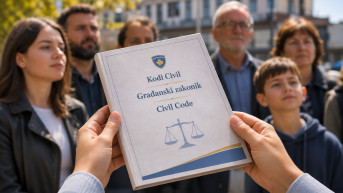
Kosovo’s Civil Code, which is expected to be adopted by the end of the year, is one of the European Union’s requirements and a condition for Pristina’s progress under the Growth Plan for the Western Balkans. Its return to the legislative procedure has brought deep social and political divisions in Kosovo to the fore. While non-governmental organizations insist on a substantive public consultation, religious communities and some representatives of the Self-Determination Movement have joined the opposition. Kosovo Online’s interlocutors point out that the most controversial provision concerns the legal recognition of same-sex partnerships, while also highlighting the importance of the Code for the Serbian community, particularly in the areas of property and inheritance.
Written by: Katarina Saicic
According to the legislative agenda, adoption of the draft law is scheduled for November 15, after which it will be submitted to the Assembly. Non-governmental organizations are calling for more time for public consultation, but “the clock is ticking.”
Work on the Civil Code began in 2014. The Kosovo Ministry of Justice launched the process of drafting the Civil Code with the support of the European Union. The objective was to consolidate and harmonize various laws governing contractual obligations, property rights, family relations and inheritance.
A working group was established at the end of December 2016, and the draft law was presented on July 7, 2020.
However, the leaders of four religious communities in Kosovo—the Islamic Community, the Catholic Church, the Serbian Orthodox Church and the Jewish Community—announced their joint opposition to the controversial provision of the draft concerning the registration of same-sex partnerships.
After the Kosovo Assembly failed to adopt the law at first reading on March 16, 2022, with 17 Self-Determination MPs either voting against it or abstaining, criticism continued to mount.
The stakes became higher when the EU announced that adoption of the Civil Code was one of the conditions Kosovo had to meet in order to receive funding under the Growth Plan for the Western Balkans. Former EU Ambassador to Kosovo Aivo Orav said that Pristina needed to adopt the legislation as soon as possible. At the same time, the same legislation is also important for Kosovo’s accession to the Council of Europe.
Although the Ministry of Justice amended the section concerning same-sex partnerships in May 2024, the fate of the Code remains uncertain. Experts say Kosovo will have to adopt the legislation because of its relations with Brussels, while some also argue that it could provide better protection for the rights of the Serbian community in Kosovo.
According to these assessments, the Kosovo Prime Minister will attempt to “push it through” at the beginning of the new government’s term in order to avoid potential negative consequences.
Civil Code between European obligations and domestic resistance
Commissioner for the Protection of Equality Milan Antonijevic told Kosovo Online that the Civil Code contained a section concerning same-sex partnerships, but that this issue was overshadowed by matters relating to property, inheritance, gender equality, women’s rights and other issues.
“These are all issues that have to be on the table. Property, for example, is an issue of particular concern to the Serbian community. Inheritance is also an issue connected with same-sex partnerships, but also with many other matters, and that is why it is important for us in Serbia to follow this debate. It will affect the Serbian community. If the Civil Code is adopted, it will have implications for the Serbian community and other minority communities in Kosovo and Metohija,” Antonijevic said.
He added that it was therefore important to call for rights to be defined as comprehensively as possible and properly guaranteed, while also closely following the Council of Europe’s response to the issue.
“It is, of course, important to follow the reactions of the Council of Europe as well. These represent the highest standards in the field of civil rights, and they must be incorporated into all documents adopted in countries that are members of the Council of Europe, such as Serbia, or in those that seek to follow those standards, as Kosovo and Metohija currently does,” Antonijevic said.
Given that the Civil Code has also drawn criticism, including from within Self-Determination and from religious communities in Kosovo, Antonijevic explained that this was because the legislation dealt with sensitive issues.
Political divisions and sensitive social issues
“Society must prepare itself for the protection of civil rights, but also for the advancement of those rights. At present, we also have the trials of former KLA leaders, and there is not much room in the Kosovo public sphere for opening up issues that are closer to citizens’ everyday lives. They are still preoccupied with major national issues, while equality and human rights remain in the background. I believe that this is why there is a division within Self-Determination and a lack of courage to take more decisive steps,” the Commissioner said.
Political scientist Ognjen Gogic told Kosovo Online that the Civil Code in Kosovo would regulate a wide range of human rights issues, including the registration of same-sex partnerships, with the aim of aligning Kosovo’s legislation with European standards.
Gogic explained that this was a broader legislative initiative.
“The idea is for Kosovo to adopt a Civil Code that would regulate a whole range of issues in the field of human rights and consolidate them within a single legislative act. It would cover issues relating to property, contractual obligations, family relations and inheritance. A whole range of matters is included in the document, but the public is most interested in what is perhaps the most controversial issue—the legal status of same-sex partnerships, namely their registration,” Gogic said.
He added that the law and the initiative had long enjoyed the support of the European Union.
“A great deal of time has also been invested in consultations on drafting the text, because the document could resolve inconsistencies that currently exist between certain laws. The idea originated a long time ago and was considered previously, but at the time it encountered public resistance precisely because of the issue of same-sex partnerships. It was therefore withdrawn and the initiative was suspended, but it is now back on the table,” he said.
Registration of same-sex partnerships the most controversial provision
Regarding same-sex partnerships, Gogic noted that the law provided for the possibility of civil registration of couples, but went no further than that.
“It does not equate a same-sex partnership with marriage, which continues to be defined as a union between a man and a woman. However, this is problematic for certain conservative circles in Kosovo. Members of religious communities have also boycotted the initiative because they consider it unacceptable,” Gogic said.
Nevertheless, he noted that one of the reasons for adopting the law was Kosovo’s desire to align its legislation with European standards.
“This has become part of the European legal framework and, generally speaking, it will take precedence. So they will probably try to discuss the issue at the beginning of the new government’s term. The most unpopular issues are usually dealt with at the beginning of a term, so Albin Kurti’s current government can now afford to face a certain degree of public resistance, while the objective is for the Code to be adopted and incorporated into the legal order, perhaps even before the end of the year. By the time new elections are held, it will no longer be an issue. It is possible that they have decided to adopt the Code in its current form now, with the support of the European Union. This is also linked to Kosovo’s obligations in the accession process and, in a way, these provisions are intended to curry favor with Europe,” Gogic concluded.
Millions of euros at stake over unfulfilled commitments
The legislation could, however, have significant consequences for Kosovo. President of the Kosovo Business Alliance Agim Shahini explained to Kosovo Online why the Civil Code is one of the laws that must be adopted for Pristina to receive EU funding under the Growth Plan for the Western Balkans.
“The European Union has allocated several hundred million euros in assistance to each of the Western Balkan countries under the Growth Plan. Kosovo has around €882 million available. So far, we have received slightly less than €60 million, but we are now in a situation where we could lose another €135 million by the end of the year because, in order to receive those funds, we have to meet several criteria, one of which is the adoption of the Civil Code,” Shahini said.
He recalled that Kosovo had recently lost €45 million under the Growth Plan because it was required to meet 13 criteria, but had fulfilled only seven.
“Of the entire package earmarked for Kosovo, totaling €882 million, we have so far received only seven percent. We still have another 111 criteria to meet. If the Government continues working at this pace, we will lose all of those funds. That money will most likely be redistributed to the other countries that meet the criteria,” Shahini said.
Nevertheless, he said the situation was not straightforward because the Civil Code was highly contentious within society, given that, in his view, it was quite progressive for the prevailing attitudes in Balkan countries.
“It is still something new and innovative for Balkan countries, something citizens are not accustomed to. However, such laws have been adopted in several European Union countries. Certain things certainly need to change, but gradually. We still do not know exactly what will happen with this law,” Shahini concluded.


0 comments