
Complex Skopje–Sofia relations: How can a dispute intertwining identity, history and geopolitics be overcome?
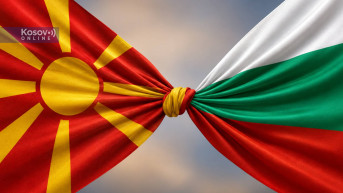
The torching of two vehicles belonging to the Bulgarian Embassy in Skopje has once again stirred tensions between Skopje and Sofia—tensions that, in reality, have never truly subsided. Relations between North Macedonia and Bulgaria rank among the most complex in the Balkans, as they are shaped by an intricate interplay of politics, national identity, language, history and geopolitics. Divergent interpretations of the very issues that define a nation lie at the heart of a dispute spanning decades. Macedonian analysts argue that Skopje must find a way to isolate this bilateral dispute from its European integration process, while emphasizing that the Macedonian and Bulgarian peoples themselves are not at odds. They also maintain that Bulgarian politicians should recognize that it is far preferable to have a European neighbour that respects them and enjoys excellent relations with them than a neighbour with whom meaningful communication scarcely exists.
Written by: Jelena Milenkovic
Bulgaria was the first country to recognize the Republic of Macedonia in 1992, following its declaration of independence from the Socialist Federal Republic of Yugoslavia in 1991. Despite this early recognition, disagreements over language, history and national identity have persisted ever since.
The Joint Declaration between the Republic of Macedonia and the Republic of Bulgaria was signed in Sofia on 22 February 1999 by the then Prime Ministers Ljubco Georgievski and Ivan Kostov. At the time, the principal point of contention concerned the Macedonian language, as Bulgaria had recognized Macedonia's independence but not the Macedonian language as a distinct language. The Declaration's key provisions reaffirmed good-neighbourly relations, the absence of territorial claims, non-interference in each other's internal affairs, the development of economic and political cooperation, and support for regional stability.
The document is widely regarded as the first major step towards improving bilateral relations and as the precursor to the 2017 Treaty of Friendship, Good-Neighbourliness and Cooperation.
The signing of that treaty marked both a significant breakthrough and a deeply controversial moment in relations between the two countries. Conceived as a framework for strengthening political ties, enhancing economic cooperation and advancing North Macedonia's European integration, the agreement also represented an effort to overcome long-standing historical and political disputes.
Following years of negotiations, the treaty was signed by Prime Ministers Zoran Zaev and Boyko Borissov. Of particular importance was the provision establishing a Joint Multidisciplinary Commission of Experts on Historical and Educational Issues, tasked with reviewing historical matters and making recommendations concerning school textbooks.
At the time of its signing, the agreement was hailed as a major diplomatic achievement and an important step towards improving relations between the two neighbouring countries. Supporters viewed it as a mechanism for promoting regional stability and facilitating closer European integration, while critics voiced concerns over the interpretation of historical issues and the potential implications for national identity.
After being ratified by the parliaments of both countries, the agreement officially entered into force on 14 February 2018. Although it established mechanisms for regular bilateral cooperation, both its implementation and interpretation remained the subject of political debate in the years that followed, particularly in the context of North Macedonia's EU accession process and the work of the Joint Historical Commission. Nevertheless, at that time, relations between the two countries appeared to be the best they had been in decades.
However, relations deteriorated again after 2019. Bulgaria introduced a series of conditions relating to history, language and the interpretation of historical figures such as Goce Delcev. In 2020, Sofia blocked the opening of North Macedonia's European Union accession negotiations, arguing that Skopje had failed to implement the Treaty of Friendship, Good-Neighbourliness and Cooperation to a sufficient extent and expressing reservations regarding historical issues, language and identity.
The veto remained in place for nearly twenty months, until North Macedonia accepted the French proposal in July 2022. The proposal envisaged the inclusion of Bulgarians in the Macedonian Constitution as a community explicitly mentioned in the preamble. It also provided for the implementation of the 2017 Treaty of Friendship and for monitoring compliance with the agreed obligations throughout the EU accession process.
Bulgaria subsequently lifted its veto, though not unconditionally. The essence of the French proposal lay in transforming Bulgaria's bilateral demands into European conditions for Skopje. Following several days of parliamentary debate and public protests, the proposal was adopted by the Macedonian Parliament, paving the way for the official launch of the screening process and the first Intergovernmental Conferences with the European Union on 19 July 2022.
Today, relations between the two countries have two parallel dimensions. On the one hand, both continue to cooperate through their NATO membership, trade and investment, infrastructure development, Corridor VIII, and security cooperation. On the other hand, they remain divided over the interpretation of historical figures from the nineteenth and early twentieth centuries, issues of national identity, the Macedonian language, the status of minority communities in both countries, and the conditions attached to North Macedonia's accession to the European Union.
In recent years, a series of developments has had a profound impact on bilateral relations, demonstrating that the principal points of contention continue to revolve around identity, history, minority rights and European integration.
In 2023, Hristijan Pendikov, Secretary of the Bulgarian cultural club "Tsar Boris III" in Ohrid, was physically assaulted and seriously injured. The incident triggered strong reactions in Sofia, where Bulgarian authorities described it as an attack on a person identifying as Bulgarian. The Macedonian authorities condemned the assault and launched an investigation.
Following the incident, Bulgaria temporarily recalled its ambassador from Skopje for consultations and announced the possibility of freezing certain joint activities. It represented one of the most serious diplomatic tensions since the lifting of the Bulgarian veto in 2022.
That same year, Macedonian institutions removed from the official register associations bearing the names "Ivan Mihailov" and "Tsar Boris III", following amendments to legislation governing the use of names associated with controversial historical figures. Bulgaria viewed the move as a restriction of the rights of Bulgarians in North Macedonia.
Tensions also arose during commemorations marking the birthday of Goce Delcev, with incidents reported at border crossings and both countries' institutions exchanging mutual accusations.
The latest incident in this series was the torching of vehicles bearing diplomatic licence plates outside the Bulgarian Embassy building in Skopje. The fire was quickly brought under control, the suspect was rapidly identified and detained, and criminal proceedings were subsequently initiated.
North Macedonia's Ministry of Foreign Affairs strongly condemned the incident and announced a full investigation, while Bulgaria's Ministry of Foreign Affairs summoned North Macedonia's Chargé d'Affaires ad interim in Sofia for consultations, describing the incident as serious and "unprecedented in bilateral relations."
Finding a Way to Exclude the Bilateral Dispute from the EU Accession Process
Former Macedonian Ambassador to Bulgaria Marjan Gjorcev recalls that the dispute between Skopje and Sofia has lasted for more than 140 years and, as such, has long since ceased to be merely a bilateral disagreement.
"This is the so-called Macedonian Question, as Bulgaria defines it. It was addressed in the Treaty of Bucharest, the Treaty of Versailles and at the Yalta Conference. In that context, it will continue to exist; it simply cannot be resolved," Gjorcev told Kosovo Online.
Against that backdrop, he stressed that the recent incident in Skopje, in which two vehicles belonging to the Bulgarian Embassy were set on fire, could in no way benefit North Macedonia.
"This misunderstanding will continue for a long time, and we must learn to live with it. They are our neighbours—our close neighbours to the east—and we must coexist and cooperate with them. There is therefore no alternative but to seek solutions, identify areas where dialogue is possible and focus on issues that can be discussed. That is the only path forward," Gjorcev advised.
He believes that Bulgaria's obstruction of North Macedonia's European path will continue "in one form or another."
"Their demands will remain maximalist. They will not abandon the policy they have developed over the past 140 years regarding the Macedonian Question. There will be no retreat on their part. Our task is to find a way to ensure that, through the European integration process, this bilateral dispute is isolated and prevented from becoming an obstacle to enlargement," Gjorcev argued.
He pointed out that, if such disputes were allowed to block accession, neither Ukraine nor Moldova—and before them Cyprus, Latvia and Estonia—would ever have become or stood a chance of becoming members of the European Union.
"That demonstrates that we must find a way to join the European Union without allowing this bilateral dispute to determine our accession prospects, whether through a phased accession process or through full membership. In any case, we must prevent bilateral disputes from being incorporated into the enlargement process, because the acquis communautaire contains no place for bilateral or identity-related issues. The matters Bulgaria raises concern history, culture, identity and statehood. These are not issues that should influence the enlargement process. If they are allowed to do so, then no country in the Western Balkans will have any realistic prospect of joining the European Union. We are the litmus test. If this bilateral dispute is excluded from the enlargement process, it would send a clear signal that we should open a different chapter in relations with Bulgaria—one focused on Corridor VIII, the Klepalo border crossing, environmental protection, energy cooperation and everything that represents progress, rather than a return to the past," Gjorcev concluded.
Macedonians – Unaware Bulgarians?
Political analyst Vladimir Bozinovski is convinced that the recent incident involving the torching of two vehicles belonging to the Bulgarian Embassy was anything but accidental.
"When something happens at a particular moment that is least convenient for one side but highly advantageous for the other, then we should set coincidence aside. The burning of two vehicles—which, in fact, sustained only minor damage—occurred precisely while discussions were under way regarding the European Parliament's report on North Macedonia's progress in the EU accession process. I believe this was anything but a random act by someone who simply decided that day to set two vehicles on fire," Bozinovski told Kosovo Online.
For that reason, he stressed, it is of paramount importance for the Macedonian authorities to conduct a thorough investigation and present all of their findings to the public.
"No one can convince me—or, indeed, the citizens of North Macedonia—that this individual simply happened to decide on that particular day to set fire to those vehicles. Why did it not happen two days later or four months earlier? This is neither an innocent act nor the isolated action of a dissatisfied individual. It has much deeper roots. I hope we will eventually learn the full truth," Bozinovski said.
He recalled that Bulgaria recognized Macedonia as an independent state in 1992 but did not recognize either the Macedonian people or the Macedonian language.
"This is not a dispute that emerged yesterday or the day before yesterday—it has existed for at least eighty years," Bozinovski emphasized.
According to him, the only period during which Bulgaria made any genuine attempt to reconcile with and recognize the Macedonian nation was under Georgi Dimitrov, immediately after the Second World War. That approach was later abandoned during the rule of Todor Zhivkov, when the earlier perception was revived—that "Macedonians are nothing more than Bulgarians who have yet to become aware of their true identity."
"That is precisely why the problem runs much deeper. For that reason, Macedonia is not asking for guarantees, but rather for a stronger gesture of goodwill from the European Union—one that would demonstrate that it genuinely sees North Macedonia as a future member. If we received such a signal, I believe it would be much easier for Macedonian Members of Parliament to vote in favour of constitutional amendments, including the inclusion of Bulgarians in the Constitution," Bozinovski argued.
Asked whether he saw any prospect of the Bulgarian blockade being lifted, he replied that while he did not necessarily feel optimistic, he still retained hope.
He pointed out that Macedonians and Bulgarians are neighbouring peoples with close historical and cultural ties and that this geographical reality will never change.
"The Macedonian and Bulgarian peoples are not in conflict with one another. What we are witnessing is a political dispute driven by the pursuit of political points. It is a fact that part of Bulgaria's political elite has succeeded in mobilising a segment of the electorate by adopting a hardline stance towards Macedonia. It is equally true that, on our side, the previous government, through its overly accommodating approach, only deepened the problem. Nevertheless, I remain hopeful that, given the desire of both Macedonians and Bulgarians to enjoy closer relations and maintain communication, political leaders—particularly in Bulgaria—will eventually realise that it is far better to have a European neighbour who respects you and with whom you enjoy excellent relations than a neighbour with whom you have virtually no communication," Bozinovski said.
He further argued that Bulgaria's current approach has produced precisely the opposite effect from that intended.
"They seek to portray Macedonians as Bulgarians, yet what they have achieved is an unprecedented level of estrangement between the Macedonian and Bulgarian peoples—the greatest we have witnessed over the past thirty-six years," Bozinovski concluded.


0 comments