
Bozinovski: Bulgaria's political elites should realize it is better to have a neighbor who respects you
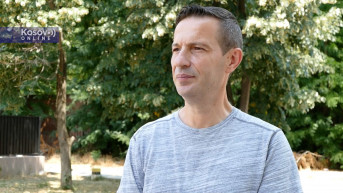
The Macedonian and Bulgarian peoples are not at odds with one another. The dispute between the two countries exists on a different level and serves to score political points, says Skopje-based analyst Vladimir Bozinovski, expressing hope that the political elites, above all in Bulgaria, will realize that it is better to have a European neighbor who respects you and with whom you have excellent relations than a neighbor with whom you have virtually no communication.
A few days ago, two vehicles belonging to the Bulgarian Embassy were set on fire in Skopje, and Bozinovski is convinced that it was no coincidence.
"When something happens at a moment that is least favorable for one side but much more favorable for the other, then we should set coincidence aside. The burning of the vehicles, which were only slightly damaged, occurred during the debate on North Macedonia's progress report on European integration. I think this case is anything but a situation where someone just happened to decide that day to come and set two vehicles on fire," Bozinovski told Kosovo Online.
He therefore stressed that it is extremely important for the Macedonian authorities to investigate the case thoroughly and share all their findings with the public.
"No one can convince me, or indeed the citizens of Macedonia, that this individual just happened to decide that very day to come and set the vehicles on fire. Why didn't it happen two days later or four months earlier? This is neither naive nor an isolated act by a dissatisfied citizen. It has much deeper roots. I hope we will learn more information," Bozinovski said.
He recalled that Bulgaria recognized Macedonia as an independent state in 1992 but did not recognize the Macedonian people or their language.
"This is not a dispute that began yesterday or the day before yesterday. It has lasted for at least 80 years," Bozinovski noted.
According to him, the only period during which there was any attempt at reconciliation and recognition of the Macedonian nation by Bulgaria was during the time of Georgi Dimitrov, immediately after the Second World War, while later, under Todor Zhivkov, the old perception returned that "Macedonians are nothing more than Bulgarians lacking national awareness."
"That is why the problem runs much deeper, and precisely why Macedonia is not asking for guarantees but rather for a greater gesture of goodwill from the European Union, one that would demonstrate that it genuinely wants to see Macedonia as a future member. If we received that, I believe it would be much easier for Macedonian MPs to vote for constitutional amendments, specifically to resolve the issue of including Bulgarians in the Constitution," Bozinovski said.
Explaining how relations between Bulgaria and North Macedonia have evolved over time, he said there were efforts to bring the two countries closer together during the 1990s under Bulgarian President Zhelyu Zhelev.
"I believe there was success after 45 years of almost no relations, not because of our fault, but because Bulgaria had been part of the Iron Curtain, the Soviet system of European satellite states along with the other countries of Eastern Europe. I also believe that during the first half of the 2000s we had genuinely very good relations. In the late 1990s and early 2000s, relations were developing in a positive direction," Bozinovski recalled.
He added that Boyko Borisov later came to power, and relations remained correct until, as he put it, Bulgarian politics realized it could once again score political points by focusing on the Macedonian issue.
"Since then, we have only been going downhill, and I believe that at this moment relations between Macedonia and Bulgaria are at their lowest point since 1991," Bozinovski said.
Asked whether there is any possibility of lifting Bulgaria's blockade of Macedonia, he replied that he does not have that impression, but he does have hope.
He pointed out that Macedonians and Bulgarians are very close peoples and neighbors, and that this will always be the case.
"The Macedonian and Bulgarian peoples are not in conflict with one another. What is happening is at the political level, for the purpose of collecting political points. It is a fact that part of Bulgaria's political elite has managed to win over part of the electorate precisely because of its hardline stance on Macedonia. It is also true that on our side, the previous government's submissive approach only deepened the problem. I hope that, since both Macedonians and Bulgarians want to be closer and maintain communication, the political elites, especially in Bulgaria, will realize that it is far better to have a European neighbor who respects you and with whom you have excellent relations than a neighbor with whom you practically have no communication," Bozinovski stressed.
He also pointed out that the actions of the Bulgarian authorities are producing the opposite effect.
"They want to claim that Macedonians are Bulgarians, but what they are actually achieving is an unprecedented distancing between the Macedonian and Bulgarian peoples, unlike anything we have witnessed over the past 36 years," Bozinovski added.


0 comments