
Djorcev: Skopje must find a way to keep the dispute with Sofia out of the EU accession process
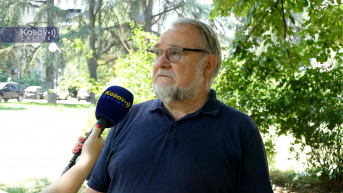
Bulgaria's blockade of North Macedonia will continue because Sofia's demands will remain maximalist, given that they concern issues of culture and identity, former Macedonian ambassador to Sofia Marjan Djorcev believes. He stressed that it is up to Skopje to find a way to isolate this bilateral dispute from the country's European path and prevent it from becoming part of the EU accession process.
Djorcev recalled that the dispute between Skopje and Sofia has lasted for more than 140 years and therefore is no longer merely a dispute.
"It is the so-called Macedonian question, as Bulgaria refers to it, which was addressed in the Treaty of Bucharest, the Treaty of Versailles, and at the Yalta Conference. In that context, it will continue. It cannot be resolved," Djorcev said.
In that regard, he pointed out that the recent incident in Skopje, in which two vehicles belonging to the Bulgarian Embassy were set on fire, certainly does not benefit North Macedonia.
"This misunderstanding will continue for a long time, and we must learn to live with it. They are our neighbors, close neighbors to the east, and we must live and cooperate with them. There is no other way except to seek solutions, approaches, and topics that can be discussed. That is the path forward," Djorcev advised.
Asked whether relations between the two countries are now at their worst in history, he said he would not go that far.
"I would say that after the establishment of the People's Federal Republic of Macedonia, the Macedonian republic within Yugoslavia, relations were at a very high level from 1946 to 1958, when the Macedonian-oriented current in Bulgaria was very strong. Macedonians in Bulgaria enjoyed cultural autonomy, and according to the 1946 and 1956 censuses there were more than 170,000 Macedonians, Bulgarian citizens with a Macedonian national identity. That changed in 1958 at a plenary session of the Central Committee of the Bulgarian Communist Party, and by 1963 Macedonians had effectively been erased in Bulgaria. I believe the period from 1963 to 1989 was the most critical," Djorcev said.
He added that some progress was made in the independent Republic of Macedonia with the 1999 agreement, but that relations deteriorated again after the agreement signed in August 2017, which, in his view, favored Bulgarian interests.
"Our government at the time, specifically Prime Minister Zoran Zaev and Foreign Minister Nikola Dimitrov, made a terrible mistake. They gave in to centuries-old Bulgarian demands without safeguarding Macedonian interests in that reciprocal Bulgarian-Macedonian relationship," Djorcev stressed.
Asked whether he sees a way out of the deadlock and the lifting of Bulgaria's blockade of North Macedonia, he replied that the blockade would continue in one form or another.
"Their demands will remain maximalist. They will not abandon their 140-year analysis of and policy toward the Macedonian question. They will not back down. It is up to us to find a way, through the European path, to isolate this bilateral dispute, which should not be an obstacle in the enlargement process," Djorcev said.
He pointed out that if this dispute is allowed to become an obstacle for Skopje, then Ukraine, Moldova, and previously Cyprus, Latvia, and Estonia would never have joined the European Union.
"That shows we must find a way to become a member of the European Union without this bilateral dispute, whether through a phased process or full membership. In any case, we must prevent this bilateral dispute from being inserted into the enlargement process, because there is no place in the EU acquis for bilateral or identity-related issues. The issues Bulgaria raises concern history, culture, identity, and statehood. These are not matters that should affect the enlargement process. If they do, then none of the Western Balkan countries will have any chance of joining the EU because of their bilateral disputes. We are the litmus test that can demonstrate that, if this issue is approached properly and the bilateral dispute is excluded from the enlargement process, it will send a signal that we should open a different path with Bulgaria, focusing on other topics such as Corridor 8, the Klepalo border crossing, environmental protection, and energy. Everything that represents progress, rather than a return to the past," Djorcev concluded.



0 comments