
Consequences of a possible US withdrawal from KFOR: Is Pristina seeking a new ally in Ankara?
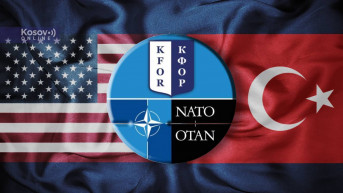
An old idea, but now feasible with Trump: US forces could withdraw from most missions worldwide due to budget cuts, including from KFOR in Kosovo. "Foreign Policy" recently advanced this narrative by claiming that authorities in Pristina are actively preparing for such a scenario and are forging an alliance with Turkey. For security experts, this puzzle is not impossible to piece together. However, like every “brain teaser,” this one also comes with a crucial "but." The US is unlikely to give up its symbolic presence in Kosovo, and many EU and Western Balkan countries do not favor Ankara's military expansion into southeastern Europe, interlocutors of Kosovo Online say.
Written by Arsenije Vuckovic
"KFOR should be able to continue its operations in the event of a US withdrawal, mainly because Kosovo has prepared for this potential scenario by strengthening its ties with Turkey in recent years," American security expert Giorgio Cafiero claims for "Foreign Policy".
His argument, published in "Foreign Policy", is based on newly elected US President Donald Trump’s statement that he may withdraw military forces from various parts of the world.
Journalist Baton Haxhiu is much more vivid in his assessment.
A US withdrawal from Kosovo, he emphasizes, would be "a strategic shift in the region’s landscape."
"What will happen if Trump continues his vision of withdrawing from 'foreign wars'? Can Kosovo be imagined without the US as its permanent protector? Such a scenario, no matter how unlikely it may seem to some, would fundamentally change the political and strategic landscape of the region," Haxhiu asserts in an op-ed for Albanian Post.
If numbers are to be believed, this “landscape” has already changed significantly, as the US has long ceased to have the largest military presence in Kosovo.
According to official KFOR data, the mission currently includes 4,302 troops from 29 countries. The largest contingent comes from Italy, with 855 soldiers, while the US ranks second, contributing 598 troops.
Among the countries with over 300 troops on the ground, Turkey is “in the middle” with 325 soldiers. Ahead of Turkey is Hungary with 365 troops, followed by Germany with exactly 300.
NATO’s equation
Marko Savkovic, a senior advisor at the ISAC Fund, tells Kosovo Online that despite the Trump administration's focus on budgetary reviews, a US withdrawal from KFOR remains unrealistic at this point.
As he says, it is even less likely that Turkey would take on a more significant role in KFOR, as this would first require approval from other Quint members. Moreover, many Western Balkan countries would strongly oppose such a move.
"I assume that the Trump administration is hastily reviewing all defense expenditures. They have a new Secretary of Defense, who is also a rather interesting and different figure compared to the political leaders we have seen so far. What certainly burdens them is the enormous cost of troops stationed worldwide and military bases established everywhere… But the big question is whether Europe is at the center of Trump’s administration’s focus. To me, it doesn’t seem like it is. Regardless of all this debate and disputes over Greenland, the real focus is actually on another part of the world," Savkovic told Kosovo Online.
He sees the reassessment of the US military budget, including spending on global bases and troops, as a real threat, but he also emphasizes that such a move would have far-reaching consequences, especially for NATO.
"This is just one of the problems NATO has or will have with the US. If we recall, during his first term, Trump repeatedly threatened to pull America out of NATO. A US exit would mean the end of NATO, and the collapse of NATO would, in turn, lead to the dismantling of the security architecture in Europe that has existed for more than 70 years," Savkovic warned.
He considers the "Foreign Policy" claim that Kosovo is rapidly preparing for such a scenario by strengthening ties with Turkey to be mere speculation.
As he says, it is also unclear how not only the remaining Quint members but also the Western Balkan countries would react.
"Could Turkey replace the US? Certainly not. Turkey is a regional power, it is important, but many actors would have to agree to such an arrangement. Other Quint members would also have to consent, and we don’t know how they would view it. This is a highly hypothetical scenario. In the end, I’m not even sure that all Western Balkan countries would look favorably upon it," Savkovic asserted.
He emphasizes that the end of KFOR’s mandate would mean destabilization for both Kosovo and the region.
"Any situation in which KFOR ceases to fulfill its UN-mandated mission would result in destabilization. For me, there is no doubt about that because KFOR remains the ultimate crisis response force that both Serbs and Albanians turn to. Moreover, replacing the military assets the US provides with those of another country would be extremely difficult," Savkovic pointed out.
Messages from allies
Security expert Bedri Elezi also does not expect the US to leave KFOR.
Instead, he envisions a scenario where the new Trump administration will increase its military presence in Kosovo to safeguard its sovereignty under UN Security Council Resolution 1244.
"President Trump will not reduce the military presence in Kosovo but will further increase the KFOR contingent to guarantee Kosovo’s sovereignty under Resolution 1244," Elezi told Kosovo Online.
Elezi said that while he respects the opinions of American experts, he considers them inaccurate.
"We have had the opportunity to speak with friends who are part of Trump’s administration, and they have stated that the US is the main guarantor of peace and security in the world and, as such, also guarantees security in the territory of the Republic of Kosovo. We appreciate the opinions of American experts who express concerns about a possible US withdrawal from NATO, but based on our communications with US representatives and other allies involved in NATO activities, we do not see any indication that KFOR plans to change its commitments in the region, particularly in Kosovo," Elezi emphasized.
He also expects that KFOR will have serious security responsibilities in the coming period.
"Especially after recent events in Kosovo, the US and its military are strongly committed to ensuring security in the Balkans," Elezi stressed.
He also pointed out visible US efforts to bring Serbia into NATO.
"The US ambassador in Belgrade, Hill, is making strong efforts for Serbia to become a NATO member, ensuring that the country is no longer under Moscow's influence and its efforts to destabilize the region and Serbia itself," Elezi noted.
Myths and interests
Military analyst Aleksandar Radic views the entire discussion through the lens of "myths and interests."
He explains that the US has long considered withdrawing its forces from KFOR, but this would not necessarily mean a greater Turkish role. For Turkey, Kosovo remains one of the strategically key points in the Western Balkans.
"The Americans showed a lack of desire to stay in Kosovo long ago, even before the first decade of the 21st century. The Serbian national myth revolves around Bondsteel, about 100 years of American control, and secret interests at play. In reality, the discussion in Washington about leaving Kosovo has been open for a long time because it is not their problem. They remained due to the turbulent situation, but the fact is that the US sends only the National Guard – essentially, a Territorial Defense force – to this mission, which speaks volumes about how they perceive the Kosovo issue. What matters to them is that their flag is present there. Yes, the US military is present, but these are not front-line units; they are there merely to showcase power and political authority," Radic told Kosovo Online.
He is convinced that Trump, with his pragmatic approach, could make this idea a reality.
"Trump’s pragmatic stance could easily lead him to ask, ‘Why are we keeping a battalion in Bondsteel, and what are they actually doing there? Is this a European problem? Yes. Is Europe worried about instability in the Balkans? Yes. Then let the Europeans deal with it,’" Radic believes.
According to him, it has long been evident that the countries most interested in participating in the KFOR mission are those geographically close to Kosovo.
However, he emphasizes that Turkey should not be included in this group, as it has entirely different motives.
"The Turkish factor is something else. Turkey wants to project its power in the Balkans. They seek political influence and have cooperation programs primarily with the Kosovo Security Forces. They also cooperate with the Armed Forces of Bosnia and Herzegovina, which consist of three constituent peoples, but it is regularly evident that Ankara sees this differently," Radic said.
Regarding Bosnia and Herzegovina, Turkish interests are a mix of pragmatism – selling weapons and military equipment for profit – and the desire to achieve political influence.
"However, their approach to Pristina is different. In addition to commercial contracts, Turkey has genuinely tried to donate certain types of weaponry that other NATO members do not want the Kosovo Security Forces to possess. KFOR's position remains that the original law governing the KSF, not the 2018 version, is in effect, meaning they can only have light weapons and are not allowed to possess offensive capabilities. But the gray area between the definition of light arms and more serious military equipment in the hands of troops following Pristina’s orders is being filled with Turkish technology," Radic explained.
He also believes it is a mistake to link Trump's potential decisions to Turkey's strategic goals.
"The 120mm mortars arrived in Kosovo at a time when it was completely uncertain who would be the next US president after Biden. This is a case of misrepresenting the facts – since Trump is a key issue for the West, everything is now being linked to that scenario. I think Turkey has a clearly defined strategic policy for its presence in the Balkans, with a focus on Kosovo, and that supplying arms is part of that policy," the military analyst concluded.

0 comments