
Do Kosovo–US relations need a full overhaul?
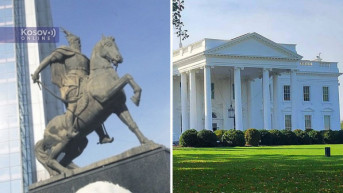
Relations between the White House and the government in Pristina will likely be put to the test following Kosovo’s elections on February 9. If the Self-Determination Movement continues to lead the future government, analysts believe that Albin Kurti will have to adjust his political course, as he carries heavy baggage from the previous Trump administration. On the other hand, improving ties with Washington would be significantly easier if the government were formed by opposition parties.
Written by Dusica Radeka Djordjevic
According to Richard Grenell, the US Special Presidential Envoy, Albin Kurti has brought Kosovo–US relations to their lowest point. However, if you ask Kurti, those relations have never been better. He made this claim yesterday at the Self-Determination Movement campaign rally in Urosevac.
"Kosovo has never benefited more from these relations. We received the largest-ever Millennium Challenge Corporation (MCC) grant of 202 million dollars for energy storage batteries," Kurti stated.
Opposition candidates for prime minister argue that Kosovo’s relationship with Washington needs an "overhaul." Bedri Hamza (Democratic Party of Kosovo – PDK) said that if his party wins the elections, the US will be the first place they turn to, emphasizing that Kosovo needs open doors in Washington. According to Hamza, Kosovo has not been sufficiently present in Washington in recent years.
Ramush Haradinaj (Alliance for the Future of Kosovo – AAK) stated that those doors will remain closed if Kurti stays in power, and cited Richard Grenell’s words. Haradinaj claimed that during their conversation in Washington, Grenell told him that Kosovo cannot expect any US support unless there is a change in leadership on February 9.
Political analyst Shkelzen Maliqi points out that when discussing Kosovo–US relations, it is essential to distinguish between Washington’s relationship with "Kosovo and its people", which remains strong, and its relationship with the current government.
"The Americans have consistently stated that they have no dispute with Kosovo or its people but rather that Prime Minister Kurti is the one obstructing processes or causing difficulties. The election results are now awaited, and we will see whether the situation here changes. It is certain that opposition candidates like Bedri Hamza and Lumir Abdixhiku are far more pro-American and have a better understanding of the situation than Kurti. But if someone with an anti-American stance is elected again, what then? In that case, part of the responsibility falls on the people as well, so we must be cautious," Maliqi stated for Kosovo Online.
Although Kurti occasionally says during his campaign that America is Kosovo’s strategic partner, Maliqi argues that he needs to demonstrate this in practice.
Aleksandar Sljuka, an associate of the NGO New Social Initiative, believes that Kosovo has not entirely lost America’s trust. Rather, he argues, it is Pristina’s current administration that has lost it, and rebuilding that trust would be significantly easier with an opposition-led government or a coalition of opposition parties.
"If Albin Kurti, who is seen as a problematic factor, remains in office, he will have to make a shift in policy," Sljuka says for Kosovo Online.
The US has been Kosovo’s most important partner for many years, both financially and in terms of international support, and Sljuka stresses that Kosovo needs the US far more than the other way around.
"If Kurti secures a third term, his administration will have to reestablish and improve relations with the US. The best-case scenario would be for Kurti himself to change course or for new figures within his administration, those with connections to individuals in Trump's team, to take the lead on this. We will likely see messages signaling a willingness to cooperate with all American administrations and to emphasize shared values. However, it will all depend on how this is received by the other side and whether Trump’s administration will be open to accepting this olive branch and moving forward, as well as how sincere both sides will be," Sljuka explains.
He says that tensions between Kurti and the US existed even during his first term.
"Richard Grenell and Trump’s circle were more aligned with other political actors in Kosovo, while Kurti expressed distrust toward them and was openly supportive of the Democrats," Sljuka points out.
As for the opposition, he notes that Alliance for the Future of Kosovo leader Ramush Haradinaj recently met with Richard Grenell in the US. He also highlights that the Democratic Party of Kosovo and the Democratic League of Kosovo have never had problematic relations with the US administration since Kosovo declared independence.
However, Sljuka believes that Trump and his top officials will not focus much on Kosovo or Kurti, but Grenell will.
"The question remains how influential Grenell actually is within Trump’s administration and whether he has enough leverage to pressure Kurti over the poor relationship. We will see how things unfold in the coming period. First, we need to see who wins the elections. Kosovo is certainly facing a turbulent time ahead," Sljuka concludes.
Marko Savkovic, a senior adviser at the ISAC Fund, told Kosovo Online that at this moment, he does not see how Albin Kurti can mend relations with the US He emphasized that the first challenge would be regaining the trust of Richard Grenell, who has been tasked as a "roving mediator" for various crisis regions, including Kosovo.
"There is a lack of trust and a poor relationship, which ultimately led to the fall of Kurti’s first government a few years ago," Savkovic noted.
He emphasizes that in foreign policy, personal relationships between leaders are very important, whether marked by animosity or sympathy. However, they are not always decisive, as broader relations and interests also come into play.
"These relationships can influence policies and wider interests, affecting assessments of whether certain interests can be pursued under a given political constellation and with certain people in power. We will see who will assume the crucial position of US Deputy Secretary of State for European Affairs and their assistant, who will be specifically responsible for this region, and what kind of relationship they will have with Grenell. Judging by the profiles of the people Trump selects, they seem to have much more in common with Grenell than with O'Brien or some earlier mediators," Savkovic said.
However, he notes that Kurti also has the option of finding "other sponsors" for his "independent policy" in certain European countries, such as Germany and the United Kingdom, or Turkey, with which he has plans for acquiring weapons and military equipment.


0 comments