
Rapajic: New authorities in Belgrade and Serb List should cooperate in interests of Serbian people in Kosovo
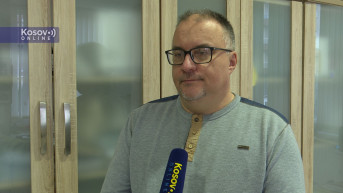
Despite their mutual animosity, the new authorities in Belgrade and the Serb List should overcome their differences and establish cooperation in the interests of the Serbian people in Kosovo, who already face enough problems, said Aleksandar Rapajic, Program Director of the NGO Advocacy Center for Democratic Culture.
Rapajic recalled that the Serb List has ten seats in the Kosovo Assembly and mayors in all ten Serb-majority municipalities, which is why he believes it is important to establish political cohabitation rather than create new divisions within the Serbian community.
“At this point, we have different political authorities in Kosovo and in Belgrade. We can see that there is animosity between these two political currents, but I believe that, for the sake of the Serbian people in Kosovo, who should be their common priority, they must cooperate and support one another. Although the political current to which the Serb List belongs lost the elections in Serbia, in Kosovo the List holds seats in the Assembly and has all ten mayors in Serb-majority municipalities,” Rapajic told Kosovo Online.
He pointed out that the current mayors would remain in office until the end of 2029, while the situation in the Assembly was more uncertain because elections could be held earlier.
“I think they should cooperate for the sake of the people in Kosovo and enter into this kind of cohabitation between the two political currents, in which they should work for the benefit of the Serbian people rather than oppose one another. We already have enough problems. We Serbs in Kosovo have more than enough of them, and we do not need internal political disputes on top of everything else,” Rapajic stressed.
Asked who, instead of the Serb List, could serve as an interlocutor for the new authorities in Belgrade, Rapajic said it was first necessary to wait for the new government to be formed and see who would be responsible for Kosovo-related issues.
“First of all, we do not even know who will represent the new authorities in Belgrade. We have to see how the new government will be formed and who will be appointed to deal with Kosovo. There are certain opposition currents here in Kosovo that I believe could cooperate better with the Students’ List in Belgrade. What I believe should not be done is to give greater legitimacy to Nenad Rasic’s party because, as far as we know, it did not receive legitimacy from Serbian voters but won its seat thanks to votes from areas where Serbs no longer live,” Rapajic said.
Speaking about the Belgrade-Pristina dialogue, Rapajic assessed that the process was currently dysfunctional and that additional political divisions could only make the position of the Serbian community in Kosovo more difficult.
“I think the dialogue is largely dysfunctional, and at this point we could even say that it is dead. So, can something weaken the position of a process that is not functioning? It cannot really weaken it. The problem is that it could create additional difficulties for the Serbian community living in Kosovo. We do not need new divisions and new problems now. We already have more than enough problems coming from the other side. I believe we should stand together and address those problems rather than divide among ourselves and create new ones,” Rapajic concluded.


0 comments