
Pavkovic: Establish technical coordination between new authorities in Belgrade and Serb List
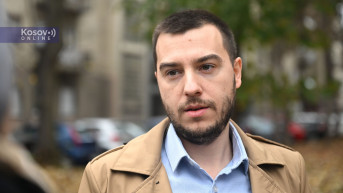
Milos Pavkovic, Strategy Director at the European Policy Centre in Belgrade, told Kosovo Online that, from a political and ideological standpoint, he understood the Students’ List’s position of refusing to cooperate with the Serb List in Kosovo, which it views as a “branch of the Serbian Progressive Party,” but stressed that, in the interests of national priorities and the rights of Serbs living in Kosovo, at least some level of technical coordination was necessary.
Pavkovic emphasized that, from the Students’ List’s perspective, the Serb List had not credibly represented the Serbian community in Kosovo and had been too closely aligned with the SNS, hence the aversion toward it and the firm position that there should be no communication.
“On the other hand, for the sake of national interests and, quite simply, the interests and rights of Serbs living in Kosovo and Metohija, I believe there needs to be at least some level of technical coordination, if not full-fledged cooperation, between the future government in Belgrade and the Serbian community. After all, the MPs in the Kosovo Assembly were, more or less, legitimately and democratically elected to represent the Serbian community, and the new authorities in Belgrade will have to establish some form of working relationship or working contact with them as such,” Pavkovic said.
He pointed out that the Serbian community in Kosovo had for some time felt let down by representatives of the Serb List, which, in his assessment, had lost legitimacy among fellow Serbs.
“And that is another important reason why the Students’ List refuses to cooperate with the Serb List, because they do not regard it as a credible representative of the Serbian community in Kosovo,” Pavkovic added.
Asked who within the Serbian community in Kosovo could instead serve as an interlocutor for the Students’ List, Pavkovic said that university-based plenums and “newly emerging” university representatives could potentially assume that role, but not the current university leadership.
According to him, representatives of civil society could potentially also serve as interlocutors, but not the international community.
“The international community remains an important point of contact, but they do not represent the Serbian community; they represent the missions and countries they work for,” Pavkovic stressed.
Pavkovic also believes it is uncertain how such a situation among representatives of the Serbian community would affect the dialogue with Pristina, which, he said, effectively “does not exist.”
“Political-level meetings have not taken place for several years, while the technical level continues to function. In that context, I do not expect this to have any particularly significant positive or negative impact on the dialogue. What will be important is if the dialogue gains momentum and we have a political-level meeting, potentially followed by the implementation of agreements—I am referring primarily to the Association of Serb Municipalities. At that point, the role of the political representatives of Serbs will grow and become more important than it is now,” Pavkovic concluded.


0 comments