
Could Belgrade host Russia–Ukraine peace talks?
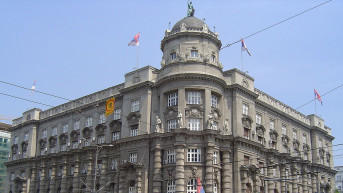
The proposal made by Serbia’s Minister of Foreign Affairs, Marko Djuric, for Belgrade to host peace negotiations between Russia and Ukraine has been welcomed by former diplomats and political analysts. Speaking to Euronews Serbia, they agreed that if Serbia were to host such diplomatic efforts, it would affirm the country’s position on the global stage as one committed to peace.
However, opinions vary on how realistic such a scenario truly is. This is not the first time Serbian authorities have offered to act as a mediator between warring sides. Experts in international affairs note that such an initiative would demonstrate Serbia’s willingness to contribute to peace through diplomatic and political means.
They add that Serbia’s current stance on the war in Ukraine has reflected its neutral position, grounded in respect for international law.
“If we’re talking about Europe, if this is a European issue and a European interest, then Belgrade has no competition. No one in Europe is as neutral in this matter and maintains open channels with both Moscow and Kyiv the way Belgrade does. Therefore, Serbia’s offer, and Belgrade’s offer, is entirely relevant and politically opportune—it aligns with the interest of the majority at this moment,” said diplomat Zoran Milivojevic.
However, analysts point out that organizing such negotiations is an extremely complex process requiring security guarantees, political stability, and complete discretion. They note that while the idea is theoretically sound, in practice it is difficult to implement.
“Even though it represents a kind of exit strategy for Serbian diplomacy, at this moment it’s absolutely unrealistic for us to host any gathering dedicated to Ukraine, especially under conditions where we have street protests, where countries like Turkey and certain Arab states are also interested in playing a role, and when Ukrainians and Russians—due to geographical proximity—still prefer Minsk. I don’t believe it is realistic for Belgrade to become the center of any new negotiations,” stated Dušan Prorokovic from the Institute of International Politics and Economics.
Commentators remind that Serbia has previously hosted pre-war negotiations between Russia and Ukraine, and that Belgrade was also the site of meetings between American officials and the Taliban during the conflict in Afghanistan.
They agree that such events present Serbia to the world as a neutral country and a suitable location for diplomacy, and that they demonstrate Belgrade’s experience in organizing such encounters.
U.S. State Department spokesperson Temi Bruce stated that American and Russian officials have exchanged new ideas regarding peace talks on Ukraine, but that this does not mean they are closer to reaching an agreement. U.S. Secretary of State Marko Rubio previously had a brief second conversation with Russian Foreign Minister Sergey Lavrov in Malaysia, on the sidelines of the ASEAN conference.
Lavrov said he had presented his American counterpart with statements made by Ukrainian officials, including President Volodymyr Zelensky and members of his cabinet, which he claimed amounted to calls for the destruction of the Russian people.
“I would like to respond with Donald Trump’s words: I won’t tell you—expect big surprises. I don’t know about big surprises, but you need to understand, since you know how diplomacy works, as you often travel with us—there are things I do not comment on. We talked about Ukraine and confirmed our position, as expressed by President Putin during a phone call with Trump on June 3,” said Lavrov.
U.S. President Donald Trump stated that he would send weapons to Ukraine, including Patriot air defense systems. He added that NATO would pay for the weapons deliveries. Following intensified Russian airstrikes, Ukrainian President Volodymyr Zelensky requested 10 Patriot systems.
U.S. Secretary of State Marko Rubio urged Germany and Spain to send some of their Patriot batteries so that Ukraine could receive air defense systems as soon as possible.

0 comments