
Czech stance on Kosovo back on a seesaw?
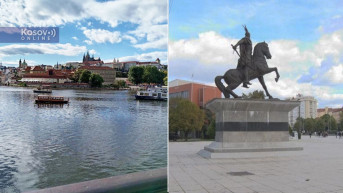
The Czech Republic recognized Kosovo three months after independence was unilaterally declared in Pristina, but it took a change of two presidents and a decade and a half to appoint its first ambassador. Prague’s top diplomat in Pristina is now in his third year, while the new foreign minister, Petr Macinka, is once again putting relations with Kosovo on a seesaw. His assessment that the government could have acted more cautiously and thoughtfully when recognizing Kosovo is not the first acknowledgment of a “misstep” from Prague, nor is it isolated within the EU, interlocutors told Kosovo Online. They do not foresee a decision to withdraw recognition on the horizon, but they do not rule out that the Czech Republic may not align with all of Kosovo’s demands and those of its recognizers within the EU in the period ahead.
Written by: Dusica Radeka Djordjevic
The Czech government recognized Kosovo on May 21, 2008. Václav Klaus, then President of the Czech Republic, stated in 2024 that he found it scandalous that Foreign Minister Karel Schwarzenberg recognized Kosovo without a government debate and without even informing the President.
“I was very angry with Schwarzenberg, and that should never have happened,” Klaus said in a joint interview with Milos Zeman, who succeeded him as president and who holds that the West’s collective recognition of Kosovo was a disgrace and a dangerous precedent.
It appears that Petr Macinka, Klaus’s former spokesperson and, since last December, Deputy Prime Minister and head of Czech diplomacy in Andrej Babis’s government, follows a similar line to the two former presidents on Kosovo.
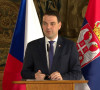
After talks with Serbian Foreign Minister Marko Djuric last week in Prague, Macinka stated that the Czech Republic recognized Kosovo’s independence nearly 20 years ago under certain pressure.
“I think the government at the time yielded to certain pressures, perhaps also to some connections that Schwarzenberg had with Madeleine Albright, who had significant interests in Kosovo. The government could have acted more cautiously then, but we do not wish to give this any new momentum now; we do not want to make theatrical, sudden moves,” Macinka said.
He also expressed the view that the Kosovo issue is primarily a Serbian matter and a regional issue, not an international one.
Aleksandar Mitic, a senior research fellow at the Institute of International Politics and Economics in Belgrade, says that Macinka’s stance on the Czech recognition of Kosovo is extremely important for Serbia and a significant indicator of how the current Czech government thinks about the issue.
“We know that, unfortunately, under strong pressure from the United States and, regrettably, due to manipulation by then-Foreign Minister Schwarzenberg, the Czech government was practically forced, against its will and against the majority, to recognize the so-called declaration of independence of Kosovo in 2008. Since then, the Czech political scene has seen very clear and strong voices against a move that is completely contrary to international law,” Mitic told Kosovo Online.
He recalls that both then-President Václav Klaus and Milos Zeman opposed the move.
“Zeman inherited from Klaus a policy of not opening a Czech embassy in Pristina. Unfortunately, that was followed by a rather destructive policy after the formation of the previous government, which fully aligned itself with something that is an outright violation of international law and established full relations with Pristina. However, with this new Babis government, we now have a coalition in which at least two partners are highly critical of the so-called unilateral declaration of independence, and we have Prime Minister Babis, who has always been quite pragmatic. He is someone who may not have challenged the so-called unilateral declaration, but on the other hand, he is not someone who pushed for recognition or for Kosovo’s accession to international organizations,” Mitic explains.
Nevertheless, he adds that the Czech Republic is not a country from which one can currently expect a withdrawal of recognition of Kosovo’s unilateral declaration of independence, although debates on the issue did take place, especially during Zeman’s tenure.
“On the other hand, in the coming period we will see a whole series of attempts by Pristina to join new international organizations in one way or another, and in that regard it is possible to expect Prague to take positions that may not be those of absolute non-recognizers such as Slovakia or Romania, but that may resemble what Hungary did under Viktor Orbán—that is, not agreeing with all of Pristina’s demands alongside other recognizers within the European Union. This leaves more room for maneuver for Czech diplomacy and more room for cooperation with our diplomacy. In any case, this is a very positive shift,” Mitic emphasized.
Diplomat from Pristina, Albert Prenkaj, notes that in 2019, during a visit to Belgrade, Czech President Milos Zeman stated that he would “consult the Czech government on whether it is possible to review the recognition of Kosovo.”
During Zeman’s tenure, he adds, Kosovo did not have the opportunity to be represented at ambassadorial level, even though the embassy had been opened in the early days following the 2008 declaration of independence.
He points out that raising representation to ambassadorial level should send entirely different signals.
“More positive ones, with enhanced cooperation and new bilateral agreements, and with numerous inter-state activities, up to high-level visits: foreign ministers, prime ministers, possibly presidents. Is this statement by the Czech foreign minister regarding recognition of Kosovo merely a temporary spin during a meeting with his Serbian counterpart Djuric, a consequence of a decline in bilateral relations between Kosovo and the Czech Republic, or a signal of shifting paradigms in international relations? Or has Zeman’s political line perhaps already returned to key state positions?” Prenkaj asks.
Beyond the Czech Republic, according to Slobodan Zecevic, director of the Institute for European Studies in Belgrade, parties on the far right in Germany and France are also questioning the correctness of recognizing Kosovo’s independence.
“Such reflections are particularly intense among far-right parties, AfD in Germany and Marine Le Pen’s National Rally in France. These are all parties that seriously question the correctness of recognizing Kosovo’s independence. The Czech Republic is one of the countries where this issue is being reconsidered and where there is reflection on whether that move was justified, given that it creates major problems in Europe, especially in the context of the Ukrainian crisis. This has affected relations between Russia, Ukraine, and the European Union in terms of a legal precedent,” Zecevic told Kosovo Online.
However, he emphasizes that thinking is one thing, official action another.
“Until we see a European country withdraw its recognition of Kosovo, we cannot say that revolutionary changes have taken place. It is good that the issue is being reconsidered in the Czech Republic, France, Germany, and in certain political circles. But there would have to be an act of derecognition for something fundamentally to change on the European scene,” he stressed.
How far do Prague’s words carry?
The Czech Republic has a population of 10.9 million and is among the ten most developed economies in the EU—but how significant is its political influence?
Mitic believes that the stance of the current government in Prague on Kosovo can have an impact within the EU. He notes that the Czech Republic is an extremely important country both within the European Union and within the Visegrád Group, which also includes Slovakia, an absolute non-recognizer of Kosovo.
According to him, Prague is seeking to maintain the best possible relations with both Bratislava and Budapest.
“We know that in practically none of the four Visegrád countries is there any particular enthusiasm regarding the so-called unilateral declaration of independence of Kosovo. The parties forming the ruling coalition in the Czech Republic, at the European level within the European Parliament, through the political groups to which they belong, can significantly influence those groups and help spread the view—both in the European Parliament and more broadly among EU member states—that the Kosovo issue is, in fact, a matter of the Republic of Serbia, a regional issue, as emphasized by the Czech foreign minister. This goes beyond mere rhetoric and I expect it to have practical repercussions in the future,” Mitic concluded.
According to Zecevic, the Czech stance could influence others in the sense of reinforcing similar thinking among far-right parties in Germany and France.
“It may have an impact in strengthening the thesis that Kosovo gained independence unjustifiably. But for now, there are no concrete political moves or decisions that would change the situation. If that happens one day, then we will be able to speak more seriously about a new situation regarding the Kosovo crisis and the recognition of its independence by certain states,” he said.


0 comments