
DAYS OF TERROR After 19 years since the Pogrom, the Serbs still live in fear
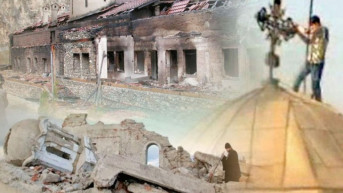
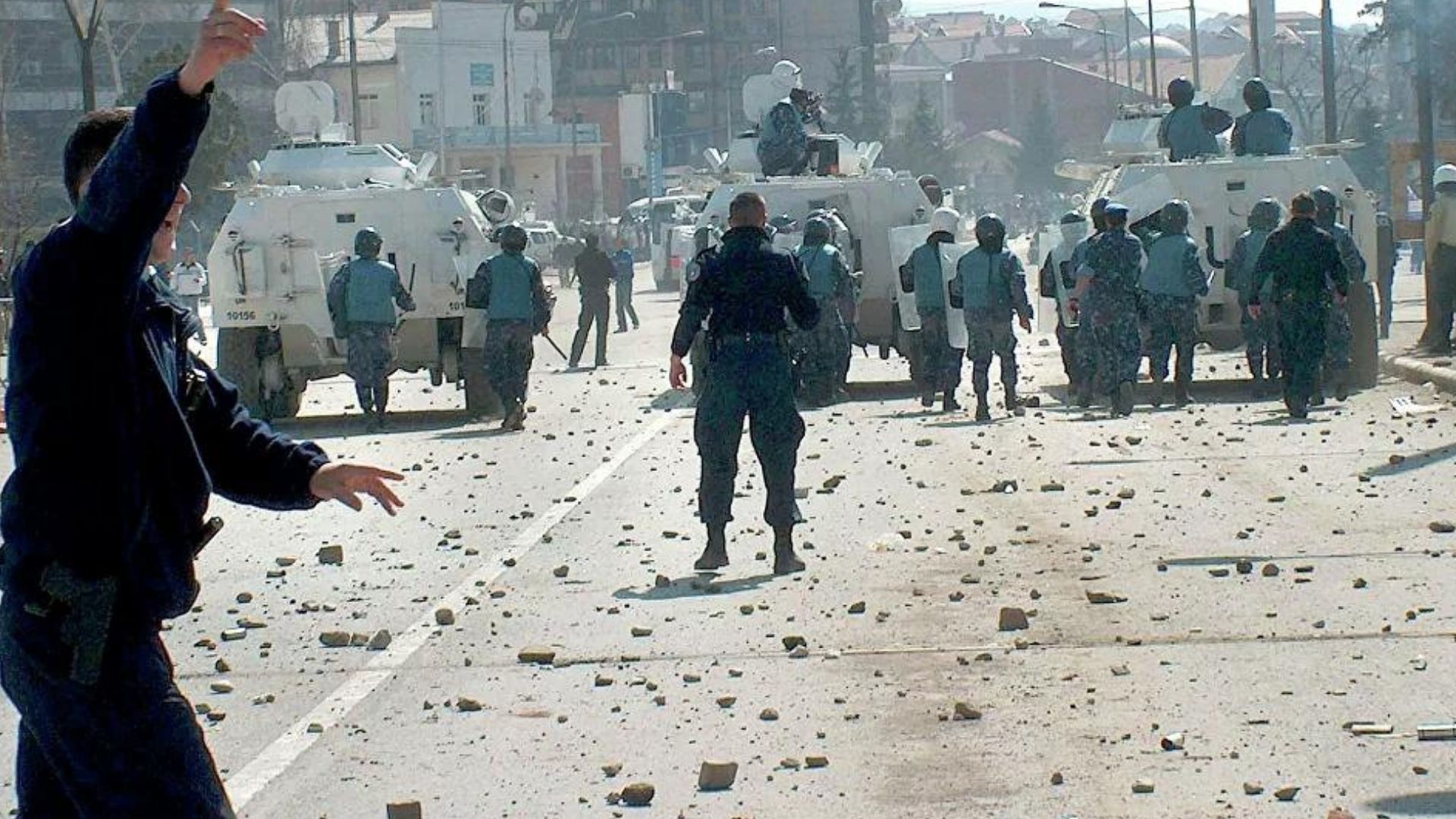
Nineteen years have passed since the violence of Albanian extremists and ethnic cleansing in Serbian areas in Kosovo on March 17 and 18, 2004, and the security situation for the Serbs today is even worse than in that period. Almost every day they are exposed to pressure, provocations, and violence with the aim of leaving their homes.
The March Pogrom took the lives of eight Serbs, in two days hundreds of people were wounded, more than 4,000 people were expelled, more than 800 homes were set on fire and 35 Orthodox temples and cultural monuments were destroyed or severely damaged.
The images of those March days in Kosovo have traveled the world, and one of the most striking will remain the one in which a young man tears down and throws a cross from the roof of an Orthodox church, which speaks unambiguously of the degree of the hostility of extreme Albanians towards the Serbs.
Even almost two decades later, the situation has not changed much. Since the beginning of this year alone, 24 ethnically motivated incidents have been recorded in Kosovo. Last year there were as many as 150, and in 2021, 128 such incidents were recorded.
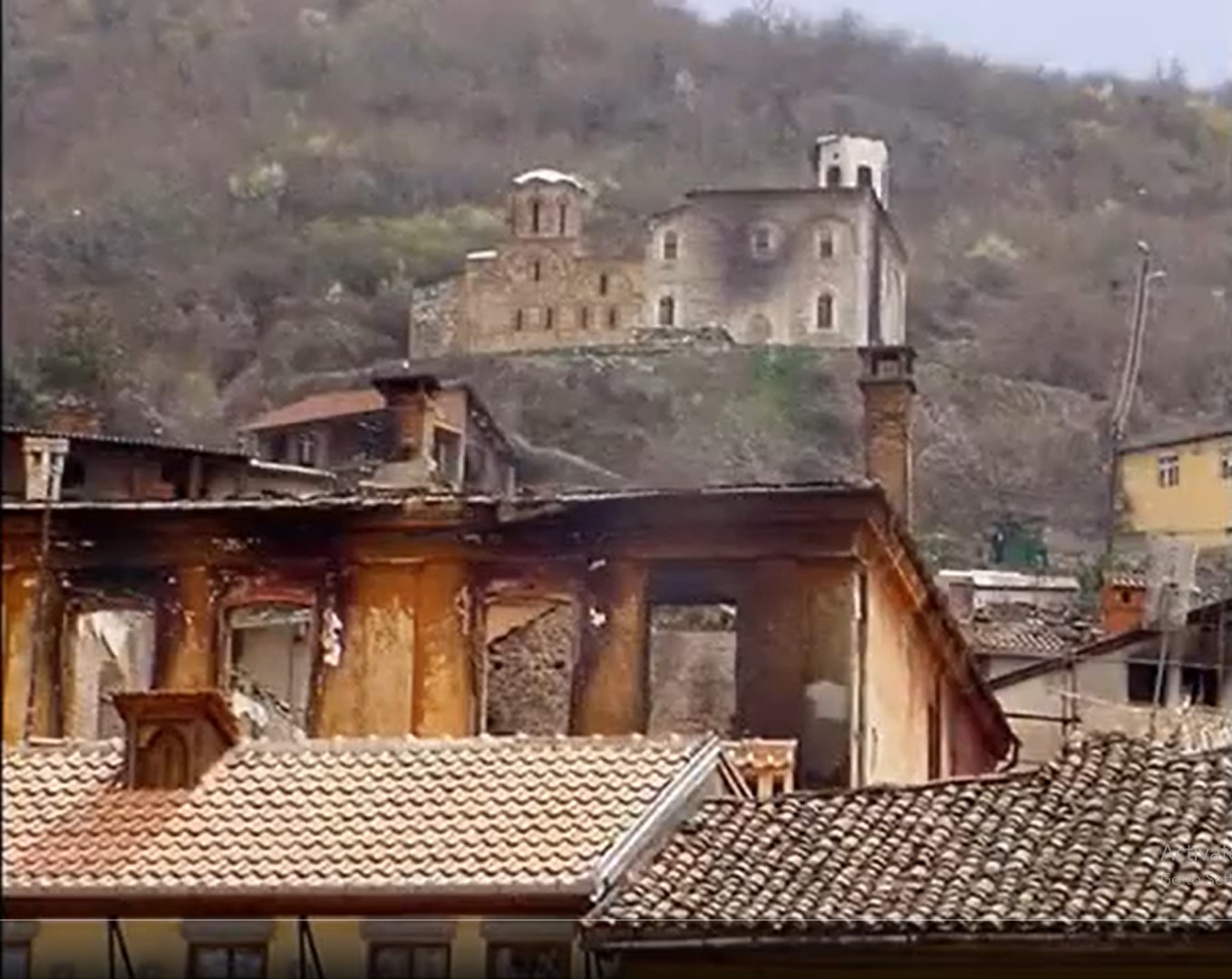
In the north of Kosovo, there are members of special units of the Kosovo police with rifles, who harass, beat and shoot the Serbs. The situation is not better in Sirinic either.
The vice-president of the Serb List and the president of the municipality of Strpce, Dalibor Jevtic, points out in a statement for Kosovo Online, that the situation in which the Serbs live is best illustrated by the fact that the attempted murder of Stefan and Milos Stojanovic, in Gotovusa on Christmas Day, was reclassified as a crime for which no prison sentence was even provided.
"In that one event and in everything that happened after that, you can get the best possible picture of the position of the Serbs in these areas and the attitude of the current government towards the citizens who come from the ranks of the Serbs," Jevtic said.
He points out that the position of the Serbs has never been more difficult, and there were, he reminds, different challenges.
"Our life has never been normal and easy, and when we say that it has never been harder, that speaks volumes for how challenging it is to live in Kosovo today and how difficult the work of our political representatives is, because we work in extraordinary conditions, in every sense of the word. These conditions require that our engagement be additional at every level, in every place, and at every moment, because it seems that everything that happens, happens for a reason – that the Serbs give up life and survival in these areas" Jevtic says.
He notes that all injustices, arrests, detentions, all attacks, and shootings, are all part of the ongoing process, especially from the moment when Albin Kurti came to power in Pristina and when it became clear that he would do everything to make the Serbs disappear from these areas.
"I read one of my interviews from 2018, and then I said that it was clear to us what the Albanians were doing and what their goals and intentions were, but that it would always, in the end, be what the power centers in the West decided. And that was confirmed in 2023 as well. It has always been the way the representatives of the international community are determined according to one process," Jevtic said.
Therefore, he adds, one must be wise and persevere in the goals, which are the life and safety of the Serbs in Kosovo and the further economic development of Serbia.
When asked if the Serbs were afraid of a new "Operation Storm" or Pogrom, Jevtic replied that the Serbs in Kosovo had been living in fear for a long time, and what had happened on January 6, when an Albanian had shot Stefan and Milos, it reminded all the Serbs of what we had seen and experienced on March 17, 2004.
Then, he recalls, in Strpce, a father and son were killed on their doorstep.
"We live in that fear, but on that day, and even later, that fear turned into strength, into national unity, expressed also at the big protest in January. We understand very clearly the message of President Aleksandar Vucic when he says that he will not allow another 'Operation Storm' or a Pogrom, and that gives us hope that something like that will not happen, because Serbia today and Serbia in 2004 are not the same, in terms of the political and economic position in the region and Europe," Jevtic said.
Fear, he says, has turned into unity, which gives faith and a sense of defiance, not stubborn spite, but the determination that, regardless of all the challenges, even when they shoot at the Serbs, they still do not give up on living in Kosovo.
"And so it is from Leposavic to Strpce, from Gorazdevac to Ranilug, everywhere where even one Serb lives, this is how it was reflected and is being reflected. In different ways, we are faced with attempts to move from here," Jevtic says.
As he says, physical violence happened on March 17, and today institutional violence is at work in Kosovo.
"It is happening through different methods, because maybe those who implement it count that it will give better results than the Pogrom of 2004 and that it will deal a strong and heavy blow to the Serbian community in the area of Kosovo and Metohija," Jevtic said.
Associate professor at the Faculty of Security Dr. Zoran Dragisic tells Kosovo Online that the security situation for the Serbs in Kosovo is very bad, which, he notes, can also be said for previous decades, since the eighties, since they have been under pressure and since they have been the victims of various crimes.
"If we are not talking about the war, but only about the times of so-called peace in Kosovo, we cannot even remember how many people died. Unfortunately, such a situation has not been rectified even today. The security of the Serbs cannot be rated as good and that is worrying and does not give bright prospects for the future," Dragisic points out.
What kind of situation do the Serbs live in and how do they persevere in their decision to stay and survive in Kosovo, only they know.
Regarding the real danger of a possible new program, Dragisic states that since Albin Kurti came to power, the rhetoric has been radicalized, but that the overall geopolitical situation is now such that Kurti would not dare, nor would anyone else try to carry out violence on such a scale - such as the March Pogrom of 2004.
That would certainly "fall on Kurti's head", Dragisic is convinced, adding that even the international forces in Kosovo would not allow it and that Kurti himself, who is not the least bit naive, knows very well what consequences it would have for him.
"That's why I don't believe that violence of that scale is possible, but I expect individual 'incidents' because it's all very well organized - to put pressure on the Serbs, to evacuate them, to make them feel insecure. This will continue in the future, but I don't expect any big actions to be possible. I don't expect any new 'Operation Storm'," Dragisic says.
He adds that the Americans and Europeans would not allow a new flame to flare up in Kosovo. On the other hand, it is quite certain that Serbia would not be silent about it.
"If anyone in Kosovo were to try to create a new 'Kosovo Operation Storm', Serbia would react to it, which would be the beginning of a new conflict on the territory of Kosovo, and probably beyond; KFOR forces will not allow that. I am sure that the Albanians will not dare to do something like that, because it would backfire. And, I think that in these geopolitical circumstances, they would 'turn a blind eye' even if Serbia reacted, but it would certainly mean a disaster for both the Serbs and the Albanians and that would push the whole region into conflict. That's why I don't believe that scenario is possible," Dragisic says.
On the other hand, Kosovo security expert Nuredin Ibishi says that when it comes to the security of all communities, "the climate is good".
"The climate is good, good environment and coexistence and good relations of all communities in Kosovo, except a little in the north where there are fewer tensions," is the impression of Ibishi.
He sees the security situation in Kosovo, as far as the communities of Serbs and other communities are concerned, as good, both individually and collectively, and assesses that "everything is under control".
When asked if March 17, 2004, could be repeated, he says that he is sure that it is not possible.
"It cannot and will not happen again. It was an extraordinary and unrepeatable situation, I think that at that time the transfer of authority from UMNIK and others to the local branches, the police, happened slowly and the Kosovo Police Service did not have full authority and it didn't have full control. So that can't happen again," Ibishi said.

0 comments