
By defending the bridge, the Serbs are defending freedom, that's why it is Kurti's target
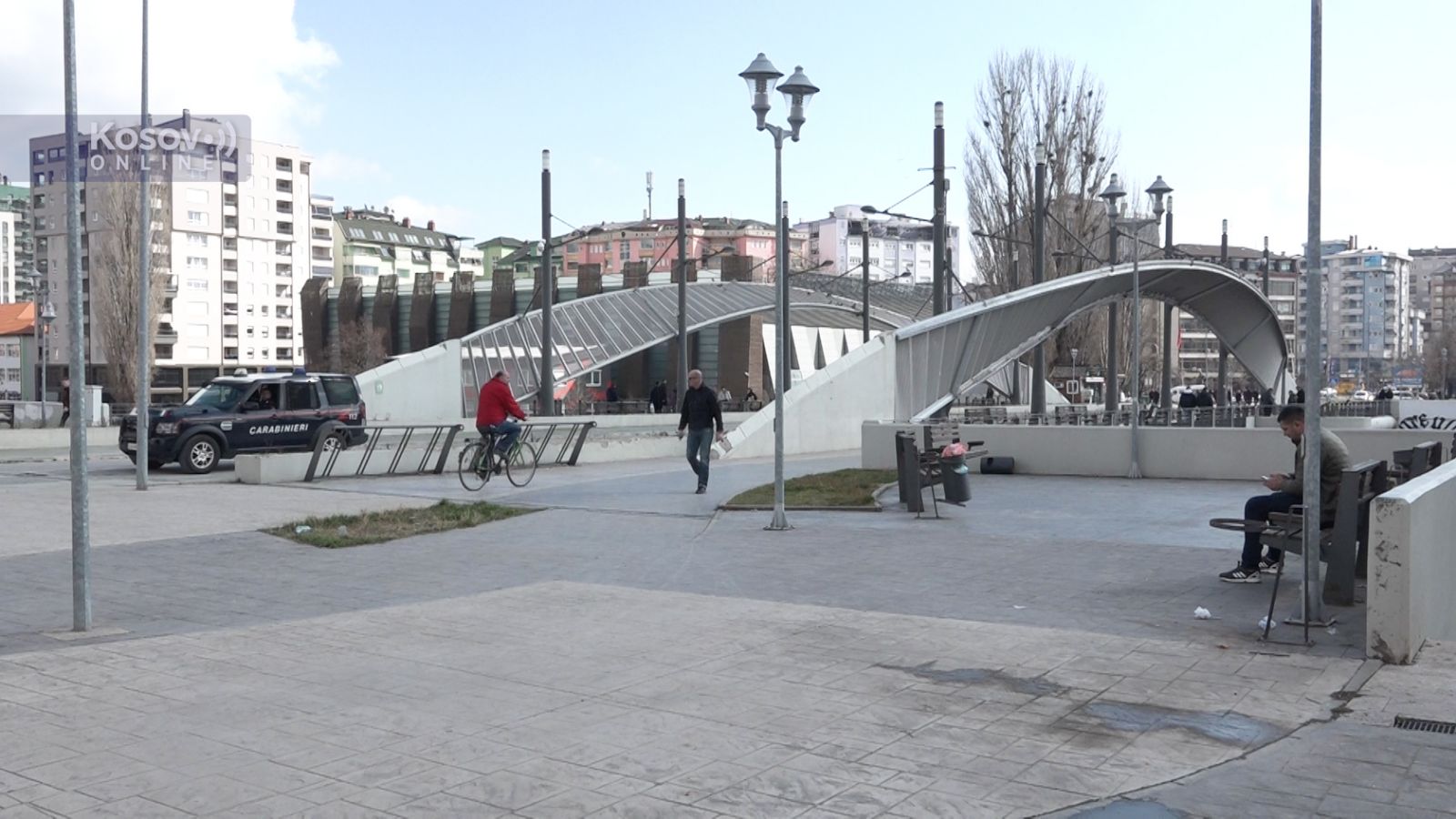
The decision of the Albanian councilors in the Assembly of the Municipality of North Mitrovica to submit a request to the relevant institutions to open the main bridge on the Ibar River that connects North Mitrovica with South Mitrovica to traffic, according to the Kosovo Online interlocutors, is another in a series of actions by Kosovo Prime Minister, Albin Kurti, which aims to put pressure on the Serbs in the north of Kosovo, and it is no coincidence that this initiative was launched on the eve of the summit at the highest level, on May 2 in Brussels.
The initiative, which was adopted on the proposal of the councilor of Self-determination in the local assembly, was assessed by the political representatives of the Serbs from Kosovo, as well as the official Belgrade, as a direct threat to peace and a violation of the Brussels Agreement.
The Serb List said that the initiative was illegal and illegitimate and that it had been adopted "by councilors without any legitimacy among the citizens" and that it was a continuation of the "occupation of the north by Kurti", as well as that it could have far-reaching consequences for the security and coexistence in the north of Kosovo.
The EU representative for dialogue between Kosovo and Serbia, Miroslav Lajcak, said that "it is not the time" for the main bridge on the Ibar to be opened. On the other hand, the Government in Pristina supported the initiative to open the bridge to traffic.
The President of Serbia, Aleksandar Vucic, assessed that with this move, Kurti wanted to "draw Serbia into a conflict with NATO" and that it was no coincidence that the initiative had been launched before the negotiations in Brussels on May 2.
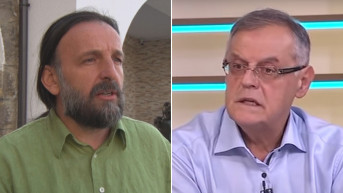
Writer and journalist, Zivojin Rakocevic, thinks that the request to open the main bridge on the Ibar to traffic is something that is "against reality and sense" and a direct attack on what the Serbs perceive as a symbol of freedom.
"For the Serbs, the bridge on the Ibar is an experience and a sense of freedom, and for the Albanians a symbol that should be transformed into a Serbian defeat and the completion of the Kosovanization of our lives. The bridge on the Ibar has become a symbol that separates freedom from non-freedom, for twenty years the Serbs from the south have known that freedom is on the other side. Defending that bridge of freedom, the late Oliver Ivanovic crossed south of the Ibar and jumped over the border they imposed on us. Now the processes are completely reversed, and we must never forget the sacrifices and efforts of those who defended the bridge," Rakocevic says.
According to him, everything that Mitrovica had that was important became part of that bridge.
"The current local government in Kosovska Mitrovica is the most insignificant political organization in the history of this city, and it proposes the most important decision that can threaten the city and the severely shaken sense of freedom. Against the will, against sense, against reality, and without democratic capacity, some unknown people are trying to destroy one city. That seems to be their only creativity and the role that is intended for them," Rakocevic points out.
Former Deputy Prime Minister and Head of the Coordination Body for Kosovo and Metohija Nebojsa Covic also assesses that the request to open the bridge is another provocative action by Kosovo Prime Minister, Albin Kurti, which aims to bring Belgrade into direct conflict with NATO.
Covic also believes that it is symptomatic that the issue was opened a few days before the meeting between Vucic and Kurti in Brussels.
"It's all related, whenever they can't implement something, they create an incident to divert attention, and that's technology, as technology was the Brussels Agreement. It's true that we got 10 years and that we've also done some economic-related things and many other positive things for the country, but it is also true that in 10 years they have also received a lot from the collective West and with accelerations," Covic says.
As Covic says, the story that Kurti is a problem for the collective West is not true.
"He is not their problem, he is their agent who continuously provokes Belgrade, and the goal of his provocations is for Belgrade to come into direct conflict with NATO, and that collective West pretends to be a little silly or crazy, and when they provoke, they plead with both sides..," Covic stated.
He recalled that he had personally signed an agreement with the former special representative Michael Steiner, of whom, as he noted, "thinks the worst", whereby Kosovska Mitrovica had been divided into two municipalities - South Mitrovica and North Mitrovica.
He also recalls that the main bridge on the Ibar was the scene of conflicts several times, and he says, he especially remembers the one when bombs were thrown that injured the Polish special forces, which he says "always stood out when it was necessary to attack the Serbs".
"We had several conflicts, there were bridge guards, and this current idea is a classic provocation along with a series of other provocations, which resulted from illegal, illegitimate, provocative, violent, and arrogant local elections in the area of four municipalities where less than 3.4 percent of citizens, and a total of 13 Serbs voted, and now they continue; they have some bodies that I would not call local self-government bodies," Covic said.
He also believes that the initiative to open the bridge puts additional pressure on the Serbs to leave Kosovo, which, he says, is usual and has been present for years, since 2001.
"I saw through them in that aspiration back then when we signed the first agreement with them after the NATO aggression, which was officially called the Covic-Heakkerup agreement, which was verified in the UN Security Council, and with which we participated in the first elections and won 21 mandates. We expected then that now it would be normal behavior, but we saw what the Serbs are for, and that is to be an ashtray on a motorbike," Covic says.
He points out that the Albanians are buying time with agreements, and the collective West is satisfying them through these agreements, arming them and "making them an army".
"Their concept is the ethnic persecution of all the Serbs from Kosovo and Metohija in order to reach the logic of a fait accompli, although this is now somewhat a fait accompli, which is what “you are talking about in Belgrade when there are no Serbs, that is, there are traces of them on Kosovo and Metohija”. That is the biggest obstacle - the north of Kosovo, but we must not forget the Kosovo Morava Valley, or Strpce, or the central part of the Republic of Kosovo - the Gracanica part, Lipljan, and the surrounding area," Covic said.
Covic says that the Serbs in Kosovo must endure and that Belgrade must help them as much as possible to survive. As he says, the collective West and the Albanians counted on that from 1999 until now, Belgrade would say "Oh well Kosovo, that's a noose around our neck".
He reminds that the President of Serbia openly says that he will never recognize an independent Kosovo and points out that Deputy Prime Minister, Ivica Dacic, also "said directly to their face - we will never recognize it" at the UN Security Council session. Nevertheless, he notes that the Albanians and the collective West are making dangerous maneuvers, such as the Council of Europe, which, he adds, is also a fait accompli.
"This is something that has never happened. The only reason for the existence of Kosovo and Metohija, as it is, is the UN Security Council Resolution 1244 and now they want to admit the territory, not the state, into the Council of Europe and into the international organization that deals with the rule of law and human rights. I'm keenly interested in how these eminent lawyers and world experts will explain, I roughly know, it's their new rhetoric, which is very hypocritical, but you have people who speak loudly against the Constitution, violating state and national interests," Covic says.
He notes that Belgrade should also be careful in the Open Balkan initiative, which, he adds, he considers a good initiative.
"Edi Rama appears in that initiative, who slyly and corruptly declares that relations between Belgrade and Pristina have never been better. What relations are like when they are bad, if they have never been better," Covic asked.
Covic reminds that there is also a Balkan initiative where Albania, Montenegro, North Macedonia, and Kosovo appear.
"I don't know if the Macedonians and Montenegrins are thinking, but the Albanians are obviously thinking, and Albania has territorial pretensions both on the territory of North Macedonia and Montenegro and on the territory of Kosovo, and that is the Greater Albania," Covic points out.
Covic repeats that Serbia must be careful at the present moment and not allow itself to be drawn into the conflict.
"We have to take care to protect our national and state interests, taking into account that Kurti is evidently their agent, a provocateur, who ought to provoke Belgrade to enter into conflict with NATO again," Covic concluded.



0 comments