
Diplomatic offensive in Africa: Who is the “Black Continent” closer to—Belgrade or Pristina?
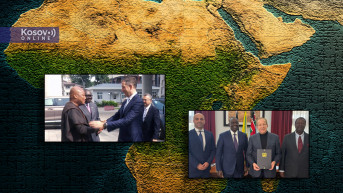
For Kosovo, the recognitions by African states Kenya and Sudan earlier this year are seen as key evidence of strengthening its international position. For Serbia, Africa is also crucial—but for safeguarding its sovereignty. In a kind of diplomatic “offensive” by both Belgrade and Pristina on the “black continent,” Serbian diplomacy, analysts say, has managed to prevent a “chain reaction” of new recognitions and to position itself with key countries in this part of the world.
Written by: Djordje Barovic
Kosovo’s caretaker Minister of Foreign Affairs and Diaspora, Donika Gervalla, told the Pristina Ambassadors’ Conference yesterday that the two new recognitions at the start of the year had “strengthened Kosovo’s international position.”
“We have secured membership in a significant number of international organizations, expanding the space for Kosovo to be present and active,” Gervalla said.
Opposition sees government results, including new recognitions, as proof of “historic failure”
“Minister Gervalla is today boasting of ‘two recognitions’ during this government’s mandate. But the truth is simple—neither of them was the result of this government’s work,” said LDK MP Rezarta Krasniqi.
Kenya recognized Kosovo on March 26, but the news was first announced on Facebook by businessman and Alliance for a New Kosovo president Behgjet Pacolli.
Sudan followed suit on April 12, with the news disclosed by Kosovo President Vjosa Osmani while in Switzerland. Osmani learned of the recognition from that country’s foreign minister—who was dismissed just a week later.
Late last month, Serbian Foreign Minister Marko Djuric visited Ghana and Benin as part of his “African tour,” stressing that “African partnerships are key to preserving Kosovo” [meaning Serbia’s position on Kosovo].
“Chain reaction”
Former diplomat Zoran Milivojevic is convinced that Serbia’s active engagement has prevented a “chain reaction” of Kosovo recognitions in Africa, and that this part of the world is an important component of Belgrade’s foreign policy strategy.
“(Kosovo) got one recognition, and another one which hasn’t been fully verified—I mean South Sudan. That remains an open question. But most of Africa is on our side, and that’s why these visits and investments in African engagement make sense,” Milivojevic told Kosovo Online.
He believes no new recognitions should be expected in this part of the world.
“There’s no chance that countries which haven’t recognized will change their stance. The global climate is shifting. Even Kenya’s recognition hasn’t had the expected effect—there’s no chain reaction. On the contrary, these visits help prevent it and disprove the notion that such a process is possible,” Milivojevic said.
He emphasized that many African countries understand the importance of the Kosovo issue for Serbia because they themselves face challenges in preserving their independence.
“A good number of these countries understand the essence of the problem. Those that haven’t recognized Kosovo are acting in line with their own interests,” he noted.
Milivojevic pointed out that Africa is undergoing a new wave of decolonization—especially in the part of the continent that Djuric visited.
“Some countries are freeing themselves from foreign influence—this is particularly true in sub-Saharan Africa, where Djuric visited Ghana and Benin. These are countries that understand the meaning of independence, the principles of international law, and the protection of sovereignty and territorial integrity. Africa is fertile ground for future investment, and the choice of these countries is no coincidence,” he explained.
For Serbia, Africa is—after Central America—one of the most important regions for protecting national and state interests.
“These are the two key regions for projecting our arguments and defending national interests. The choice of these countries and this continent is a direct answer to that need,” Milivojevic said, adding that Africa is of strategic importance for Serbia well beyond the Kosovo issue.
According to him, Serbia’s return to regions where it has “credit” from the past—such as during the Non-Aligned Movement era—is part of a broader foreign policy strategy. He also noted that Africa has become “a global focus of interest” and that most countries that haven’t recognized Kosovo are from this continent.
He singled out the “Mediterranean line” of Morocco, Tunisia, and Algeria, as well as Egypt, Nigeria, and South Africa.
“Egypt recognized Kosovo at one point but now behaves quite differently,” he noted.
Milivojevic sees Serbia’s interest in Africa as aligned with its foreign policy orientation toward political independence and military neutrality.
“The philosophy of non-alignment is in Serbia’s nature and points it toward cooperation with these countries,” he said.
The fight for recognition—and de-recognition
Constitutional law professor Mazllum Baraliu believes both Pristina and Belgrade are working to increase the number of African states that recognize—or de-recognize—Kosovo’s independence, with Serbia using the considerable influence of China and Russia in the region.
He said Belgrade has invested significant resources in getting countries to withdraw recognition.
“De-recognition doesn’t exist as a category in international law, but it happens. In this case, Serbia has invested significant resources and effort in trying to get some countries to withdraw their recognition of Kosovo—though it hasn’t succeeded to the extent it claims,” Baraliu said.
Further recognitions in Africa, he argued, depend entirely on the activity of Kosovo’s foreign ministry and other institutions—particularly given the strong influence of China and Russia, which has already been decisive in preventing some states from recognizing Kosovo.
He recalled that both Kenyan and Sudanese recognitions occurred this year, and that the future depends on how much effort Kosovo invests in securing more.
“It also depends on Serbia’s efforts to pursue de-recognition, even though under the Washington Agreement Serbia committed not to engage in such actions and not to block Kosovo’s membership in international organizations. But Serbia hasn’t stopped working on de-recognition,” Baraliu said.
In the future, he concluded, the process will depend on two factors: how successful Kosovo is in securing new recognitions, and how determined Serbia is in preventing them.
Diplomatic methods
Mijat Kostic of the New Third Way think tank says Serbia is engaged in a “foreign policy offensive,” which includes both the recent visit to the U.S. and Djuric’s “African tour.”
“This should be seen as an offensive diplomatic move by Serbia to prevent further recognitions of Kosovo or to persuade some states to withdraw recognition,” Kostic told Kosovo Online.
Commenting on Djuric’s visit to Ghana and Benin, Kostic stressed the importance of continuing bilateral cooperation, especially since Serbia can offer these countries infrastructure projects, investments, and cooperation in the defense industry.
Such partnerships, he said, could serve as an asset for Serbia in diplomatic battles against Kosovo in international organizations like Interpol.
He also noted that in today’s geopolitical turbulence, Africa is of crucial importance for Serbia—not only because each country has one vote in the UN General Assembly, but also because of the historical legacy of Yugoslavia’s Non-Aligned Movement.
Kostic added that cooperation with African countries is not only diplomatic and economic but also security-related, pointing to Djuric’s invitation for African leaders to attend this year’s arms fair in Belgrade—a continuation of Yugoslav-era defense industry ties.
Finally, Kostic said Africa’s own history of post-colonial struggles and secessionist conflicts makes many of its states sympathetic to Serbia’s position.
“African countries are in a unique position—they were born out of post-colonial struggles for independence, and many have faced civil wars or secessionist movements. Take the example of Sudan and South Sudan,” he concluded.


0 comments