
During the transitional period without a solution for the dinar, the uncertainty and anxiety of citizens are increasing
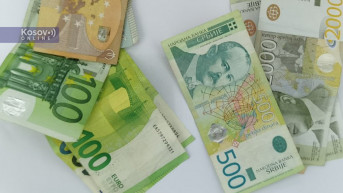
The three-month transitional period set by the Central Bank of Kosovo in February, intended to "ease citizens' access to financial services" following its decree to phase out the dinar from monetary circulation, has proven too short to resolve all the problems caused by this decision. With the expiration of the transitional period, uncertainty has only increased for citizens in Kosovo who receive their salaries, pensions, and other incomes from Serbia, as well as for those who have used dinars in their business operations.
It is still unknown whether the end of the transitional period will also mean automatic penalties for those who would use dinars, for example, to purchase groceries and other goods, and for traders who would accept dinars. Mostly outraged citizens have little hope that the troubles that have befallen them will be overcome even after tomorrow's seventh round of dialogue in Brussels on the dinar issue.
"Life is getting harder. I am an older person, my blood pressure and sugar are high, and I have to run around Serbia to get money. It's sad what they are doing to us, does the world see this? What is this Kurti doing, I don't know. We should all live in this environment as we used to. Why should we gouge each other's eyes out? Forget the dinar, let's live, it's hard and expensive anyway," complained Zorica Spasic from Gracanica to our reporters.
Although hoping for a solution soon, Milena Redzic Simic from Strpce says it will be much harder after the transitional period expires.
"It's quite a complicated procedure for us, to travel, withdraw money, and then convert it all into another currency. We'll see, we'll manage somehow," she said for Kosovo Online.
Vesko Stojkovic, president of the Pensioners Association in Gracanica, reports that there have been many cases reported to the Association where it was not possible to pay in dinars in stores, and there were also problems with paying for spa rehabilitation or vacation for pensioners. He believes that the international community failed during the transitional period, as it could have postponed the implementation of the CBK decision for a reasonable period.
The European Union's Special Representative for the Dialogue between Belgrade and Pristina, Miroslav Lajcak, seems to be more optimistic than the citizens. Yesterday, he expressed confidence that a temporarily sustainable solution for the issue of the dinar can be achieved.
Meanwhile, the Central Bank of Kosovo announced yesterday that during the transitional period, it conducted a series of activities to facilitate the implementation of the Regulation on Cash Operations for citizens. These activities included the licensing of commercial banks, the installation of 38 ATMs, the introduction of a helpline, easing conditions for opening bank accounts, and a temporary suspension of CBK fees.
Milica Andric Rakic, Program Manager at the NGO Civic Initiative, states that although the transitional period has expired, it is not logical to start implementing punitive measures until an agreement is reached on how citizens receiving incomes from Serbia can have their money transferred to accounts in Kosovo. She emphasizes that the transitional period was introduced before the Government of Kosovo acknowledged that there was a problem that needed to be negotiated.
"That period was meant for an information campaign aimed at encouraging people to open accounts at banks registered in Kosovo. Since then, the Kosovo side has recognized that the problem is somewhat bigger, and negotiations are ongoing on how to get the money into citizens' bank accounts. With this in mind, it does not make sense to change anything now until an agreement is reached, and it would be rational not to take any measures at this moment, although it has been announced that this period has ended. No solution has been provided to the citizens," Andric Rakic highlighted for Kosovo Online.
Milica Andric Rakic, however, reminds that many things that happened earlier did not make sense, which is why she adds that she cannot be certain that nothing will change.
"It's possible that they will start visiting commercial establishments and warning people to only accept euros, but when it comes to punitive measures, I am not sure it is wise from the perspective of the Kosovo authorities to do this until a solution is found for how people can receive money from Serbia into accounts in Kosovo. However, I must be cautious because there have been quite a few escalatory moves, especially considering that developments around the Council of Europe might not go as the Kosovo authorities expect. In that case, we can expect some kind of retaliatory actions against the Serbian community," says Andric Rakic.
Regarding the branches of Serbia's Post or Postal Savings Bank, she adds that there is also the possibility of closing them or seizing their assets, but that falls under the topic of closing temporary bodies, which the international community, specifically the USA, has reacted quite strongly to. Therefore, she believes that similar actions by the Pristina authorities can be expected now if they proceed in such a manner, hence they will likely wait with such moves.
Regarding the changes citizens should expect after the transitional period for the implementation of the CBK Regulation expires, Dragisa Mijacic, the coordinator of the National Convention on the EU for Chapter 35, says that at the branches of the Postal Savings Bank and its ATMs, as well as at the counters of Serbia's Post in Kosovo, dinars will no longer be available for withdrawal.
"Such transactions will no longer take place," he says for Kosovo Online, explaining that the use of dinars was abolished on February 1st, and the transitional period referred to a tolerance period for the operation of certain financial institutions such as the Postal Savings Bank and its branches in the north or for the use of dinars in retail outlets.
"We do not know whether the Government of Kosovo will start with some repressive measures and whether it depends on the Government or the CBK and what kind of measures would be applied to certain entities. What we do know is that the Postal Savings Bank, a financial institution linked to the National Bank of Serbia, has stopped cash transactions. In other words, you can no longer go to the Postal Savings Bank and withdraw those 5,000 dinars that you could have withdrawn until last week. You cannot perform other financial transactions at that level either, but work in retail establishments and receiving money in those establishments is still tolerated. It is not simple to abolish; this transaction occurs between citizens and sellers, and it would require a huge repressive mechanism of inspectors who could abolish the use of dinars in this way," says Mijacic.
He assesses that the CBK's regulation on the dinar has shown a significant issue in that the Serbian people, and other peoples tied to the dinar, are very attached to cash.
"We live in the 21st century, and you have the possibility of various cashless payments through cards or mobile applications, in different ways you can pay bills and necessities, but here people simply like to have cash. It meant a lot to certain people, particularly the older population, that they could withdraw those 5,000 dinars, and certainly, it will not be easy for them to go to the nearest crossing to withdraw money from an ATM. On the other hand, many will take the opportunity to go to central Serbia to buy products that cannot enter Kosovo at a much cheaper price and to withdraw their money, convert it into euros, and return to Kosovo with those euros," explains Mijacic.
Dragisa Mijacic does not believe in a quick solution in Brussels due to the political circumstances.
"Perhaps there will be a solution in the coming period, but the political circumstances are not right now. We have two aspects of this problem - at a technical level, it can be resolved easily, but on another, the political level, it requires political will. Now we are moving more into a phase of confrontation, and this will not bring about the concessions that are necessary to resolve this issue," Mijacic concludes.
Nemanja Zavisic, an analyst at the Center for Social Stability, believes that the transitional period, which lasted until May 12, was not sufficient as a compromise solution has not been found to this day. Zavisic says that the decision is political and has only one goal, which is to make life harder for Serbs in Kosovo so that they would leave their homes.
"The decision to ban the dinar is a unilateral decision by the institutions in Pristina, a unilateral decision by Albin Kurti who has only one single political goal, and that is to make life as difficult as possible for the Serbian people in Kosovo and Metohija," said Zavisic for Kosovo online.
According to him, there is once again silence from a part of the international community, primarily Brussels, which has done nothing in the past few months to reach some compromise solution.
Commenting on the anticipated financial penalties for all those caught using the dinar as a means of payment, Zavisic hopes that Albin Kurti will not cross that red line and will not start financially penalizing Serbs in Kosovo.



0 comments