
Zavisic: Transition period insufficient, aim of dinar abolition to force Serbs to leave Kosovo

Zavisic has stated that the transition period was insufficient and claims that the goal of abolishing the dinar is to force Serbs to leave Kosovo. This perspective suggests a strategic move aimed at creating economic and social pressure on the Serbian population in Kosovo, potentially leading to their displacement.
According to Zavisic, the abrupt change in monetary policy, without adequate time for adjustment, disrupts the daily lives of many residents. This disruption particularly affects those who are deeply tied to the dinar, as well as local businesses that rely on dinar transactions. The economic instability caused by the abolition of the dinar, he argues, could lead to increased emigration of the Serbian community from Kosovo.
He also points out that the current three-month transition period was insufficient for businesses and individuals to adapt to the new regulations. The sudden enforcement of these regulations has left many without viable alternatives, exacerbating their financial struggles.
Zavisic’s comments reflect broader concerns about the long-term implications of this policy change. If the intention behind the regulation is indeed to pressure the Serbian community to leave, it raises significant ethical and human rights issues. The economic and social impact of such a policy could have far-reaching consequences for the demographic composition and stability of the region.
In conclusion, Zavisic calls for a reconsideration of the transition period and urges for solutions that do not marginalize or forcefully displace the Serbian community in Kosovo. He emphasizes the need for policies that promote coexistence and economic stability rather than division and displacement.
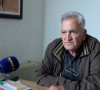
Analyst at the Center for Social Stability, Nemanja Zavisic, believes that the transition period given by the Government of Kosovo until May 12, when the complete ban on the dinar comes into effect, is insufficient because a compromise solution has not yet been found. Zavisic states that this decision is political and has only one goal: to further complicate the lives of Serbs in Kosovo, prompting them to leave their homes.
"It was not sufficient, primarily because the false institutions in Kosovo have done nothing to reach a compromise solution. The decision to ban the dinar is a unilateral decision by the institutions in Pristina, a unilateral decision by Albin Kurti, who has only one political goal, and that is to make life as difficult as possible for the Serbian people in Kosovo and Metohija. This decision aims to prevent our citizens in Kosovo and Metohija from living normal lives. This is why I believe that the time was not enough and that this unilateral decision is primarily directed against the Serbs," Zavisic said to Kosovo Online.
He adds that the purpose of this decision is to make life difficult for Serbs, who will now, when going to pharmacies, restaurants, stores, and similar places, not be able to use the dinar as a means of payment.
He points out that they will have to exchange dinars for euros, which will further complicate their lives.
"In this way, Kurti wants to create conditions in which Serbs will not be able to function and live normally in Kosovo and Metohija and to carry out what the Croatians did in 1995 in the territory of the Republic of Serbian Krajina, that is, to conduct a pogrom of our people," he said.
He emphasizes that Serbs in Kosovo cannot even exchange dinars for euros directly; instead, they have to withdraw their salaries and pensions in dinars and then exchange them for euros. The nearest places to do this are the administrative crossings Jarinje and Brnjak.
He adds that they can also go to central Serbia, which further complicates things because they need to pay extra for transportation and travel tens of kilometers to withdraw their salaries and pensions and convert them to euros, thus losing additional value in their earnings.
"Kurti has looked for every possible way to use this decision to make life harder for our people in Kosovo and Metohija. This is not a decision with merely financial consequences; it is an exclusively political decision designed with one goal, to prevent the Serbian people from living normal lives in Kosovo and Metohija, and to make all Serbs pack up and leave Kosovo and Metohija according to Kurti's wishes. That is the goal," he emphasizes.
According to him, there is once again a silence from part of the international community, primarily Brussels, which has done nothing in the past few months to reach a compromise solution.
Commenting on tomorrow's seventh round of dialogue between Belgrade and Pristina regarding the dinar, Zavisic says that the Director of the Office for Kosovo and Metohija, Petar Petkovic, will visit Brussels tomorrow to attempt once again to speak with representatives of Kurti's government. However, he personally is pessimistic about finding a solution.
"Personally, I am not optimistic and do not think that this conversation can bear fruit because Kurti, for everything he does, I would say, first ensures the support of the political West. Sometimes that support is open and direct, and sometimes it is tacit, as in this case, which is precisely why I am not very optimistic," Zavisic notes.
Commenting on the anticipated fines for those caught using the dinar as a means of payment, Zavisic expresses hope that Albin Kurti will not cross this particular red line and will refrain from imposing monetary penalties on Serbs in Kosovo.
He emphasizes that such fines would be a blow to their livelihood.
"Then the Serbs would be forced to respond adequately, meaning that our people would be driven to rebel against such measures that directly impact their livelihood. I hope that Albin Kurti will show some sense and that the international community, although we haven't seen it so far, will exert additional pressure on Kurti to postpone the implementation of this measure once again. This would buy some time, at least a few months, to try to reach a compromise solution because any solution that we want to implement in practice, any solution that is desirable in Kosovo and Metohija, is only the one that comes from dialogue between the two sides, without unilateral decisions, solutions, and impositions," said Zavisic.
Zavisic reiterates that he hopes the international community will do its job this time and force Kurti to delay the implementation of sanctions against the Serbian people.


0 comments