
Mijacic: Dinars will no longer be withdrawable at Post Offices and Postanska stedionica Bank
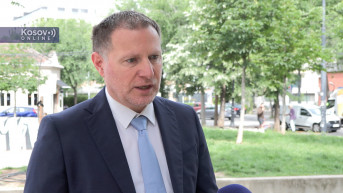
The end of the transition period for the implementation of the Central Bank of Kosovo's regulation, which eliminates the use of the dinar, means that dinars will no longer be withdrawable at the counters of the Postanska stedionica Bank, its ATMs, or at the counters of the Serbian Post Office in Kosovo. Such transactions will no longer be conducted, says Dragisa Mijacic, Coordinator of the Working Group of the National Convention on the EU for Chapter 35, to Kosovo Online.
He explains that the use of the dinar was abolished on February 1st, and the three-month transition period primarily pertained to the tolerance of certain financial institutions, such as the Postanska stedionica Bank and its branches in the north, or for the use of dinars in retail stores. He notes that the decision on the transition period was made in a rather non-transparent manner, as was the decision regarding its possible termination.
"We do not know whether the Government of Kosovo will implement any repressive measures and whether that depends on the Government or the Central Bank of Kosovo (CBK), and what kind of repressive measures would be applied to certain entities. What we do know is that the Postanska stedionica Bank, a financial institution tied to the National Bank of Serbia, has ceased cash transactions. In other words, you can no longer go to the Postal Savings Bank and withdraw the 5,000 dinars you could until last week. You also cannot perform other financial transactions at that level, but work in retail stores and receiving money in those stores is still tolerated. It is not easy to abolish that, as these transactions occur between citizens and sellers, and a huge repressive mechanism of inspectors would be needed to stop the use of the dinar in this way," Mijacic explains.
He adds that the CBK regulation on the dinar has highlighted significant issues, showing that the Serbian people and others who are tied to the dinar are heavily reliant on cash.
"We live in the 21st century and have various cashless payment options through cards or mobile apps; there are many ways to pay bills and necessities. However, people here simply prefer to have cash. For certain individuals, especially the older population, being able to withdraw those 5,000 dinars was significant, and it will certainly not be easy for them to go to the nearest border crossing to withdraw money from an ATM. On the other hand, many will take this opportunity to go to central Serbia to buy products that cannot enter Kosovo at significantly lower prices, withdraw their money, convert it to euros, and return to Kosovo with those euros," Mijacic concludes.
As another negative consequence of the CBK regulation, Mijacic notes the decline in turnover in retail stores in Serbian communities, which affects their ongoing operations and the salaries of employees in those businesses.
"There are many dimensions to this problem, and a solution must be found. Whether the solution is sought in Brussels or in the adaptability of the people who need to find ways to cope with this situation, we will see. It is easier to seek it on the latter side because it will be difficult to reach a solution in Brussels. People will manage somehow, though many will face significant challenges in doing so, while others may not feel much impact," says Mijacic.
He does not believe in a quick solution from Brussels due to the political circumstances.
"Maybe a solution will be found in some future period, but the current political circumstances are not favorable. We have two aspects of this problem—on a technical level, it can be resolved easily, but on a political level, political will is needed. Currently, we are moving more into a phase of confrontation, which will not bring the concessions necessary to resolve this issue," concludes Mijacic.
comments