
Effect of the census in Kosovo: Serbs between statistics and reality
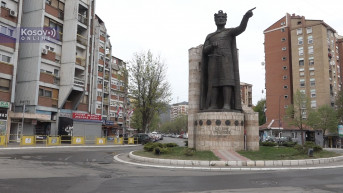
Based on preliminary census results, Kosovo has a population of 1,586,659. According to these data, just over 6,500 people live in the four municipalities in the north. For the interlocutors of Kosovo Online, this is just one of the obvious controversies, not only a result of the Serbs' boycott but also numerous irregularities that accompanied the entire process.
Written by: Arsenije Vuckovic
Statistics are like a bikini: they show a lot but don't reveal everything. The legendary sentence of Croatian sports commentator Drago Cosic seems to apply to the recently completed census in Kosovo.
"During the period 2011-2023, Kosovo's population increased by 203,294 inhabitants (positive growth). However, preliminary data show a decrease in the population," explained a slide during the presentation of the report by the Agency for Statistics.
But this is not the only inconsistency in the census results.
In Gracanica, a Serbian enclave in central Kosovo, 19,371 citizens live—almost three times more than in the four municipalities in the north.
In North Mitrovica, 2,346 citizens were registered, 435 in Zvecan, 758 in Zubin Potok, and 3,207 in Leposavic.
The Institute for Advanced Studies GAP indicated that around 20 municipalities will lose significant funds from Kosovo's budget due to the reduction in the number of residents and households recorded after this year's census.
GAP estimates that Prizren will lose the most, but Pristina will gain about 8.5 million euros in additional funds.
However, Avni Kastrati, acting director of the Kosovo Agency for Statistics, was much more specific today, at least regarding the Serbian community.
Stating that about 36,000 Serbs were registered, Kastrati said that some boycotted the process and would be punished for it.
"The number of Serbs we managed to register is approximately 36,000. This is data we have not yet published. These are Serbs in the south, but there are also those from the north. Most of the Serbian community in the north did not participate despite our efforts. We selected enumerators three times, selected a team, went out on the field. There were pressures, they did not participate. Even statistics will make an estimate according to international criteria and standards, and the final data, which will be released in December, will include this part with other indicators," Kastrati said.
Punishment is coming soon, he claims.
"Those who did not register will be punished in the coming months and years when they need support from institutions for documentation and other issues. If you did not participate in the registration, you do not have a chance to get a grant. If not registered, you cannot expect to win that grant; otherwise, as a first step, you must go and pay a fine for not participating in the registration," Kastrati warned.
Good and Bad News
Milica Andric Rakic, program manager of the NGO Social Initiative, told Kosovo Online that the census results show that there are many more Serbs in some areas than in 2011 and that the boycott in the north could indeed lead to smaller budgets for the four municipalities, but not to more serious political consequences.
"Not the entire Serbian community boycotted. The boycott obviously only happened in the north, while in other places, Serbs were registered because the only places where population growth was recorded are municipalities with non-majority communities. This is because they also boycotted in 2011, but now they recorded more people. For example, both Strpce and Gracanica have almost 80% more citizens now than they had in 2011. For them, this is good news because the municipal budget in Kosovo is defined according to a formula that includes the number of residents, and they can expect their budgets in the Kosovo system to increase in this sense, which is good news for them," said Andric Rakic.
However, she emphasizes that for the four Serbian municipalities in the north, despite the majority of Serbs boycotting the census, there will be no significant changes.
"Estimates will still have to be made to project the budget. It might decrease compared to what we had before 2012, when the administrative office was established in North Mitrovica, and then in 2013 when the Kosovo municipalities were formed in the other northern municipalities. Problems might arise here. The government could deliberately give a much lower estimate than the actual population, thus influencing a reduction in the budget, but these are the range of consequences," Andric Rakic points out.
She says she does not expect other serious political consequences and that it is not realistic to threaten that majority-Serb areas will be prevented from joining the Association of Serbian Municipalities due to the lower number of residents shown in the census.
"I don't think that is a realistic threat because the decision about majority-Serb municipalities is made through elections, not the census. If a Serbian option wins, it is a majority-Serb municipality, and if there are enough councilors within the local assembly to vote for joining the Association of Serbian Municipalities, then the census results are completely irrelevant. So, the only significant consequence will be on the budget projection for these northern municipalities," says Andric Rakic.
She emphasizes that the boycott of the census in Kosovo dates back to the 1990s, and that the international community will not consider these results valid either.
“It is simply not serious to take them seriously. Whoever wants to work with the municipalities in the north will have to do as before, because this is not a new situation since there has been no census in the north since the 1990s. Anyone who wants to seriously engage in development projects, if we ever reach that stage, will have to make different types of population estimates. There are many methods to do this: based on the number of children in schools multiplied by the average family size, which is one formula... The number of electricity connections or sewage connections... There are simply many ways to estimate the population, especially in such a small area. We are not talking about half a million people,” explains Andric Rakic.
She does not rule out the possibility that in different political circumstances it would be possible to repeat the census only in the areas that boycotted it and reminds that such initiatives existed even after the 2011 census boycott.
“There was an initiative then to conduct the census only in the north. So something like that is possible. If the political situation stabilizes at some point, it is possible to have a partial census repeated only in the north,” says this activist.
When asked if the boycott by the Serbian community will provoke a reaction from the authorities in Pristina, Andric Rakic says that there is no room for more serious abuses, except verbal ones.
“I don’t believe, I don’t see how these results can change the intentions of Pristina for better or worse. They are as they are and I believe they would behave exactly the same regardless of what is planned to be done in northern Kosovo. It would happen the same regardless of whether the community participated in the census or not. I don’t see serious room for it to be abused in any way except for those verbal claims that these are not majority-Serb municipalities. But, the next local elections will change that. Simply, none of the Brussels agreements define municipalities as majority-Serb based on census results. So, I don’t see that there should be any problem,” concludes Andric Rakic.
Who is Responsible for the Boycott
Sociologist from Pristina, Dr. Ismail Hasani, believes that numerous irregularities were recorded during the census, but also that the boycott by the Serbian community is the result of the wrong policies of the authorities in Pristina, who did not want to find a way to explain to citizens that this process is in their interest.
“People need to be educated. I am talking about those who are in power. They need to be educated. You can’t go to people, in this case, Serbs, by telling them that it is an order from the Government of Kosovo. They will refuse it for various reasons, perhaps because of tensions, outside influences... They should have found ways to approach people and conduct the census peacefully,” Hasani told Kosovo Online.
He said that the census boycott harmed the municipalities with a majority Serbian population the most, as they will lose budget funds or grants for projects, and he doesn't understand why this was allowed.
“I see no reason except for the insane policy that Albin Kurti might have dreamed up or heard about where, in some normal countries, censuses are conducted at any time of the night or day,” Hasani explains.
When asked if the authorities in Pristina will use the fact that many Serbs were not counted, Hasani says the Kosovo government must consider them.
“Where will that Serb go, I wonder? He is not a criminal. Those who committed crimes are not here. Unfortunately, some fled out of fear and repression after the war, even though they were not guilty. But those who stayed and work their fields and live off their labor, they are here. The government must consider them. Why didn't someone participate in the census? Because the Ohrid Agreement, which was clear and loud, was not implemented: Complete your homework. This was said to both Kosovo and Serbia,” Hasani concludes.
"Locked System"
Political scientist Ognjen Gogic believes that the authorities in Pristina will try in every way to use the census results and the boycott to question the guaranteed rights of the Serbian community.
"Self-Determination, the ruling party in Kosovo, uses every opportunity, every pretext to question the rights guaranteed to Serbs in Kosovo. And it's not that they won't try to question some of those guarantees again in light of the census results, but those guarantees are so complicated to change that this is what prevents them," Gogic told Kosovo Online.
He explains that Kosovo's constitutional system is "locked" regarding any changes to the rights enjoyed by Serbs because amendments require their consent.
"Self-Determination has its hands tied on some majority issues. Otherwise, they would gladly take the census results and say - there are far fewer Serbs living in Kosovo, and therefore they do not qualify to enjoy the rights they currently do. But they can't do that, fortunately for the Serbs," Gogic emphasizes.
He warns that the problem with the census was not only the boycott by Serbs but also the fact that many could not register.
"We can talk about a greater extent of the boycott in northern Kosovo, but both in the north and in areas south of the Ibar River, citizens reported that they did not have the opportunity to register. And that's what has remained unaddressed. Insufficient effort was made to ensure that people had the right to register and then obtain an accurate picture," Gogic warns.
He adds that there will be concrete consequences of the Serbian boycott, mainly through reduced budget funds for the four majority-Serb municipalities in the north.
"That will be a direct consequence of this census. This allows Kurti and the central authorities in Kosovo to continue exerting pressure on northern municipalities. In light of the census results, which are the only authoritative ones for them, they will likely reduce budget transfers to municipalities in northern Kosovo and possibly apply other restrictive administrative measures, citing census results that show a very small number of people living in northern Kosovo," Gogic believes.
He adds that the census results will not affect the rights of the Serbian community, as evidenced by the boycott of the 2011 census.
"We should remember that Serbs also boycotted the 2011 census, and to a greater extent. Most Serbs from both the north and the south boycotted it then. This generally did not have significant consequences on the enjoyment of constitutionally and legally guaranteed rights that the Serbian community has. These rights exist regardless of the actual number of Serbs living in Kosovo. The biggest problem with that previous census was that it determined the number of residents living in the municipalities, so the municipalities with a Serbian majority did not have an accurate picture of the number of residents, which affected the budget funds they received, and the transfers from the central budget," Gogic recalls.
He adds that the results in other areas where Serbs did not boycott the census, from Gracanica and Strpce to Serbian municipalities in the Pomoravlje region, show that there were no significant demographic shifts in the Serbian community, despite the recorded increase in Albanians and members of the Roma community.
“Demographically speaking, those municipalities are stable. They are small but stable. However, within them, there might be a slight shift in favor of the Serbian community,” Gogic believes.
He also warns that the Serbian community must be aware that the international community no longer has understanding for their conscious exclusion from processes in Kosovo.
“The fact that Serbs have excluded themselves from the process does not mean that the international community will now seek ways to bring them back into the process. They need to be aware that the international community no longer has patience for such actions,” Gogic states.
He concludes that the international community, like the OSCE, can conduct its analysis of the actual population numbers for its purposes, but this will not influence Pristina's decisions.
“The international community can use other data for its assessments, but this ultimately does not impact the enjoyment of rights. For instance, the international community will not intervene to increase the budget for northern municipalities or claim that the population there is higher than the census suggests,” Gogic emphasizes.


comments