
Elections are drawing near - who could form the government and are there any options favorable to the Serbs?
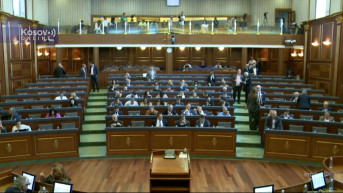
Albanian parties in Kosovo are currently in a low position for the upcoming parliamentary elections, which are scheduled for early next year, but it is speculated that they could be held earlier, perhaps as soon as the summer. According to the latest opinion polls, although Albin Kurti's Self-Determination Movement has a significant advantage over opposition parties, no single party would be able to form a government alone.
If the election results reflect such a balance of power, various post-election scenarios are possible, and sources interviewed by Kosovo Online assess that any coalition would be more favorable to the interests of the Serbian community as long as Albin Kurti is not a part of it.
A survey by the Pristina Institute for the Study of Public Opinion showed that the Self-Determination Movement would receive 40.9 percent of the vote, while the opposition LDK and PDK would receive half as much, 21.5 percent, and 20.4 percent respectively. The coalition between the AAK and Nisma would receive nine percent of the vote, while the Guxo list, led by Foreign Minister Donika Gervalla, would not surpass the threshold.
However, within the Self-Determination Movement, there are opinions that they could achieve an even better result than in 2021, with Enver Dugolli, a member of parliament, saying that early elections could bring them more than 50 percent of the vote. On the other hand, the deputy president of the Democratic League of Kosovo, Hykmete Bajrami, is confident that the LDK will be the winning party, while the head of the Democratic Party of Kosovo parliamentary group, Abelard Tahiri, believes that the next government will be formed by the opposition and that the Self-Determination Movement will no longer be a part of it.
Is there an opposition party that would like to join a new government with the Self-Determination Movement, and could the opposition govern alone? Which option would be more favorable for the Serbs, considering that all have already "shown" what they are like when in power since the previous governments were led by prime ministers from the PDK, AAK, and LDK?
In case the election results align with the latest polls, Miodrag Milicevic, the Executive Director of the NGO "Aktiv," believes that a government formed by opposition parties would be more likely than a post-election alliance between an opposition party and the ruling Self-Determination Movement. From the perspective of the Serbian community's interests, he says that previous governments were more acceptable than Albin Kurti's government. He also believes that if the parties currently in the opposition were to return to power, they would respect the fact that the Serbs live in Kosovo.
"I believe they would have a policy that nurtures interethnic relations to the extent that it involves respecting the fact that the Serbs live in Kosovo and that addressing the priorities of the Serbian community is primarily tied to the Government in Pristina, as well as to the progress of dialogue between Belgrade and Pristina," Milicevic says for Kosovo Online.
Research from several months ago, as indicated by Milicevic, showed that Albin Kurti's party was polling better and had the support of up to 46 percent of citizens.
"This is all, of course, a product of the policy being pursued towards the north and in the dialogue process in general, which entails denying everything that has been agreed upon, demanding formalization with signatures, de facto and de jure recognition of Kosovo's independence by Serbia, with the aim of gradually building up ratings and potentially preparing for possible elections during the summer. I say during the summer because that's when the diaspora returns, and Kurti enjoys great support from it, and it is assumed that if the elections were held during the summer, the percentage of votes would be much higher. However, according to the indicators, no one crosses that critical 50 percent mark that allows someone to independently form a government," our interlocutor says.
Milicevic points out that opposition parties have been experiencing various forms of pressure for a long time, especially in local self-governments where opposition parties are in the majority and where mayors are from the PDK and the LDK.
"It is unlikely that any of these opposition parties will form a coalition government with the Self-Determination Movement in such circumstances, for many reasons. There are serious political disagreements, primarily related to damaged relations with international partners, especially the USA. If the percentages remain as they are, it is more likely that we will see a coalition coming from the ranks of opposition parties rather than one that any party would make with the Self-Determination Movement. At least, that's according to these current parameters because we are still not entirely sure when the elections will take place and what will precede them," Milicevic says.
When asked which post-election combination would be more favorable for the Serbian community, he says that at this moment it is clear that the connections between the Serbian community and Serbian political representatives with the current government are almost completely severed. This type of dialogue, as he emphasizes, does not exist, and that is the biggest problem burdening intra-political and inter-ethnic relations.
"What is currently happening is the absence of any political dialogue where it should be, and that is the Kosovo Assembly. When you have such a situation, it is quite clear that all previous governments were more advanced compared to Self-Determination and the policy being presented now. This type of current policy is actually a policy of fait accompli where you have no room to react, but are reactive to the decisions made in Pristina. Any attempt to seek compromise becomes an impossible mission, and that is the biggest problem society faces. For the Serbian community, it would be far better to have a constructive government in Pristina that, instead of populism, uses any communication channel including civil society to improve inter-ethnic relations, establish dialogue, and above all, understand the issues the Serbian community in Kosovo faces. At this moment, such a dialogue does not exist. All other governments in that sense were far more acceptable to the Serbian community compared to the current one," Milicevic says.
Analyst Artan Muhaxhiri believes that no opposition party after the elections will want to cooperate with Albin Kurti if it is not known how he will behave regarding the final agreement with Serbia. He also notes that Self-Determination's populism and Prime Minister Kurti's achieved results while opposition parties lack a strategy to deal with that and are not working to reduce the popularity of Albin Kurti.
"If the elections were held this year, the results would be similar to what the polls show, of course, barring any dramatic events. In such circumstances, Kurti has a very comfortable position. It doesn't seem like there are any other serious contenders for the top spot, and he knows he will win. But the problem will be who he will form the new government with, as he will have to share power with someone. The topic of dialogue with Serbia is crucial here because no party will cooperate with Kurti without knowing how he will behave regarding the final agreement in the dialogue with Belgrade and how that agreement will be defined and reached, given the significant pressure from the EU and the US. The question of this agreement will be the most important issue for the next government if the elections are held this year," Muhaxhiri says for Kosovo Online.
According to his assessment, three years of Kurti's government have passed without many good results.
“I don't think he has many cards in hand when it comes to the economy, improving the daily lives of citizens, or salaries, and he will focus on populism and the approach to northern Kosovo in the campaign. He will say that he has created a new reality and that the Kosovo Government has more authority in the north. The opposition will have a problem with this because they cannot politically attack him since they haven't done anything significant to solve the problems in the north in 20 years, they didn't have a strategy. For everything the opposition attacks him on, Kurti says, 'You haven't done that in 20 years,' so I don't think this will be a quality pre-election campaign. Kurti is a populist politician and will focus on topics that will bring him votes, and in the campaign, he will only talk about the sovereignty of Kosovo and not about how he has poor relations with our allies, the US and the EU,“ Muhaxhiri says.
As he notes, unfortunately, opposition parties are also not well-prepared on economic issues and cannot make promises regarding salaries, so the status quo will continue, and the main topic in the campaign will be dialogue with Serbia.
Regarding which coalition would be “least bad“ for the Serbs in Kosovo, Assistant Professor at the Faculty of Political Sciences in Belgrade, Marko Dasic, tells Kosovo Online that the greatest damage to the Serbian community is “delivered during Albin Kurti's mandate.“
“One statement by Gabriel Escobar comes to mind, who said that if Kurti failed to deliver the results agreed upon in the dialogue in Brussels, they would try to find partners who would do so. Perhaps the elections are a chance for some new options to be politically profiled, and maybe citizens will trust someone else,“ Dasic says.
He recalls us that AAL leader Ramush Haradinaj stated that Kosovo did not have its own foreign policy but rather follows the policy of the United States and that Richard Grenell, former US President Donald Trump's envoy for the Serbia-Kosovo dialogue, vigorously and consistently claimed to have been closest to reaching an agreement with Aleksandar Vucic during his mediation.
“You don't have any foreign official who could claim something like that about Kurti. So, probably all other options appear more cooperative from the perspective of Western partners regarding the potential outcomes of the Belgrade-Pristina dialogue,“ Dasic says.


0 comments