
Elections, Kurti, and geopolitical tensions: No progress in the dialogue this year either?
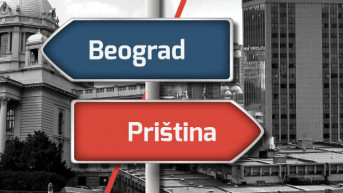
During the past year, the dialogue between Belgrade and Pristina stalled primarily due to political instability and the blockage of institutions in Kosovo, and analysts assess that there will be no progress in this process this year either. The issue of a second presidential term for Vjosa Osmani could lead to new elections in Kosovo, while elections in Serbia are expected toward the end of the year. Analysts also note that the Western Balkans are not in the focus of the international community, which is facing heightened tensions caused by U.S. intervention in Venezuela and threats toward Greenland.
Written by Jelena Novakov
Both Belgrade and Pristina have demands toward the European Union, including Kosovo’s request that Brussels pressure Serbia over alleged involvement in the attack in Banjska and lobbying against Kosovo’s membership in international organizations. At the same time, Serbia is insisting that the EU press for the formation of the Community of Serb Municipalities, something that, analysts claim, Albin Kurti has shown no interest in.
Dialogue with Serbia was not part of Vetëvendosje’s election program, and political analyst Dorajet Imeri previously pointed to the unwillingness of the parties to fulfill their obligations, assessing that Pristina is not ready for compromise even for the sake of good relations with the West.
U.S. foreign policy expert Charles Kupchan of the Council on Foreign Relations in Washington assessed that Acting Prime Minister Albin Kurti will not invest effort in dialogue with Serbia and will continue pressure on the Serbian community, which will also prolong disagreements with the United States and the EU. Daniel Serwer, meanwhile, says that the U.S. and the EU will exert pressure on the new government in Pristina to achieve progress in implementing the Ohrid Agreement and forming the Community of Serb Municipalities.
However, the extent of pressure that the U.S. and the EU will exert on Belgrade and Pristina is questionable amid heightened geopolitical tensions following the arrest of Venezuelan President Nicolás Maduro and renewed threats by U.S. President Donald Trump to take over Greenland from Denmark in March, when Kosovo is also expected to elect a new president, with the risk of new elections.
With a potentially electoral year in both Serbia and Kosovo, the European Union is expected to further shift focus away from the dialogue amid reports that it is preparing sanctions against U.S. technology giants and considering the relocation of U.S. military bases on European territory, while fighting in Ukraine continues.
Security studies researcher Nikola Vujinovic said there are three key reasons for the stalemate in the Belgrade–Pristina dialogue: Albin Kurti’s lack of interest, political instability in Kosovo last year, and the indifference of the international community, which, he assessed, has shown no willingness to pressure Kurti.
Vujinovic said he does not expect progress in negotiations this year because the international community has other priorities and Kurti has not been pressured to consider forming the Community of Serb Municipalities.
“I do not expect the dialogue to advance. I will cite three additional obstacles. The first is Mr. Kurti’s sweeping victory in the parliamentary elections, which will further complicate the possibility of international pressure. Second, within the EU, as mediator, Cyprus will assume the presidency. Cyprus does not recognize Kosovo as an independent state; for them, it is part of the Republic of Serbia, and therefore there is no need for any dialogue to continue. The third issue is the continuation of political instability,” he told Kosovo Online.
Vujinovic noted that there are already indications that Vjosa Osmani will not receive a second presidential mandate and that political parties in Pristina will enter negotiations to elect a new president in March, pointing out the possibility that Osmani could become the new head of Kosovo’s diplomacy.
“As a result, political instability in Kosovo and Metohija will continue, along with economic problems. On the other hand, the Republic of Serbia is also in an electoral year, as announced. Bearing in mind that especially the opposition in Serbia—whether parties or students in blockades—do not view Kosovo as a priority,” he assessed.
Vujinovic also remarked that Kosovo is not a priority at the international level, given the sharp rise in global tensions following Nicolás Maduro’s arrest and U.S. threats toward Greenland.
“That does not suit us, as the Serbian community, for the simple reason that it will only allow Kurti to further exert pressure and carry out his terror,” the researcher said.
He assessed that pressure on the Serbian community would have been lower had the opposition won the elections in Kosovo, but that there still would not have been major progress in the dialogue.
“Had the opposition achieved any victory, it would have been a very weak coalition government, but we would still have the circumstances of the Cypriot presidency and an electoral year in Serbia, so I believe pressure on the Serbian community would not have been as intense,” he said, adding that in such a case there would not have been incidents such as the removal of a Christmas banner in North Mitrovica.
An opposition victory, Vujinovic concluded, would nevertheless not have contributed to resuming the dialogue, because it primarily depends on the international community, which largely considers Kosovo independent and shows little interest except in extraordinary circumstances.
“For the continuation of the dialogue, an opposition victory would have absolutely no significance, because the dialogue depends on the international community, which largely considers Kosovo an independent state and is not particularly interested unless blood is shed or other extraordinary situations arise, while the United States is now seeking to take over Greenland. That is far more important to the EU than Kosovo,” Vujinovic added.
Kosovo Responsible for the Stalemate
Former chief Kosovo negotiator in the dialogue Avni Arifi told Kosova Press that Peter Sørensen and Kaja Kallas have not proven themselves in the dialogue, but that responsibility nonetheless lies with Pristina.
“When you do not have a government, there is no legitimacy for anyone to participate in the dialogue; that is why there was no dialogue. The main problem I have is that Kosovo is to blame for the lack of dialogue. That is, the reason there was no dialogue is that Kosovo was unable to establish institutions. These meetings that took place were social meetings to keep Sørensen’s spirit alive during his mandate—to talk to parties about what they think and what their vision is. Yes, completely—that is, insignificant meetings. Sørensen and Kaja Kallas did not prove themselves in the dialogue. This was prevented by our internal developments,” Arifi said.
GLPS researcher Arbëresha Loxha says that the European Union must carefully analyze Serbia’s behavior in order to achieve progress in the dialogue.
She cites Serbia’s approach and lobbying against Kosovo’s membership in international organizations, as well as the attack in Banjska, as violations of the Ohrid Agreement.
“We see no progress in terms of new steps within the Kosovo–Serbia dialogue due to the fact that we did not have a government with a full mandate, but we did have a government in power. On the other hand, political turmoil in Serbia has been continuous and has not allowed the Serbian government to pay attention to processes such as the dialogue. I believe that even the EU, for these two main reasons, has not made any efforts to achieve something concrete in terms of the dialogue. What is important to do in the Kosovo–Serbia dialogue is to achieve full implementation of past agreements. Also, to ensure full disclosure and the bringing to justice of all those responsible for the terrorist attack in Banjska. The Ohrid Agreement was initially violated by Serbia’s lobbying against Kosovo’s membership in international organizations, and then by the terrorist attack in Banjska,” she emphasized.
Acting Prime Minister Albin Kurti says that for the dialogue to continue, agreements must be implemented.
“In order to continue the dialogue, we must implement the agreements. But to continue the dialogue, of course, Milan Radoicic—the main terrorist who killed our police sergeant, the hero of Kosovo, Afrim Bunjaku—must be handed over to Kosovo’s security authorities, since there is a 160-page indictment by the Special Prosecution, together with 44 accomplices who sought to start a large-scale conflict in Banjska and Zvecan. They failed. They also failed in the subsequent blowing up of the Ibar–Lepenac canal, for which there is also an indictment, and they will fail every time. In addition, the European good-neighborly agreement, based on the Basic Brussels Agreement and the Ohrid implementation annex, cannot advance as long as Milan Radoicic is, as we speak today, closer to President Vucic than even his close security detail,” Kurti said.




0 comments