
Vujinovic: I do not expect progress in the dialogue, international community has other priorities
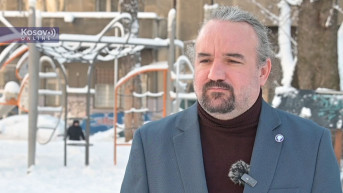
Security studies researcher Nikola Vujinovic said that there are three key reasons behind the stalemate in the Belgrade–Pristina dialogue, including Albin Kurti’s lack of interest, political instability in Kosovo last year, and the indifference of the international community, which, he assessed, has shown no willingness to exert pressure on Kurti.
Vujinovic said he does not expect progress in the talks this year because the international community has other priorities, and no pressure has been placed on Kurti to address the issue of forming the Community of Serb Municipalities.
“I do not expect the dialogue to move forward. I will cite three additional obstacles. The first obstacle is Mr. Kurti’s sweeping victory in the parliamentary elections, which will further make it difficult for the international community to exert pressure. On the other hand, within the EU as the mediator, Cyprus is taking over the presidency, a country that does not recognize Kosovo as an independent state, and for them it is part of the Republic of Serbia, so there is no need for any dialogue to continue. And the third issue is the continuation of political instability,” he said.
Vujinovic pointed out that there are already indications that Vjosa Osmani will not receive a second presidential mandate, and that political parties in Pristina will enter negotiations on the election of a new president in March, noting that there is a possibility Osmani could become the new head of Kosovo’s diplomacy.
“Because of this, political instability in Kosovo and Metohija will continue, along with economic problems. On the other hand, the Republic of Serbia is also in an election year, as announced, and given that especially the opposition in Serbia, whether political parties or students involved in blockades, do not view Kosovo as a priority,” he assessed.
Vujinovic also noted that Kosovo is not a priority at the international level, considering the sharp rise in global tensions following the arrest of Venezuelan President Nicolas Maduro and US threats toward Greenland.
“That does not suit us, as the Serb community, for the simple reason that it will only allow Kurti to further apply pressure and carry out his terror,” the researcher said.
He assessed that pressure on the Serb community would have been lower if the opposition had won the elections in Kosovo, but that there still would not have been significant progress in the dialogue.
“If there had been any opposition victory, it would have been a very weak coalition government, but we would still have had the circumstances of the Cypriot presidency and an election year in Serbia, so I think the pressure on the Serb community would not have been as strong,” he said, adding that in such a case there would not have been incidents such as the removal of a Christmas banner in North Mitrovica.
An opposition victory, Vujinovic concludes, would nevertheless not have contributed to the continuation of the dialogue, because it primarily depends on the international community, which largely considers Kosovo independent and shows little interest in it, except in extraordinary circumstances.
“For the continuation of the dialogue, an opposition victory would have absolutely no significance, because the dialogue depends on the international community, which in the vast majority considers Kosovo an independent state and is not particularly interested unless blood is shed or some other extraordinary situations occur, while the United States are currently seeking to take Greenland. That is far more important to the EU now than Kosovo,” Vujinovic added.



0 comments