
Albanian language official across the entire territory of North Macedonia or only in local self-governments?
The issue of the use of the Albanian language in North Macedonia has once again come into the center of public debate. The discussion gained momentum after the Constitutional Court decided to reject lawsuits filed by opposition Albanian parties challenging the “Safe City” system law, as it does not allow messages about traffic fines to be sent in Albanian as well. On the political and social scene, a division is evident in interpretations of whether the Law on the Use of Languages is being consistently implemented and whether Albanian is an official language throughout the country.
Written by: Darko Savanovic
While political analyst Sefer Selimi believes that the issue of the Law on the Use of Languages, which, as he says, implies the use of Albanian de facto as a second official language across the entire territory of the country, is more of a political question, his colleague Sotir Kostov argues that the only official language for international relations and across the entire Republic of Macedonia is Macedonian, and that any other interpretation is unscientific.
The public debate intensified after the Constitutional Court rejected a request to annul provisions of the Law on Misdemeanors related to the “Safe City” system. The Albanian opposition political bloc submitted several initiatives and requested a review of whether the use of the Albanian language is respected in communication with citizens when issuing fines for traffic violations registered in the “Safe City” system.
The President of the Constitutional Court, Darko Kostadinovski, announcing the rejection of these initiatives, said that messages about fines can be sent in Macedonian and English, but not in Albanian.
This decision of the Constitutional Court triggered a series of reactions among opposition Albanian political parties.
The Democratic Union for Integration assessed that Kostadinovski, through his actions, exceeded his authority and brutally intervened in the legal order and interethnic relations in the country, and called for his resignation.
The debate on the role of official languages was further intensified after incidents involving Minister of Education Vesna Janevska, regarding her statements about the use of the Albanian language at public events. In several public appearances, despite journalists’ requests for her to speak in Albanian or to bring an interpreter when addressing the media, she was categorical that Macedonian is the official language of the state and that she does not need an interpreter at public appearances.
The debate also involved North Macedonia’s Prime Minister Hristijan Mickoski, who from the parliamentary podium, responding to a question from an Albanian opposition MP, stated that according to the Constitution the official language across the entire territory is Macedonian and its Cyrillic script, but that the following article includes provisions for local self government units where ethnic communities use their language as official where they make up more than 20 percent.
Former President of North Macedonia Stevo Pendarovski has a different interpretation and believes that Albanian is also an official language, because Albanians make up 20 percent of the population, and that the main problem is the practical implementation of the law, especially by institutions and the judicial system.
“Albanians can use the language, but in many cases we do not see its full implementation in institutions and courts. It is important to ask whether these rights are applied in everyday life. The law defines the level, but we do not see it in actual use among people. An Albanian living here should ask whether these rights are applied in everyday life. And if, despite that, they are not fully implemented, then there will be those who would want to challenge even what is written in the law,” Pendarovski said.
The former president also said in that interview that one citizen had submitted an initiative to the Constitutional Court seeking to abolish the Law on the Use of Languages, which, he said, could cause a major problem if the law were repealed.
The Constitutional Court denied Pendarovski’s claims, stating that his statement was inaccurate and that it is not about “an applicant unknown to the public”, but rather 13 initiatives submitted by 45 applicants, including political parties, professors, lawyers, associations, and citizens.
“Furthermore, prejudging the Court’s decision, as well as assumptions about the possible consequences of the decision, represents an inappropriate approach that may affect not only the reputation of the Court, but also the perception of the legal order and the institutional integrity of the state,” the Constitutional Court of North Macedonia said in its response.
“An aversion toward the Albanian language is being created”
Political analyst Sefer Selimi assessed that the issue of the Law on the Use of Languages, which implies the use of Albanian de facto as an official language across the entire territory of the Republic of Macedonia as a second official language, is more of a political question.
“In one part of our society, an unnecessary aversion and resistance toward the Albanian language is being created, driven by nationalist and even chauvinistic reasons, reflecting intolerance or, in some way, rejection of the Albanian identity of the state. Therefore, political parties are clearly aiming to collect political points by using such approaches toward the second-largest community in the Republic of Macedonia, thereby undermining interethnic relations,” Selimi said.
According to him, in order to fully understand this process, it is necessary to recall that the use of the Albanian language was improved in several phases for various reasons, including resistance in part of society.
“The Albanian language as an official language is one of the pillars of the Ohrid Framework Agreement, an agreement that prevented a civil war in our country and shaped Macedonia into a civic state, where communities can freely nurture and express their identity without being discriminated against or subjected to restrictive or other measures that existed before the Ohrid Agreement,” Selimi said.
Asked how he comments on the request to the Constitutional Court to review provisions of this law, he said that it is legitimate and that every citizen has the right to submit such initiatives to the Constitutional Court.
“But the Constitutional Court must act with dignity in accordance with its obligations and competencies and not turn into an instrument of political parties or implement political agendas and goals. That is why it is very important that it acts as a responsible institution that makes decisions which can seriously affect the overall social climate, but also trigger serious processes that are like Pandora’s box and can lead to serious developments in the state,” Selimi said.
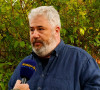
Political analyst Sotir Kostov says that the only official language for international relations and across the entire Republic of Macedonia is Macedonian, and that any other interpretation is unscientific.
“This matter is regulated by the Constitution and laws, and even by bylaws of local self-government units. We last amended the Constitution in this area, we had amendments arising from the Framework Agreement, and I remember very well that Amendment Five, now incorporated into Article Seven of the Constitution, regulates this matter very clearly and literally states: the official language across the entire territory of the Republic of Macedonia and in international relations is Macedonian. Everything is clear, there is no need for further explanation,” Kostov said.
He emphasized that paragraph 2 states that another language can also be official where members of a community make up more than 20 percent, in a manner regulated by this article in the bodies and institutions of local self-government units, and that this does not apply only to Albanian, but also to the languages of other ethnic communities.
“That is plural, not only Albanians, but also Turks, Bosniaks, Serbs, Vlachs, and all others in Macedonia when communicating with bodies and institutions at the state level. And this is the case when a local self-government unit can decide to declare a language as official, but within the local self-government unit, meaning local use. For state use, the only official language for international relations and across the entire Republic of Macedonia is Macedonian. Any other interpretation is unscientific,” Kostov said.
According to him, a smaller group of politicians and analysts and an even smaller number of journalists are “fueling” interethnic issues, which is why it is necessary to follow constitutional and legal norms.
“If we follow what Mr Pendarovski and some Albanian politicians, not all, are saying, we made a brief analysis, we would need to make changes in 68 areas, to fundamentally change almost everything, that means money, uniforms and so on, and then we would have to amend some 30 to 40 laws, many of which are systemic laws, and we as a state, as a nation, as a society do not have that kind of money, but this is what such misinterpretation leads to,” Kostov said.
“We do not need the albanization of Macedonia”
He pointed out that his analysis shows that in 31 municipalities in North Macedonia there is official use of languages at the local level in two or more languages.
“Most often there are two, then three, then four languages. And in four municipalities out of a total of ten in Skopje we also have official use in two and three languages. These include Albanian, Turkish, Romani, Serbian, Bosniak. There are now 80 municipalities in Macedonia including the city of Skopje. If in 31 of them languages are used in official use alongside Macedonian and minority languages, where do we see injustice? There is no injustice,” Kostov said.
According to Kostov, all relevant international experts and institutions, when assessing Macedonian society and the state in terms of democracy, rights, and freedoms of citizens, say that international standards and norms are applied even beyond what is required in the European Union and globally.
“This means that we are the most democratic state in terms of the use of language and script of Albanians, Turks, Serbs, Bosniaks, Vlachs, and so on. Let us now go by sectors: we have primary, secondary, and higher education, everyone can use their mother tongue, identity cards can be issued in one’s mother tongue, travel documents as well. In the media sphere we have television and radio broadcasting in other languages, with special programs. Not to mention national ones, we have the Second Service of MTV, we have a parliamentary channel. There are Albanian television stations, Turkish ones, Romani ones, and so on,” Kostov said.
According to him, there is no injustice or restrictive granting of rights regarding language and education and everything is regulated, but, as he said, someone wants to albanize the linguistic landscape.
“We have a broad framework and we simply need to adhere to the law and the Constitution, because any tampering with them entails changes to the Framework Agreement and reopening its analysis. It does not mention the Albanian language, it mentions 20 percent. Now some find that offensive. No, it does not refer only to Albanians, it refers to all minorities in the Republic of Macedonia. Everything is regulated, but someone wants to albanize the linguistic landscape. In a village like Cer, in Delcevo, in Mitrasinci, now I am going to the east, or down south in Valandovo, the Albanian language should be official. Why? This is Macedonia. We do not need the albanization of Macedonia because we have Albania, we have Kosovo. This is Macedonia,” Kostov said.
0 comments