
European army back on the agenda again – What stands in its way?
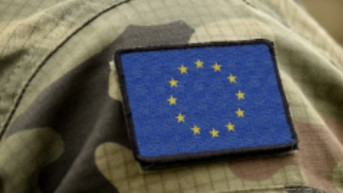
The idea of a European army, although difficult to implement institutionally, is once again back on the agenda. The European Union Commissioner for Defence, Andrius Kubilius, sees it as a necessity, while the EU’s High Representative for Foreign Policy, Kaja Kallas, considers it extremely dangerous. Observers familiar with developments within the EU, speaking to Kosovo Online, point out that the creation of such an army is not possible without a thorough revision of the Lisbon Treaty—a complex undertaking—that some member states would not abandon NATO membership for this purpose, and that, as in earlier attempts, the United States might try to restrain this European ambition.
Written by: Dusica Radeka Djordjevic
Reflections on a European army are as old as the European project itself, and a new round of discussion has been launched by Andrius Kubilius, the EU Commissioner for Defence, who believes that the EU should have a military force of 100,000 soldiers.
In light of Russia’s aggression against Ukraine, as he stated, and U.S. efforts to threaten Greenland, he advocates a rethinking of Europe’s common defence. He recalled that Jean-Claude Juncker, Emmanuel Macron, and Angela Merkel had already proposed a strong and permanent European military force more than a decade ago.
On the other hand, EU High Representative for Foreign Policy Kaja Kallas warned earlier this week that the formation of a European army would be extremely dangerous.
“The most important issue is the command structure: who gives orders to whom. If you have a European army and a NATO army, the ball simply falls between two chairs, and that is extremely dangerous. We must strengthen European defence, which is part of NATO and complementary to the Alliance. NATO should not be thrown out the window,” Kallas emphasized.
In previous years, in addition to Macron, the vision of a European army was openly supported by Spanish Prime Minister Pedro Sánchez and Italian Foreign Minister Antonio Tajani.
Research fellow at the Institute for European Studies in Belgrade, Milan Igrutinovic, assesses that the European Union is, with regard to Kubilius’s proposal, only at the intellectual and philosophical beginning of the debate and that, for now, there is no substantive discussion.
“These are, in a way, like bubbles in boiling water that actually show the level of nervousness in the European Union over the war in Ukraine, which is not ending, while on the other hand the United States is withdrawing as a supporter of Ukraine and pursuing a policy that is not only independent but already antagonistic toward the European Union,” Igrutinovic told Kosovo Online.
In his view, this is an attempt to float various ideas to the surface under security circumstances that are far from rosy. Apart from Kaja Kallas’s negative comment, he says he has not seen any positive reactions to Kubilius’s idea.
Although France has traditionally been a promoter of the idea of common European defence, it is now conspicuously silent on the issue, partly because President Emmanuel Macron’s political position has been weakened by the lack of a parliamentary majority, which limits his room for manoeuvre on the international stage.
“Spain is most often mentioned as interested, along with several northern European countries. However, Sweden, after joining NATO, has reoriented its priorities and I think it is not ready to do anything that Washington might react to negatively. This is now a double trap for Europeans. On the one hand, America constantly says ‘increase your defence spending, do more,’ but if a serious European initiative were to emerge and they said ‘we want to build our own army and create joint budgets,’ Americans might perceive that as competition and try to undermine it—which is in fact what they have been doing for decades,” Igrutinovic notes.
After victory in the Cold War, during the early 1990s, a European defence initiative—the European pillar of NATO—was being developed, but the Americans, he says, effectively closed that debate by insisting there should be no duplication of capabilities, arguing that NATO already provides Europe’s collective defence, which ensures the leading role of the United States and allows it to remain the key decision-maker in Europe.
According to security expert from Pristina Burim Ramadani, the idea of a European army is becoming increasingly vocal due to the war in Ukraine and diplomatic tensions between the U.S. and Europe, but he does not believe that the EU or European countries are capable of reaching that point.
“NATO will remain as it is, and I do not see Europeans forming an army, also because some European countries, such as Poland and Hungary, are very close in cooperation with the United States and therefore will not give up NATO membership to form a European army,” Ramadani told Kosovo Online.
Senior research fellow at the Institute of International Politics and Economics in Belgrade, Bogdan Stojanovic, also believes that the proposal to create a European army is very ambitious and difficult to realize.
Even if, hypothetically, all EU member states agreed to implement this idea, he told Kosovo Online, it could not be completed within the next ten years.
Defence, he notes, falls under intergovernmental cooperation among EU member states, and a great deal of time would be required to complete bureaucratic procedures, as decisions must be taken by consensus.
“100,000 soldiers is an impressive number. This is not the first attempt to create some form of European army. There was the Pleven Plan in the 1950s, and then the attempt to create battlegroups in 2007, when two battalion-sized groups of 1,500 soldiers each were formed, which never really took off. Now we are talking about a much larger number, and it is truly hard to believe,” Stojanovic stresses.
Conflict of competences with NATO
As another complicating factor for implementing the idea of a European army, he cites a conflict of competences with NATO.
“In which situations could such an army act without encroaching on NATO’s defence domain? Almost all EU states—23 out of 27—are NATO members, so this would create an additional conflict of competences. That is why this idea is still, as the defence commissioner himself said, merely for consideration. There is no concrete implementation plan, at least for now,” he points out.
He adds that the most powerful EU member states, primarily France and Germany, have always supported some form of strengthening strategic autonomy and independence in the security sector vis-à-vis the United States.
“Both France and Germany refused to be part of Trump’s Peace Committee, which sends a clear message on the one hand. On the other hand, we have the so-called new NATO members, the Eastern European countries, which have always been more oriented toward the American security umbrella. Almost no state has said anything concrete on this topic. It seems to me that no country wants to jeopardize the already fragile alliance that currently exists with the United States,” Stojanovic assesses.
Kubilius’s proposal, he says, comes at a moment of severely strained EU–U.S. relations and in the context of negotiations over ending the war in Ukraine, where the United States is negotiating with Russia, which has been the European Union’s arch-enemy.
“We now have a situation in which the United States is, in certain spheres, almost a greater adversary of the European Union than Russia itself,” he concludes.
How to create an EU army?
The formation of a European army, Igrutinovic explains, could not be carried out without a thorough revision of the Lisbon Treaty, which functions as the EU’s constitution and does not envisage the existence of a European army, nor the allocation of any EU budget funds for common defence.
In the accompanying protocols to the treaty, he adds, there is a fairly clearly defined hierarchy of military relations, and it is explicitly stated that NATO is the primary collective guarantor of security on European soil.
“That legal framework would have to be changed, which raises the issue of a possible revision of the Lisbon Treaty, requiring consensual agreement of all 27 member states, and it is very difficult to imagine that happening for this reason alone. Under these institutional and legal circumstances, it is practically impossible,” he notes.
Who would command?
If the idea of a European army were implemented, according to Igrutinovic, political control would be exercised by the European Council, comprising heads of state and government. There would also be a commissionerate for common defence, under which a classic military headquarters would operate, issuing orders to the troops forming the future army.
For rapid responses requiring short decision-making mechanisms, he believes decision-making would likely be delegated to the commissionerate, without the need to convene the European Council, which takes days.
“Certain decisions on responses by that army would certainly be reduced to qualified majority voting, in order to prevent a single country, due to specific interests, from blocking decisions. The decision-making mechanism would have to be relaxed, allowing some decisions to be taken by the European Commission without convening the European Council, while practical implementation would be left to the EU military headquarters, which exists but only as a rudimentary organization, not as a classic military headquarters with a broad spectrum of units—ground forces, navy, and air force,” Igrutinovic says.


0 comments