
Stojanovic: The proposal to create a European army is ambitious and difficult to realize
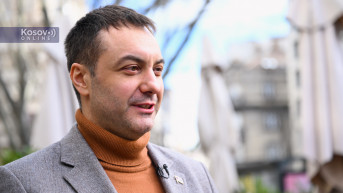
Senior Research Fellow at the Institute of International Politics and Economics, Bogdan Stojanovic, told Kosovo Online that the proposal to establish a European army is highly ambitious and difficult to implement, adding that even if all European Union member states were to hypothetically agree to pursue the idea, it could not be completed within the next ten years.
Defense, he notes, falls within intergovernmental cooperation among EU member states, and significant time would be required to complete bureaucratic procedures, as decisions must be taken by consensus.
“This is a hypothetical moment, and when we return to the reality on the ground, the project is even less feasible, because 100,000 troops is an impressive figure. This is not the first attempt to create some form of a European army. There was the Pleven Plan in the 1950s, and later the attempt to establish EU battlegroups in 2007, when two battalion-sized groups of 1,500 soldiers each were formed—something that never truly came to life. Now we are talking about a multiple times larger number, and it is really hard to believe this could be achieved,” Stojanovic said.
As an additional obstacle to implementing the idea of a European army, he points to a potential conflict of competences with NATO.
“In what situations would such an army be able to operate without encroaching on NATO’s defense mandate? Almost all EU member states—23 out of 27—are NATO members, so this would create an additional conflict of competences. That is why this idea is still, as even the EU Commissioner for Defence has said, only under consideration. There is no concrete implementation plan at this stage,” he explained.
Stojanovic adds that the most powerful EU member states, primarily France and Germany, have traditionally supported some form of strengthening strategic autonomy and independence in the security sector vis-à-vis the United States.
“Both France and Germany refused to be part of Trump’s Peace Committee, which sends a clear signal on the one hand. On the other hand, we have the so-called new NATO members—Eastern European countries—which have generally been more oriented toward the American security umbrella. Almost no country has made a concrete statement on this issue, beyond saying that Europe may need strategic autonomy, but without offering specific proposals. It seems to me that no state wants to jeopardize the already fragile alliance that currently exists with the United States,” Stojanovic assessed.
According to him, the proposal by EU Defence Commissioner Andrius Kubilius for the EU to consider establishing a permanent force of 100,000 troops comes at a time of severely strained EU–U.S. relations and in the context of negotiations over ending the war in Ukraine, in which the United States is negotiating with Russia, long viewed as the European Union’s principal adversary.
“We now find ourselves in a situation where, in certain spheres, the United States appears to be a greater adversary of the European Union than Russia itself,” Stojanovic concluded.


0 comments