
Turkish drones—A gift to Kurti ahead of elections or the final step in creating the Kosovo Army?
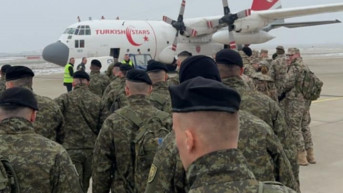
Cooperation between Türkiye and Kosovo in the fields of military equipment, training, logistics, and more is nothing new; however, the delivery of specialized loitering munitions (“suicide drones”) several months ahead of the agreed deadline—and immediately prior to local elections in Kosovo—has once again raised the temperature in the Balkans and prompted reactions from both Belgrade and Pristina.
Written by: Veljko Nestorovic
There is no doubt that military cooperation between Türkiye and Kosovo will continue—possibly even intensify—in the period ahead, and Ankara has made it more than clear how much it values its influence in this part of Europe and the Western Balkans.
It should not be forgotten that, under the plan adopted by the authorities in Pristina, the transformation of the KSF into the Kosovo Army is to be completed by 2028.
President Aleksandar Vucic emphasized that, in connection with the deliveries of “kamikaze drones” to Kosovo, Serbia both demands and appeals to the United Nations to react and to ensure respect for the resolutions that have been adopted, as well as for the UN Charter, and that Türkiye, as a partner and friend, respect the elementary norms of public international law.
“We demand and appeal to the UN to react and to ensure respect for the resolutions that have been adopted, and for the UN Charter. What we do not need at this moment is further escalation. We appeal once again to our Turkish partners to talk with us and take our interests into account. Türkiye’s conduct is of the utmost importance for the stability of this region. Therefore, I appeal to our Turkish partners and to President Recep Tayyip Erdoğan to consider not only their own interests, but those of the entire region, as well as those of Serbia as a partner and friendly country. We call for respect for the norms of international law, the UN Charter, and UN resolutions. We seek the closest and best relations with Türkiye, but we ask for respect for the elementary norms of public international law, as well as for the interests of Serbia and the Serbian people,” Vucic underlined.
He stated that he will always be a good host to President Erdoğan of Türkiye, adding that Türkiye is a great country and Erdoğan a great leader. Vucic recalled that more than a year ago, at Türkiye’s Permanent Mission to the UN, he held a bilateral meeting with President Erdoğan—also attended by Foreign Minister Hakan Fidan—at which he requested that Türkiye cease arming Pristina.
“I appealed and referred to Resolution 1244. I also referred to other instruments, from Resolution 1160 to the 2013 agreements. I asked that this not continue. We made the same request to the Americans, who explained that they had nonetheless made a decision regarding the Javelin,” he said.
Political analyst Bljerim Burjani, commenting for Kosovo Online on the acquisition of “Sky Dagger 15” drones from Türkiye, assessed that Kosovo is working to increase its military capabilities and that this carries no message to anyone—least of all to the states in the region.
“Kosovo has a new army which will increase the country’s defense capacities; these are just small steps in building the military capabilities for the country’s future defense,” Burjani said.
He stressed that this is nothing new and carries no particular message.
“While Serbia is purchasing aircraft from France, Albania is increasing its capacities as a NATO member. This drone purchase carries no message to anyone, not to any state in the region, as those states have invested a hundred thousand times more in military capabilities. It can be said that Kosovo is only at the beginning,” Burjani noted.
Analyst Predrag Rajic believes that Türkiye is the principal patron of Kosovo; that Ankara regards this part of Europe as its sphere of interest; and that it is on the offensive in the territories that once formed part of the Ottoman Empire.
“Let me recall that in 2008, when so-called Kosovo declared independence, Erdoğan said that a Turkish younger brother was born that day. So I would not say that any of this is new; this is merely a gradation and the crossing of new lines in the cooperation between Pristina and Ankara, where Türkiye now presents itself as the essential and key patron of so-called Kosovo—unlike Germany and the United States, which even make certain diplomatic decisions. We have seen Washington suspend the strategic dialogue—or preparations for it—with Pristina; in other words, diplomatic decisions by which they reproach Kurti’s conduct to some extent and at least give that kind of political reprimand. It is not substantive, but verbal in character—and from Türkiye he receives nothing of the sort,” Rajic said.
Regarding the delivery of drones, Rajic recalled the Bayraktars.
“They already delivered Bayraktars last year; we now see the delivery of loitering munitions, and that they will jointly produce drones. And not only that—they have made several other forays, sending, for instance, light weapons, anti-tank and anti-personnel arms, mines, and the like. So they have been engaged in this for quite some time. I would therefore say that this is perhaps the most significant step in that context, but that Türkiye is not changing its strategic decision to be the key ally of Albanians in the Balkans—specifically, Albanians in Kosovo and Metohija—and that they will continue with that project. They have also expressed readiness to fill any vacuum that might remain after a potential withdrawal of the Americans and Germans. In doing so, Türkiye is sending the message that, should the Americans—above all—fully withdraw, and there are voices in Washington under President Trump’s administration that this should happen, it will be the Turks who will fill the space,” Rajic stated.
Military analyst Vlade Radulovic emphasized that Türkiye’s work with the KSF involves not only the delivery of weapons, but also training, logistics, and exercises, and he underlined that yesterday’s delivery of “Sky Dagger 15” drones was influenced primarily by two factors.
“First, this is a message to us in response to the military parade held in Belgrade and to what was showcased there. Second, it is evident that they were delivered ahead of the elections because Kurti always skillfully exploits the issue of the so-called army—that is, the KSF—emphasizing the alleged threat from Belgrade and the hybrid war,” Radulovic said.
Security studies researcher Nikola Vujinovic assessed that the “Sky Dagger 15” drones that have arrived in Kosovo represent a continuation of Türkiye’s policy of arming Kosovo Albanians and that President Recep Tayyip Erdoğan clearly supports Albin Kurti as a political force in Kosovo. He nevertheless notes that he does not see in this a security threat to Serbia.
Vujinovic recalled that Türkiye has been arming Pristina for years and that, among NATO allies, it is the most operational in this regard. He also recalled the “Bayraktar” drones, likewise delivered from Türkiye, as well as the announcement of the opening of a munitions and armored-vehicle factory.

0 comments