
Even the biggest brands can't go to Kosovo: Will the appeal of companies from the USA stop the blockade of Serbian goods?
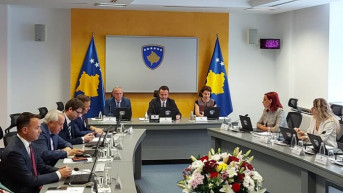
The blockade of the import of goods from Serbia to Kosovo, which had been introduced by the authorities in Pristina almost three months ago, was not only causing great damage to members of the Serbian community, as well as to the Serbian and Kosovo economy, but international brands were also suffering losses to a significant extent, the American Chamber of Commerce recently pointed out.
Data show that since the introduction of the blockade, "imports of goods by companies with significant US ownership have declined by more than 39 percent compared to 2022. The American Chamber of Commerce emphasizes the very bad impact that the current measures of the Government of Kosovo have on international companies.
Pristina maintains a "ramp" for Serbian goods despite numerous appeals from businessmen on both sides of the administrative line, experts, and Western diplomats who warn that the blockade is damaging the economy of the entire Western Balkans. The decision of the Government led by Albin Kurti, however, is still in force, but it is interesting whether the last warning of US businessmen will succeed in changing something in this regard.
Interlocutors of Kosovo Online positively assess the initiative undertaken by the American Chamber of Commerce and point out that the measures introduced by Pristina are purely political.
Economic expert and former president of the Kosovo Chamber of Commerce, Safet Gerxhaliu, reminds that not only the American Chamber of Commerce reacted to Pristina's measures, but that economists and businessmen from the region also pointed out their harmfulness from the very beginning.
He believes that in addition to all political conflicts with Serbia, it is not in the interest of Kosovo to create economic disagreements with European and American countries.
"It should not have been expected that only the American Chamber would react to Kosovo, all experts know that such barriers do not favor the economic development of Kosovo. If someone thinks that they will destroy the economy of Serbia through such blockades, it is a big deception. Today in Serbia there are more than 400 foreign manufacturers, these are world brands and simply, in addition to these political problems with Serbia, due to this state of dialogue, opening a new economic conflict with large European countries that have placed or transferred production to Serbia is not in the interest of Kosov. Therefore, I think that dialogue is the only solution. This needs to be resolved as soon as possible because everyone loses from the blockades, especially the citizens of the region," Gerxhaliu stressed.
He assesses that Pristina has taken certain steps in the direction of concessions, but that the request of the American Chamber is well-argued because the Government of Kosovo should "think rationally".
"I think that positive steps have been taken in that context; raw and unprocessed materials have been released, but I think that this is a well-argued request by the American Chamber and that it is time when the Government should think rationally because blockades lead nowhere," he said.
The former President of the Kosovo Chamber of Commerce says that business representatives can influence the decision-makers in Kosovo through existing economic initiatives and dialogue so that trade barriers are abolished as soon as possible.
"There are problems when it comes to the freedom of movement of goods, services, and capital; it is not only the case between Kosovo and Serbia, but also between Bosnia and Herzegovina and Serbia, Montenegro and North Macedonia, Albania and Macedonia, and between Macedonia and Serbia. Dialogue must be the mechanism by which all these problems will be solved, that's why there are regional initiatives that should be used, to address these problems and from that level of businessmen to put some kind of 'soft' pressure on the governments to abolish the barriers as soon as possible," Gerxhaliu concludes.
He says that the biggest consequences of the import ban are suffered by the population because the goods of foreign companies that can no longer enter Kosovo from Serbia come from other countries at much higher prices.
"The biggest problem is that people do not understand that such blockades do not benefit anyone, neither Serbia nor Kosovo, if here we already have a drop in the import of goods from Serbia and those goods are replaced by goods from other countries, in that context it is certainly felt the most by the consumers of Kosovo because trade is like water, it finds its own way. Now these goods do not come from Belgrade, Serbia, but come from Hungary, Bulgaria, and other European countries, but when the costs of transportation are added to that, I think we should think more rationally about who pays for that guild. If we already have a drop in imports by 50 million euros, no one analyzes what the drop is, that is, how much the drop in exports of goods from Kosovo is," Gerxhaliu said.
He adds that there is an opinion that Kosovo only imports Coca-Cola and Plazma biscuits from Serbia.
"If before the blockade, one bottle of Coca-Cola cost about 1.39 euros, today it is almost 1.60 euros, and this shows how affected the consumer of Kosovo is. On the other hand, those food products have also been replaced, either from Macedonia, or from Bulgaria, or even Croatia, but the problem is that for a time there was a blockade for raw and unprocessed materials, which had a far greater effect on the economy of Kosovo, especially for products 'made in Kosovo', because the essence of that production was in raw materials and semi-finished products from Serbia," he said.
Therefore, he points out, everyone loses in such blockades. There is no winner, he says, and the parties must learn that dialogue has no alternative - as soon as the political problems are resolved, a new era for economic development will come, and in that context, not only Serbia will win, not only Kosovo will win, but the whole Western Balkans".
Gerxhaliu says that trade will always find a way and that international companies will succeed in marketing their products regardless of the circumstances, but that the highest price will be paid by the poorest sections of the population who have to buy more expensive goods.
Bojan Stanic, Assistant Director of the Sector for Strategic Analysis, Services, and Internationalization of the Serbian Chamber of Commerce, says that the Serbian side welcomes the initiative of the American Chamber of Commerce to try to influence Pristina and believes that the pressure on the Kosovo authorities should also be increased from the political centers, primarily from the State Department.
For now, Stanic is not optimistic that the call to Pristina by the American Chamber of Commerce will yield quick results, as there were none when the Chamber of Commerce of Kosovo and the EU warned of multiple damages due to the ban on the import of goods from Serbia.
It is a fact, he states, that the economy suffers because of politics and that Pristina's decisions threaten the economy in the entire region, as well as international companies operating in the Western Balkans, which, he warns, can have far-reaching consequences in the future.

"First of all, when you look at the companies that sell goods in Kosovo, they simply lose on average around one million euros per day. According to our calculations, from the introduction of blockades in mid-June until September 1, the loss was around 60 million euros. For the entire export of Serbia, that is not so significant, but for certain companies it is. When we talk about companies that market goods in Kosovo, we must first of all keep in mind that many of them are majority foreign-owned, but we treat them as domestic companies because they are established under the laws of Serbia,” Stanic said.
On the other hand, he pointed out that the measures introduced by Pristina violated many signed agreements on economic cooperation such as CEFTA, as well as the principles of regional cooperation through the Berlin process and other initiatives, and, he added, also violated the good economic cooperation that existed between the Serbian Chamber of Commerce of and the Kosovo Chamber of Commerce.
"Of course, what is important to point out is that we welcome the statement of the American Chamber that goes towards the abolition of barriers, but Pristina should not be invited to reconsider, but rather to cancel that decision. There is no more room for reconsideration for the simple reason that it is obvious that the economy is suffering from it in Serbia, in absolute terms more, but essentially the economy of Kosovo suffers much more, bearing in mind that it is less developed, that the population there has a lower standard and on the other hand they now have the problem of acquiring goods that are uncompetitive compared to those from Serbia because we are naturally closer partners," Stanic said.
He believes that the whole problem was caused by the irrationality of the politicians in Pristina, "who are driven by their nebulous goals for which no one can guarantee how they will end up".
He adds that they do not see that with the decision to import Serbian goods, the introduction of taxes, and campaigns against Serbian products, they are creating a problem that will be further outlined through greater pressure on the ordinary population, but also on their companies that depend on the products they import from Serbia at a cheap price.
"Due to all the disagreements, the political risk in the region increases, and as a result, many investors decide not to make new long-term investments, which are a problem for everyone in the region," Stanic pointed out.
He assesses that the Government in Pristina has miscalculated and stated that the confirmation of this was the gradual abolition of some restrictions, such as those on raw materials, some semi-finished products, and some products that were not produced in Kosovo.
The complete ban, he says, remains for final products sold in retail stores.
Stanic emphasizes that all the initiatives undertaken by the EU to convince Pristina to give up the bans have proven to be very ineffective.
"We have a very slow mechanism of EU influence on the area of the Western Balkans, while the American one is somehow more practical. But we do not see that what the American Chamber of Commerce said would give many results in that direction for the simple reason that even the Kosovo Chamber of Commerce appealed and pointed out how much it harmed the economic interests of Kosovo and there were no results. Those decisions were made by Pristina in a political sense and therefore political pressure and initiatives are needed to abolish those measures and to resolve the situation, and the American Chamber of Commerce does not have that influence, the State Department has," Stanic concluded.



0 comments