
Has the court resolved all ambiguities, and can Kosovo form its institutions faster after the December elections?
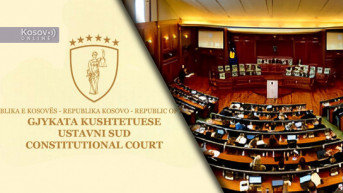
The Constitutional Court’s decisions on the constitution of the Assembly of Kosovo, adopted following the parliamentary elections of 9 February, have clarified many—but not all—ambiguities surrounding this process. On the basis of these rulings, the formation of the new convocation of the Assembly after the 28 December elections should proceed more quickly. However, the process may still be slowed by the fact that Kosovo’s regulations do not prescribe a deadline for the announcement of final election results, by the possibility that political parties may again turn to the Court seeking additional interpretations, or by potential non-compliance with the Court’s rulings, experts tell Kosovo Online.
Written by: Dusica Radeka Djordjevic
The Constitutional Court’s judgments issued at the request of MPs—on 26 June, 8 August, and 30 September—will serve as important guidelines during the constitution of the tenth convocation of the Assembly.
One ruling states that the constitutive session of the Assembly must be successfully concluded within 30 days from the date of the official publication of election results.
Another provides that MPs must elect the President of the legislative body by public vote, which may be conducted only up to three times for the same candidate, and that all MPs must be present and must vote during the election of the President and Vice Presidents of the Assembly.
A third ruling states that the constitutive session is not concluded unless a Vice President from among the Serbian community MPs has been elected.
One more ruling is still pending, and it is of particular importance for Serbs. It should clarify whether the election of a Vice President of Parliament from the ranks of the Serbian community is constitutional if the candidate was not proposed with the support of the majority of Serbian MPs.
Milos Pavkovic, Director of Strategy at the European Policy Centre in Belgrade, recalls that in the recently dissolved Assembly convocation, Nenad Rasic was elected Vice President without the support of the Serb List, and that the Court did not respond to the complaint filed by the Serb List. The same scenario could potentially occur after the new elections.
“The Court has not resolved the issue of electing the Vice President of the Assembly. It has not spoken on the matter and likely will not, given that we are entering another cycle of parliamentary elections. The same scenario could potentially occur after the new elections, and once again the Constitutional Court’s opinion will be sought,” Pavkovic told Kosovo Online.
He adds that it is not possible to determine precisely when Kosovo will receive a new government after the 28 December elections, because the certification of final results may be prolonged, as was the case after the 9 February elections.
“Essentially, the timeframe within which the government should be elected is somewhere between 60 and 90 days, meaning early spring—March 2026. But the timeline may shift, primarily due to the process of confirming final results,” Pavkovic notes.
According to his assessment, final results should be announced at the beginning or in the middle of January, but he warns that potential complaints could prolong their publication.
He points out that once the Assembly is constituted, the deadline for electing the government is short.
“The party that wins the most votes receives 15 days to form the government. If it fails, the mandate passes to the second-ranked party, which also gets 15 days—or potentially, as happened recently, a second nominee from the winning party may be appointed. If no government is elected, new snap parliamentary elections must be held,” Pavkovic explains.
Professor of Constitutional Law Mazlum Baraliu believes that nothing remains unresolved and that the Constitutional Court has, in recent months, clearly set out the principles the Assembly and political parties must follow regarding the constitution of the parliament. However, he stresses that parties and MPs have not respected the Court’s decisions.
“I believe that everything has been resolved and explained in the Court’s rulings. However, political parties and MPs—all 120 of them—did not comply with the Constitutional Court’s decisions. They simply disregarded the deadlines and the rulings. In one decision, the Court said that the Assembly must be constituted within 30 days—not only by the winning party or coalition, but by all political parties and all MPs—and they did not respect this obligation,” Baraliu told Kosovo Online.
Although the deadlines are defined, he notes that the timeframe for forming institutions after the 28 December elections will depend on the preparedness of the Central Election Commission—which includes representatives of all political entities—and on how agile and efficient it will be this time, as well as on whether there will be complaints filed with the Elections Complaints and Appeals Panel or the courts, and how many.
“Political parties file complaints about everything, and proceedings before the Complaints and Appeals Panel, as well as before the Supreme Court or the Constitutional Court, prolong the time needed to form institutions. This political class tends to ask the Constitutional Court all sorts of questions, even though the Court has already ruled that it will not respond to matters outside its jurisdiction,” Baraliu says.
Miodrag Marinkovic, Executive Director of the NGO CASA, also believes that the Constitutional Court has provided clear interpretations of the legal framework regarding the constitution of the Assembly. However, he says that one question remains open: how political parties—primarily Self-Determination—perceive and interpret the Court’s rulings.
“I think the Constitutional Court has given clear interpretations of the legal framework, especially concerning minority participation. However, they (the authorities) have demonstrated that the political will for conflict, which they have nurtured all this time, is stronger than the Constitution and the law—or at least they behave that way. Therefore, the only real question here is whether the current government is ready to heed the rulings of its own court. Nothing else,” Marinkovic told Kosovo Online.
Despite the Court’s decisions, Milica Andric Rakic, Program Manager of the NGO “Community Initiative,” is not optimistic that things will move faster after the 28 December elections.
She points out that even after the new elections, there may be attempts to delay the formation of institutions if no party again secures a clear majority.
The delays following the 9 February elections, she notes, were driven by the election results themselves, because neither the former opposition nor the ruling party achieved a clear majority.
“Everything will depend on the election results. If the results are very similar—and it seems they will be—and if Self-Determination fails to secure an additional ten percent that it needs, I expect attempts to again prolong the formation of institutions. In that way, Self-Determination could once more extend the duration of the caretaker government and its own hold on power, although weakened both in legitimacy and legality—meaning what a caretaker government is legally permitted to do,” Andric Rakic told Kosovo Online.
If no clear majority emerges for electing a new President of Kosovo, she adds, new elections in April may occur once more.
“The situation is truly unstable—both institutionally and politically—and everything will depend on whether the pendulum swings by those required 10 percent toward one side or the other, or whether we will again see a similar distribution of votes,” she concludes.


0 comments