
How Albin Kurti Imposes the dialogue agenda by “setting fires“
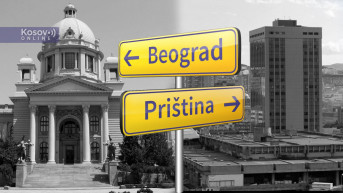
Whether introducing Albanian mayors into municipal buildings in the predominantly Serb-majority north with police assistance, banning the import of Serbian goods, or preventing the use of the Serbian dinar, Kosovo Prime Minister Albin Kurti seems to have a well-thought-out tactic of imposing topics in the Brussels dialogue by creating crises, pushing aside what needs to be on the table.
Attempts to contain such major "fires" usually begin at separate meetings between Belgrade and Pristina with ambassadors from the Quint countries, then move on to the agenda of Brussels mediators in the dialogue, while ongoing negotiation topics are pushed out of focus.
Kosovo Online interlocutors assess that Albin Kurti, through an aggressive policy, is actually hindering talks on a crucial issue for Serbs, namely the formation of the Community of Serb-majority Municipalities. However, the constant rearrangement of the dialogue agenda couldn't happen without the support of a certain part of the international community. They point out that even before Kurti, unilateral moves served as a switch on the tracks along which the negotiations of the two sides are moving.
Stefan Surlic, an Associate Professor at the Faculty of Political Sciences, believes that Kosovo Prime Minister Albin Kurti has certain channels of support in the international community that enable him to change the course of the dialogue with numerous incidents and an aggressive policy, obstructing the key issue for Serbs, which is the formation of the Community of Serb Municipalities, from being addressed.
He says that the latest decision of Pristina on payment transactions is just the latest in a series of such measures, and it is clear that Pristina has not abandoned its intention, although a unanimous voice of the Quint could be heard regarding the decision of the Central Bank of Kosovo to abolish the dinar and a call for suspension.
"I believe that Kurti has the support of certain international partners, although we heard a unanimous voice from the Quint countries on this issue. I think there are certain channels of support that enable Kurti to pursue a very aggressive policy, which began with the occupation of the north, conducting illegitimate elections, expropriation, baseless arrests, and the decision to abolish the dinar is just one of a series of measures," Surlic told Kosovo Online.
Our interlocutor emphasizes that the decision of the CBK to abolish the dinar postpones the entire process of forming the CSM, recalling that the initial idea was for the CSM, together with its formation, to encompass some topics, including the currency.
"It is clear that all previous agreements and arrangements have meant specifying how Belgrade will transparently finance the Serbian community in Kosovo. As O'Brien has already emphasized, coordination between Belgrade and Pristina is needed on this issue as well. Thus, unilateral acts that hinder the ultimate goal, which is the formation of the CSM, should be avoided. There needs to be a minimum of trust and compromise between the two sides, and these issues should be resolved concurrently with the steps accompanying the formation of the CSM," Surlic concluded.
Professor Dusko Celic from the Faculty of Law at the University of Pristina with a temporary seat in Kosovska Mitrovica believes that the practice of "imposing" issues in the dialogue is not new. He says that the entire dialogue conducted in Brussels since 2011 has been characterized by the same scenario, which involves creating a crisis with some unilateral move from Pristina, followed by discussions on how the Serbian side, or Belgrade, will adapt and accept the new fact.
"This is a scenario of accomplished facts. A crisis is created, a unilateral move is made from Pristina, and then discussions take place on how the Serbian side, or Belgrade, will adapt, how it will accept the new fact," Celic says for Kosovo online.
As he points out, we have had this type of scenario all along, which, he emphasizes, certainly does not come only from Pristina.
He explains that this scenario formally comes from Pristina, but "no serious person can convince us that some ruler in Pristina, in the form of anyone there, opposes the political West, the most powerful countries of the political West, including the United States".
"With this latest move, suspending Serbia's payment system, I am convinced that it is a pre-arranged scenario between the political West and Pristina. We have seen through the reactions of the West on this occasion, and earlier, that there is actually approval of such moves in one way or another. So, it is obvious that they view Pristina as their project, as an independent state, and they talk to them based on some imagined sovereign state, and Kurti behaves that way in Pristina," the professor says.
What, as he says, somewhat annoys him, is that Belgrade does not clearly show that such behavior from Pristina and the West renders any dialogue meaningless. However, he notes that Belgrade does not do it so clearly because it considers the extremely difficult and vulnerable position of the Serbs in Kosovo.
"That is why Belgrade does not resort to countermeasures and does not resort to showing from its side that what Pristina is doing simply makes any kind of further dialogue meaningless. However, Belgrade must send a clear message that with this, especially with the latest measure, Pristina has opted for a unilateral resolution of all issues and that in that sense, the dialogue is completely meaningless," Celic concludes.
Igor Novakovic from the Center for International and Security Affairs believes that Kosovo Prime Minister Albin Kurti is constantly imposing topics in the dialogue by constantly creating crises that must then be resolved within that process. He fears that due to this, the Community of Serb-majority Municipalities may not come to the agenda in the dialogue, but also not until Kurti confirms his dominance in parliamentary elections, and perhaps not even then.
Novakovic notes that after the conflict in Banjska, the West cannot adequately impose priorities on Kurti in the dialogue and speed up the process of forming the Community of Serb-majority Municipalities.
"Kurti is doing it all the time, but now he has much more leeway after what happened in Banjska because it is very difficult for the West to say, 'Sorry, there are certain priorities in the dialogue'. It is very obvious that Pristina constantly draws attention to this issue, while on the other hand, Belgrade, from their perspective at least, has not offered adequate answers to what happened in Banjska," Novakovic said for Kosovo Online.
He believes that the issue of forming the Community of Serb-majority Municipalities will not be on the table so quickly.
"It seems to me that the goal is for it not to come to the agenda at all, at least not before the elections in Kosovo, until Kurti confirms his dominance, but the question is whether even then," Novakovic stated.
He recalls that after the Brussels Agreement, the CSM was supposed to be implemented within six months, but it was not precisely because of the protests organized by Kurti.
"This is nothing new, and I think that this issue will never be fully implemented, and there will likely be alternative solutions or some kind of further frozen conflict," Novakovic concluded.



0 comments