
How did the EU step on a "mine" and what does Lajcak's confession say about the West's approach to the crisis in Kosovo?
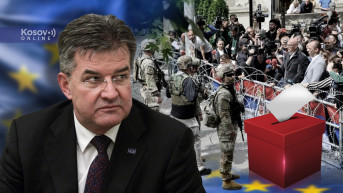
The message of the Special Representative of the EU, Miroslav Lajcak, that the April local elections in four municipalities in the north of Kosovo were a "landmine" because they were held without the participation of the Serbs and their results only complicated the situation, according to the interlocutors of Kosovo Online, indicates the non-serious approach of international representatives to the issue of Kosovo and the attempt to normalize relations between Belgrade and Pristina.
Lajcak stated that due to the "electoral landmine", the focus in the relations between the two parties was not on normalization, but on solving the crisis. For Lajcak, the agreement in Brussels on February 27, and then in Ohrid on March 18, was a historic moment, but, he said, the path to its implementation was undermined.
After this statement, Lajcak, together with other European officials, went on a collective summer vacation, during which the EU institutions are on until September, and as things stand now, there are no indications that the EU and the US have a solution to the crisis that arose by "stepping on an electoral mine in the north".
On the list of incorrect political assessments by international mediators, when it comes to the events in the north of Kosovo, our interlocutors include not only the elections on April 23 but also the determination of the EU and the USA to recognize the results of that vote, in which only about 3.5 percent of voters participated. The decision of the Prime Minister of Kosovo, Albin Kurti, to forcibly, with the help of armed Kosovo policemen, impose illegitimate Albanian mayors in the municipalities where the absolute majority of the Serbs live, led to tensions, which, due to Kurti's refusal to change the policy, threaten to lead to serious conflicts in the north.
Retired diplomat Zoran Milivojevic believes that Lajcak's statement is an acknowledgment that they were not neutral in the dialogue, that they played into the hands of the Pristina side, especially by admitting in advance the results of the vote through which they tried to impose a political solution.
"Secondly, they admitted the inability of the EU and their inability to mediate actively and effectively in support of seeking a political solution based on compromise. They indirectly admitted that without Serbia and the Serbian side, nothing in Kosovo could be resolved and that Serbian interests had to be taken into account," Milivojevic says.
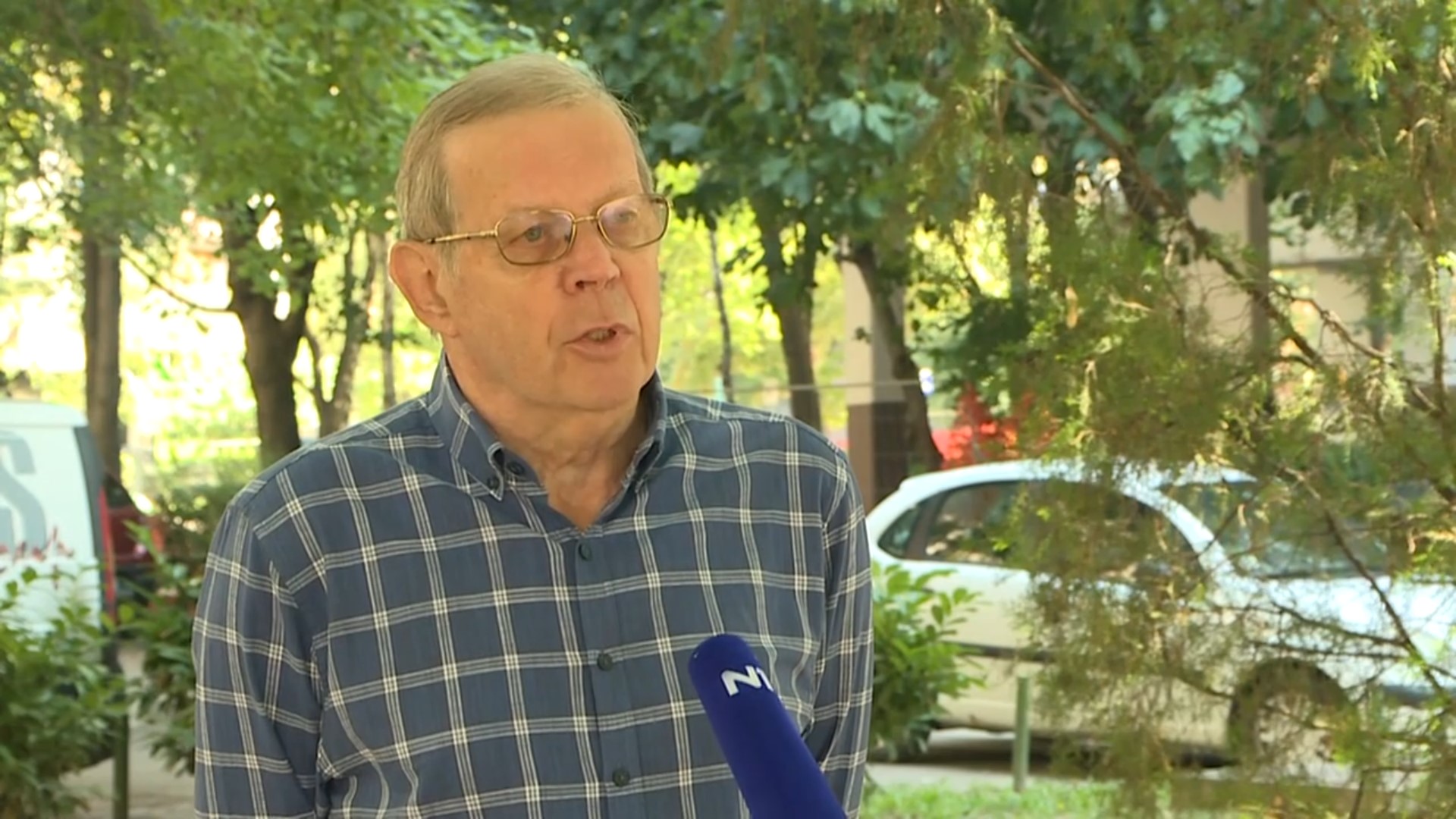
The fact that Lajcak has been in charge of the dialogue for three years, in which there has been no progress but only new crises, Milivojevic points out, speaks volumes about his success as a Special EU Envoy.
"Instead of progress in normalization, they deal with crisis management. They, of course, will not admit responsibility for the crisis in the north, but they actually admitted the inability and impossibility of solving it without the Serbs. The elections confirmed that nothing can be done by force and that, if they want to conduct a dialogue that makes sense, they must also respect Serbian interests, the fact that de-escalation is the withdrawal of Kosovo Forces from the north, the release of the arrested Serbs and the formation of the Community of Serb-majority Municipalities. This is the only platform that enables essential de-escalation and the continuation of negotiations. Everything else is absolutely in the wrong positions, and Lajcak admitted it," the diplomat points out.
He adds that both the EU and the US respect Pristina's interests from the beginning and the methods applied by Kurti.
"They know very well what it is about, but they are biased because their and Pristina's goals are the same - to impose a political solution, for Serbia to give up its state and national interests and to make concessions in favor of Kosovo's independence. The West and its representatives, starting with Lajcak and then the others, must keep in mind that Serbia will not give up its state and national interests and that it will not change its position regarding Kosovo and Metohija. They will not admit and will not give up on seeking a political solution through dialogue, based on compromise," Milivojevic says.
He believes that in the coming period, there can be progress if pressure is put on Pristina to correct its policy, give up repression, and return to the political dialogue on normalization based on compromise and with the CSM as the key point.
"They know what they have to do. They have to change their position, respect the Serbian position and Serbian interests, respect the previously reached agreements, return to realpolitik, and influence the Pristina side to give up maximalist positions and the methodology of imposing solutions, strategic goals, and political will by force," our interlocutor concludes.
Political analyst Nexhmedin Spahiu sees in Lajcak's words an acknowledgment that things have worsened with the holding of elections. He adds that it is likely that the EU got into the whole election story because of a wrong political assessment of what could happen if the Serbs do not participate in them.
"Probably the elections were the result of a wrong political assessment. The very fact that they are not able to close the conflict yet means that they are not very well-informed, otherwise, this matter should be over by now. Instead of making political moves based on assessments of the situation on the ground, they are more based on attempts to solve some things in a dialogue in Brussels between the representatives of Serbia and Kosovo, which can often lead in the wrong direction, because they do not know the history and essence of the problem, i.e. the conflict, and therefore they are actually wrong. They are not actually able to end this conflict and make peace," Spahiu believes.
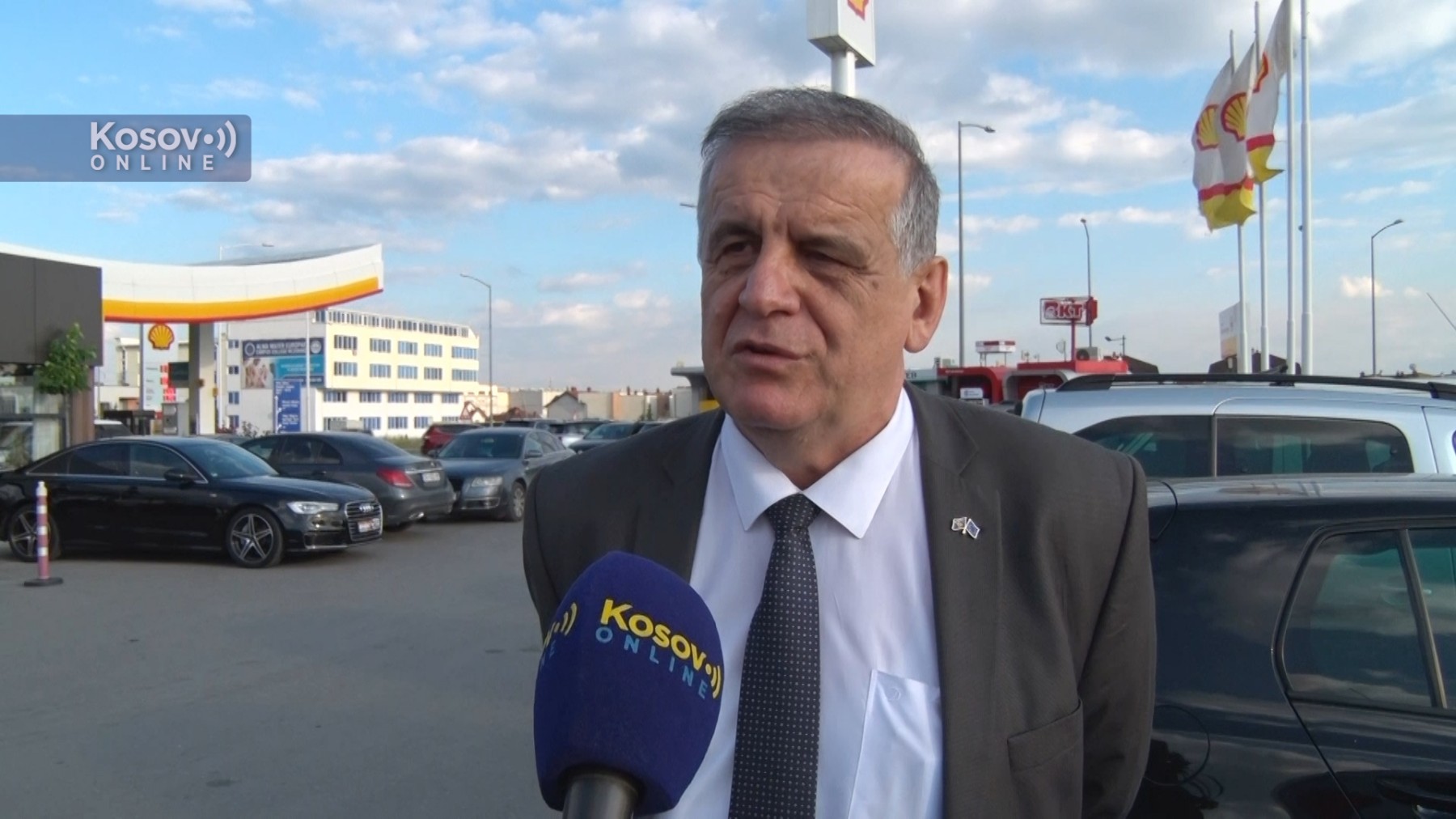
When asked how he saw the unfolding of the crisis in the north, and what the plan of the US and the EU is, Spahiu answered, "What will happen, only God knows. I can say what, in my opinion, should happen - that the mediators Escobar and Lajcak and their teams prepare a proposal for the Draft Statute for the Community of Serb-majority Municipalities in Kosovo and write that the Community should enter into force on the same day that the Embassies of Kosovo and Serbia are opened in Pristina and Belgrade and that it be such an agreement that will specify all things and how much that staff will be and where those embassies will be opened. All of this should be specified in detail in the Draft Statute and then be left to the parties to take it or leave it. That way we will know whether there will be an agreement or not, and which side will accept it and which will not. Only if they do that, then we can say that we are close to ending this conflict, that is, we are creating a truce in the region," Spahiu says.
He expects new elections in the north, noting that Kosovo Prime Minister Albin Kurti has also agreed to them, but adds that they alone will not be the solution to the problem.
"Elections are not a problem, the problem is the agreement on the Draft Statute of the Community of Serb-majority Municipalities, what will be the authority of that Community and of course the dates, how and when it will be implemented. These are things that have been agreed upon based on the Franco-German plan. Those who mediate in the negotiations should focus on that. I believe that Prime Minister Kurti would agree to the Community of Serb-majority Municipalities that would give solid autonomy to the Serbs in Kosovo, which could not be a tool for Belgrade to dictate the policy in Kosovo and through which it could not exert its influence in Kosovo, could be accepted. Of course, anything resembling the Republika Srpska, through which Serbia would constantly exert influence in Kosovo, could not be accepted by Kurti, nor by any Kosovo leader," Spahiu points out.
The director of the International Institute for Middle Eastern and Balkan Studies (IFIMES) Zijad Becirovic tells Kosovo Online that Lajcak's admission that the elections in the north were a mistake is an indication of the obvious absence of a serious approach and vision to really solve the present problems, and above all to ensure a better life for the citizens, without jeopardizing peace and stability.
"The day before the extraordinary local elections, the US Special Envoy for the Western Balkans, Gabriel Escobar, said that he would recognize the local elections in four municipalities with a Serb majority, even though they were not even held. Unfortunately, such people deal with us, and then what should we expect? That is why I am a supporter of turning to each other in the region and finding a solution to how to live and ensure a better future for all of us. Time is running out quickly, and we are more or less in the same positions and dealing with the same issues. This is not leading to anything," Becirovic points out.
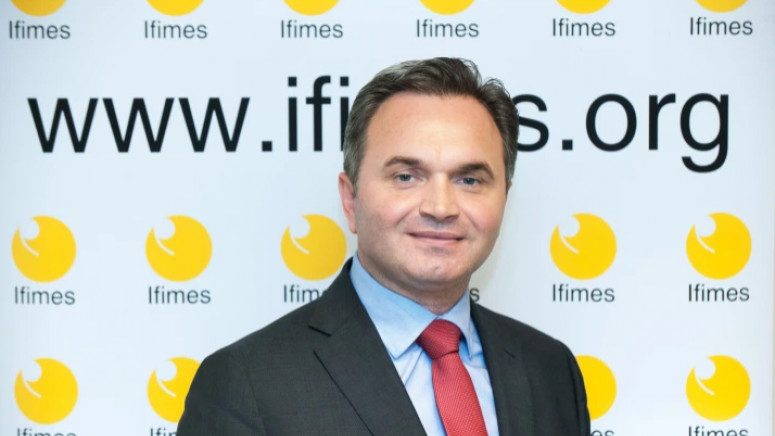
The fact that, in addition to insisting on the elections in the north, the EU and the USA also recognized the results of that vote, in which the turnout was only about 3.6 percent, for Becirovic belongs to the "believe it or not" category.
"And it's even more incredible that a few days after the fiasco in the local elections, they say that new elections should be organized and that they are looking for a solution on how to carry it out. All of this offends the common sense of the people in this region," our interlocutor believes.
He has no doubt that Lajcak's statement about the elections is actually an acknowledgment by the EU and the US that they bear a large part of the responsibility for the crisis in the north of Kosovo. He points out that there are agreements that have been signed that obligate them to comply with those agreements, to apply them, the Brussels and other agreements, and to improve the situation on the ground, to create a new, better environment, and "not to make nebulous statements."
Regarding the fact that Lajcak has been the EU Envoy for the Serbia-Kosovo dialogue for several years, which have been practically not given results, instead the dialogue on normalization it has been moved to crisis management, Becirovic emphasizes that wherever in the world the EU is involved in a problem - there is no solution.
"The EU is not a subject of international relations, it does not decide, but it can provide funds for something that is primarily agreed upon by the US or possibly the UN. The EU as an integration is quite ineffective, and Lajcak himself cannot boast of that. There are estimates in the EU that as much as 300 billion euros a year go to the gray economy. That is the picture of today's EU," Becirovic says.
When asked whether the EU and the USA had a plan for the crisis in the north or whether we would remain in a frozen conflict for a long time, considering that the European institutions were now on vacation and that the pre-election campaign in the USA and then the EU institutions were practically starting from the fall, Becirovic said that a serious approach yielded serious results. Here we had an absence of serious approach and vision. We had a partial approach, which gave partial results, mostly unapt. There is no solution to the Kosovo issue until a solution to the Ukrainian crisis is found," he says.
He believes that the projections made by Escobar that a solution could be reached by the end of the year are unrealistic.
"There is nothing to be gained from that. In order to solve something, they must change their approach and the war in Ukraine must be stopped. After Ukraine, we can continue to look for a solution within a reasonable time. We have a situation that has changed the plans in many ways, and that is that the President of Serbia, Aleksandar Vucic, managed to impose the paradigm 'they can't get everything, and we nothing', and this is now a challenge for everyone because he managed to make Serbia, which was the object of events when it comes to Kosovo, become a subject and without which nothing can be solved," our interlocutor concludes.

0 comments