
How likely is it that MPs will lose their mandates if the Assembly is not constituted by July 26?
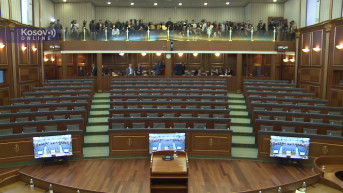
Can members of the Kosovo Assembly lose their mandates after the deadline set by the Constitutional Court for the constitution of parliament expires? Opinions are divided on this issue. According to one interpretation, the Kosovo Constitution does not foresee that failure to constitute the Assembly leads to loss of mandates; according to another, this would happen automatically. But who would have the authority to revoke MPs’ mandates when the Assembly has not yet been constituted—and therefore, the Committee on Legislation and Mandates does not exist?
Written by: Dusica Radeka Djordjevic
The discussion on potential sanctions for MPs if the Assembly is not constituted by July 26—the deadline set by the Constitutional Court—was initiated by former Deputy President of the Constitutional Court, Kadri Kryeziu, who even mentioned prison sentences.
"Every ruling of the Constitutional Court is law," said Kryeziu, noting that failure to comply automatically leads to consequences.
"The first is an administrative sanction, meaning the revocation or loss of mandate. The second is a criminal sanction, whereby the Special Prosecutor’s Office is obliged to initiate proceedings for violating the legal and constitutional order of the Republic of Kosovo and for breaching the law. This applies to all 120 members of the Kosovo Assembly, who could, under the criminal code, be sentenced to between three and six years in prison," he said.
Mimoza Kusari-Lila, an MP from Alternativa (a coalition partner of Self-Determination), also stated that one of the legal consequences, should the Kosovo Assembly not be constituted by July 26, could be the revocation of all MPs’ mandates.
"Following that, mandate revocation could extend to other candidates from electoral lists," Kusari-Lila said. A similar warning was issued by Social Democratic Initiative MP Xhevahire Izmaku, who believes that MPs’ mandates could be at risk if the Constitutional Court’s deadline is not respected.
However, according to Eugen Cakolli from the Kosovo Democratic Institute, the Constitutional Court cannot issue a decision to revoke MPs' mandates. He also argues that there is no constitutional or procedural basis for removing the mandates of Assembly members if the Assembly is not constituted within the 30-day timeframe given by the Court.
"The Constitution clearly outlines the circumstances under which an MP loses their mandate. These include resignation, death, failure to take the oath, a final criminal conviction, serving an effective prison sentence, and others. Nowhere does it state that failure to constitute the Assembly leads to loss of mandate. That is simply illogical, and responsibility cannot be collective. The Constitutional Court cannot issue such a decision," Cakolli concluded.
Political analyst Gezim Kasapolli stated that nowhere in the Constitution of Kosovo does it say that members of parliament can be penalized or have their mandates revoked for failing to vote.
“There are no such provisions in our Constitution, and I don’t believe it will go that far,” Kasapolli told Kosovo Online.
The revocation of all MPs' mandates is an unrealistic scenario, according to Stefan Surlic, assistant professor at the Faculty of Political Sciences in Belgrade. He stated that such threats—primarily directed at opposition MPs—serve as a delaying tactic that benefits the Self-Determination Movement.
"I believe this is a spin deliberately pushed by the ruling structure and those close to it, suggesting ‘there won’t be elections, we’ll just change the composition of parliament.’ This is a highly unrealistic scenario, because although the MPs' mandates have been formally verified, the Assembly has not been constituted. So, if the Assembly is not formed, no specific measures can be expected. Hypothetically, even if MPs were to lose their mandates, the electoral lists would still have the right to nominate new candidates. All of this amounts to buying time—we currently have a caretaker government, no constituted Assembly, and a general political climate that points toward upcoming elections," Surlic told Kosovo Online.
Aleksandar Rapajic, Program Director of the NGO Center for Advocacy of Democratic Culture from North Mitrovica, stated that he is not aware of any legal grounds for criminal prosecution of MPs if the Assembly is not constituted within the deadline set by the Constitutional Court. However, he believes that if the 30-day deadline is not met, MPs will automatically lose their mandates.
"In that case, new elections would have to be called, most likely by the President," Rapajic said.
According to Rapajic, the situation is currently very unusual, and the election campaign for the next vote has already effectively begun.
"We can see that political parties have no real interest in resolving the issue—they've already entered campaign mode, attacking one another, releasing test messages to gauge public reaction. I believe the most logical solution would be to avoid holding elections twice within a few months and instead combine new parliamentary elections with the upcoming local ones. Legally, this could be done by postponing the parliamentary elections to coincide with the scheduled local elections. However, given the deadlines set by the Constitutional Court, this will be very difficult to implement," Rapajic told Kosovo Online.
Stefan Surlic believes that elections are the only way out of the political crisis in Kosovo. However, he argues that the ruling structure under Albin Kurti is seeking to delay elections—potentially to align them with local elections, or even to avoid that alignment altogether.
"If there were consensus among the political actors about holding new elections, I think they would have already found a solution. But since no tacit agreement has been reached, we are now witnessing this absurd situation where the Assembly is repeatedly convened to elect a speaker, with no success," Surlic said.
Gezim Kasapolli believes that in order to resolve the situation where the Assembly cannot be constituted, President Vjosa Osmani needs to refer the matter to the Constitutional Court—because without that, the crisis could drag on indefinitely. He emphasized that someone currently holding institutional power must be the one to reach out to the Court.
"Right now, there is no functioning parliament or government—only the President holds institutional power, and she is the one who can consult the Constitutional Court on further steps. I believe that is the best way to resolve this crisis. Vjosa Osmani has already met with the leaders of political groups, and she will be cautious in how she frames the request to the Court, because this will not only set a precedent for this government and parliament, but also for all future ones—since we could face similar complications again," Kasapolli explained.



comments