
If the European plan fails, will the fate of Serbia and Kosovo be decided at a new Yalta?
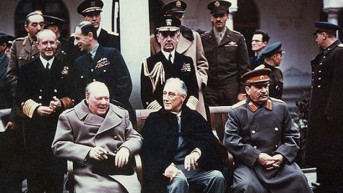
The story about the "new Yalta" as a scenario for the normalization of relations between Serbia and Kosovo, that is, about the fact that the great powers will impose a solution if the European proposal is not accepted, is meaningless for the interlocutors of Kosovo Online, and it can, as they assess, also serve as a way to scare the Serbs with the possibility that the big powers can reach an agreement on spheres of interest because in that case, Serbia would suffer more than Kosovo.
A few days ago, the director of the Albanian Post, Baton Haxhiu, sent a short public letter to fellow journalists, politicians, and the civil sector in Serbia, in which he announced, referring to "a very high official of a large Western country", that if the European plan failed, the fate of Serbia and Kosovo could be decided at the "new Yalta" and that on that occasion neither the Serbs nor the Albanians would be able to delegate their demands or wishes.
Yalta is a place on the Crimean Peninsula, where in February 1945 the Allies, the leaders - Russia, Great Britain, and the US - Joseph Vissarionovich Stalin, Winston Churchill, and Franklin Roosevelt met and agreed on a plan for the final reckoning with Hitler's Germany in the Second World War, and certain new territorial divisions and spheres of influence of the victorious powers were also agreed upon. The event is also known as the Crimean Conference.
Historian Cedomir Antic points out that the story about the "new Yalta" is meaningless and says that the education of European politicians and diplomats, to whom Haxhiu refers, has greatly declined.
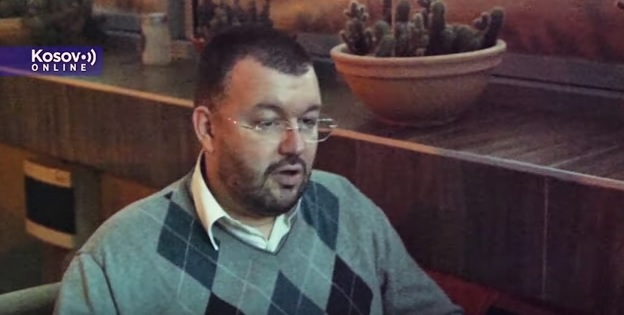
He reminds that for the countries that impose the European proposal, things are already over, that is, they say that Kosovo is independent and that the borders are unchangeable.
"Those borders that are unchangeable are administrative borders within Serbia, as well as the border of any arrondissement in France or Lander in Germany, that's how the border of Kosovo should be," Antic says.
However, he adds that those who first recognized an independent Kosovo, now that the world is facing a major crisis, are positioning themselves as neutral observers.
Antic reminds that they recognized independent Kosovo according to Ahtisaari's plan, which was not accepted by the UN, and notes that according to that plan, the Serbian Orthodox Church should have a certain status before independence and the adoption of the constitution.
He adds that it has only now started to be discussed about that status and assesses that it is "a fraud".
"And the fact that Albanians are fighting among themselves over who is a greater Albanian and who has done more for their motherland, who expelled more Serbs, who will offer Serbia to be Germany while the Albanians from Kosovo will be France that is already their internal question. If it was about one man, I would say that it is a psychiatric issue, but since it is about several people, I think that it is a national tragedy, not a Serbian one, but an Albanian one," Antic emphasizes.
Commenting on Haxhiu's letter, Antic says that it is completely meaningless and that it seems to have been written by someone who knows almost nothing about history and who is pretentious.
It indicates that Kosovo Albanians are not a great power and that they do not represent anything more important than any other people in the Balkans.
He notes that "they suffer by the mythomania because they are aware that historically they did not have a state, that they were 'late'".
"It is known that they strive for those megalomaniac grandiose images and it is known that the greatest modern Albanian writer claims that the Albanians defeated Germany in the Second World War. Unfortunately, this is part of a period in which the historical Albanians find themselves, they are now in a phase of nationalism in which other nations were mostly 150 years ago, and it will remain so for some time," Antic says.
When it comes to the Franco-German proposal, Antic considers it a dictation because, according to him, there is no agreement.
Sometimes, as he says, he laughs at the amount of undisguised chauvinism, pretentiousness, and megalomania of the Albanian leaders from Baton Haxhiu's generation.
He asked what it was that an Albanian cannot like in that agreement and pointed out that it could only happen "if they expect to occupy the countries from the Sava to the Danube or that Serbia celebrates the Albanian flag day or if they expect that the tribal units of the terrorist KLA come and occupy half of Serbia".
"The agreement imposes the mutual recognition of Serbia and Kosovo. As much as some in Kosovo may have been aware of the era when their ancestors Arbanasi people held the Ottoman Empire and maintained sultans like Abdulhamid, nor was Kosovo ever a state, it was an autonomy within Serbia and formally is still the case, nor have the two countries ever been at war, even in 1912, the Ottoman Empire and Serbia were at war, not Kosovo, not Albania, not Greater Albania," Antic concluded.
Former diplomat Vladislav Jovanovic says that the story of the "new Yalta" is an Albanian hoax and that the Albanians expect that the entire West would stand up for Kosovo and that in that case, they would be able to settle with the other side only at the expense of Serbia, and not Kosovo.
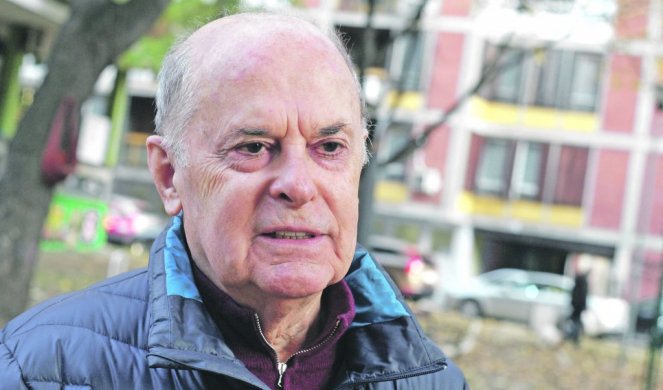
As he says, this is also hidden in the latest offer from Brussels - that Serbia does not have to recognize Kosovo, but only leave it to the UN Security Council to decide on it.
"The Albanians started an armed terrorist uprising precisely at the urging of the West, and with the same goal - to destroy the territorial integrity of Serbia and to make a state out of the Serbian southern province, even though the national minority has no right to self-determination and a state according to all possible rules of international law," Jovanovic says.
He believes that what Haxhiu is saying is "apparently well-intentioned" - that it would be best for the Serbs and Albanians to solve their own problems, essentially "a hoax and deception”.
"It is known that the Albanians for Kosovo will not give up the Western fathers who created them and who guarantee that they will be brought to the safe shores of the UN. This is perhaps a parallel attempt with the one from Brussels to achieve the same goal by other means – to separate us from our rights to Kosovo and to leave it to others to solve, and we know in advance what others will solve," Jovanovic emphasizes.
He believes that Serbia must never let go of the "deed to Kosovo", which, he adds, represents Serbia's internationally recognized right to Kosovo since 1912, and onward.
He adds that even in Resolution 1244 Serbia's sovereignty in Kosovo is emphasized in several places, only that, he reveals, it is temporarily suspended under the supervision of the UN until the issue is finally resolved.

0 comments