
Incentives, sanctions, or something else: What could unlock the Belgrade–Pristina dialogue?
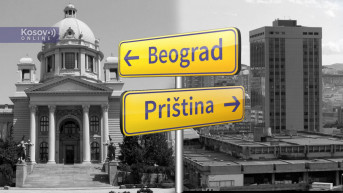
The phrase “progress in the Belgrade–Pristina dialogue is necessary” has become a standard refrain in the speeches of European officials, but few of them have a recipe for achieving real movement. The interlocutors for Kosovo Online offer completely opposing suggestions — from those who believe the EU could motivate the parties to be more constructive by taking long-awaited positive decisions for both Belgrade and Pristina, to those who argue that only pressure and the threat of serious consequences for failing to implement dialogue agreements can bring this process to an end.
By: Dusica Radeka Djordjevic
The dialogue is in crisis, stagnant, and exhausted. Many who follow the negotiations between Belgrade and Pristina — mediated by the European Union since 2011 — would agree with this diagnosis. However, they differ sharply on the key question: what methods could guarantee a “cure”?
According to Dragiša Mijacic, coordinator of the National Convention on the EU’s Working Group for Chapter 35, new energy could be injected into the process if the European Council decided to open Cluster 3 in Serbia’s EU membership negotiations, and if the Council also decided to lift the punitive measures imposed on the Kosovo government.
“That could bring the new momentum that Mr. Sørensen and Kaja Kallas would then need to sustain. Something must serve as a starting point, and perhaps this is precisely it — lifting the punitive measures on Kosovo and opening Cluster 3 for Serbia,” Mijacic told Kosovo Online.
He notes that the next European Council meeting is in December, presenting an opportunity for these decisions.
“That meeting must deliver some positive steps: in Serbia’s case, the opening of Cluster 3; in Kosovo’s case, the lifting of sanctions or punitive measures. I believe the European Council should move in that direction, even though such decisions will be unpopular in both Serbian and Kosovo societies — as they will be seen as concessions to the current ruling parties. But these measures must be lifted because they harm both societies,” Mijacic emphasizes.
However, for both decisions, EU member states are divided between supporters and opponents.
Serbian President Aleksandar Vucic said yesterday that at a recent summit of EU foreign ministers in Brussels, High Representative Kaja Kallas proposed lifting sanctions on Kosovo, immediately supported by Croatia and Slovenia, while Hungary and France opposed it.
He also said that Italy had sent a letter calling for the opening of Cluster 3 for Serbia.
The outcome of both issues will be known on December 18, when the European Council meets.
“Lack of Trust and Lack of Effective Pressure”
University professor and security expert Kolje Krasniqi does not believe that a new momentum in the dialogue would emerge if the EU lifted punitive measures on Kosovo while opening a new negotiating cluster with Serbia.
“Such a proposal is unbalanced and does not contribute to real normalization between Kosovo and Serbia. Its purpose is merely to maximize benefits for Serbia without addressing the causes of the dialogue’s stagnation. It also ignores the fact that Kosovo was sanctioned for developments in the north, while Serbia has systematically violated agreements. It requires no accountability from Belgrade, proposes no reciprocal measures, and does not mention dismantling illegal structures in northern Kosovo. Instead, it reinforces the narrative of ‘status quo plus’ for Serbia, strengthening its internal position without bringing real progress to either side,” Krasniqi told Kosovo Online.
He advocates a very different approach.
For the sake of unblocking and successfully concluding the dialogue, Krasniqi believes the international community must define clear and serious consequences for the non-implementation of agreements — including freezing Serbia’s negotiating chapters, conditioning EU funds, and imposing symmetrical political and diplomatic penalties on both sides.
Krasniqi argues that the dialogue has entered its deepest stagnation in a decade due to structural factors: lack of trust, lack of effective EU pressure, differing interpretations of agreements, and a lack of initiative and genuine political will to compromise.
“It seems that the current model has failed. The EU appears to have lost its role as a neutral mediator, both in Belgrade and Pristina. Serbia treats the dialogue as a technical process, while Kosovo views it as political. Agreements are not implemented, and violators are not punished. As the dialogue has now been reduced to crisis management, a completely new approach is needed — reformatting the dialogue chapters into a single final package with a clear end goal: either de facto recognition of Kosovo or normalization along the Franco-German model, including Serbia’s acceptance of Kosovo’s legal reality,” he states.
As for the Community of Serb-majority Municipalities (CSM), he believes it should be resolved with mediation and guarantees from major European powers that no parallel authority will be allowed, and that it should be implemented only after dismantling illegal structures in the north — and in reciprocal form: Serbs in Kosovo, just as Albanians in Serbia.
“First CSM, then Sanctions Relief”
Slobodan Zecevic, director of the Institute for European Studies, also does not believe that positive incentives would unlock the dialogue — but argues that pressure must be directed toward Pristina.
The Serbian side, he says, has largely implemented the dialogue agreements, while the Kosovo side has not — because the core of the Brussels Agreement is the Association of Serb-majority Municipalities.
“Serbia would never have transferred competencies to Kosovo institutions in the north had it not been promised that the CSM would be created. I do not know to what extent lifting the sanctions on Kosovo authorities — who have still not formed the CSM — would help them finally do it. Serbia has shown great tolerance and continued moving forward, while the Albanians have continually invented new obstacles to forming the CSM. They claim their Constitution forbids it, and that it is stronger than the agreements reached under EU auspices. In reality, it is the opposite: the EU-mediated agreement is stronger than their Constitution. If necessary, they must amend the Constitution, not the agreements,” Zecevic said.
He therefore believes that pressure from both the United States and the EU is needed to compel Pristina to form the CSM first — after which sanctions, which he considers largely symbolic, could be lifted.
“The pressure from the West would force them to do what they should have done back in 2013. They have had plenty of time to show goodwill and have not done so. If even these symbolic sanctions are lifted, what will force them to form the CSM? What would motivate them? Politics is about power relations. It’s not about goodwill. If no one shows them clearly that what they are doing is wrong, but instead keeps rewarding them, they will push further in their ambitions to cleanse Kosovo of Serbs,” Zecevic says.
Political analyst Seb Bytyçi told Kosovo Online that the EU, as mediator, does not stimulate progress by gestures of goodwill nor by a “carrot and stick” strategy — which is likely why the dialogue has not achieved significant success.
Asked whether the dialogue would advance if the EU showed goodwill by lifting sanctions on Kosovo and opening Cluster 3 for Serbia, Bytyçi replied that lifting the measures on Kosovo can be expected — but due to the results of the local elections in which ethnic Serb politicians won in the four northern municipalities.
“The EU currently maintains a harsher stance toward Serbia because of the suppression of student protests and the Banjska attack, so it is unlikely that any new accession chapters will be opened with Serbia in the near future,” Bytyçi believes.
“Societal Diplomacy”
How to revitalize the dialogue is also a topic addressed by Stefan Surlic, director of the Center for Interdisciplinary Balkan Studies, in his analysis “Dialogue at an Impasse: How Innovative Mechanisms Can Restart Normalization.”
Surlic argues that formats should be institutionalized in which civil society, academic institutions, cultural and sports organizations from Serbia and Kosovo cooperate on joint projects. These forums should not remain one-off initiatives but permanent platforms for communication and idea-exchange.
“The key innovation could be the creation of ‘citizens’ working groups’ or ‘dialogue councils’ that would have an advisory role toward negotiating teams, providing recommendations on local priorities — from employment of vulnerable communities to protection of cultural heritage,” Surlic writes.
This would create a mechanism of “societal diplomacy,” reducing stereotypes, creating constructive narratives, and indirectly pressuring political elites to maintain dialogue continuity. Institutionalization of these groups would be formalized through regular meetings with EU mediators in Brussels, parallel to meetings of leaders or technical teams.
Surlic also notes that one of the biggest challenges is the perception that the dialogue is “imposed from outside,” which is why it is necessary to create a sense that the process belongs to the people on the ground.
“Holding occasional negotiating sessions in cities in Serbia and Kosovo — particularly in mixed areas like Mitrovica or Bujanovac — would send a strong message that the voice of the local community is heard,” he adds.
Another major problem, Surlic says, is the lack of transparency in implementing agreed points, and he argues for establishing a publicly accessible digital platform that would track the implementation of all agreements in real time.

comments