
Political crisis and dialogue: Who has the lost year hurt, and who has benefited?
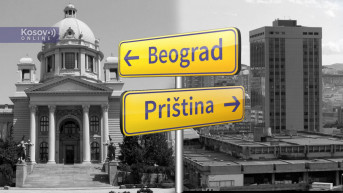
The political crisis in Kosovo—where, nine months after parliamentary elections, no government has been formed—has also affected the Belgrade–Pristina dialogue. There have been no serious talks or implementation of previously reached agreements, and if new elections are called for December, progress in the dialogue will not be expected before February, interlocutors told Kosovo Online. They believe this situation primarily harms the Serbs in Kosovo, but also the wider region.
Written by: Dusica Radeka Djordjevic
The EU Special Representative for the Dialogue, Peter Sørensen, visited Pristina last month, while the chief negotiators of Belgrade and Pristina, Petar Petkovic and Besnik Bislimi, met earlier in Brussels in September—indicating that the dialogue shows faint signs of life.
However, without new agreements and with the old ones being ignored, this year has practically been lost for the dialogue.
The institutional crisis in Kosovo shows no signs of ending, meaning the vacuum in negotiations could extend into early 2026.
The European Union told Kosovo Online that the dialogue will resume once the necessary conditions are in place.
“High Representative for Foreign Affairs and Security Policy Kaja Kallas will convene a new meeting when the situation allows,” the EU’s spokesperson in Brussels told Kosovo Online’s correspondent.
As explained, this refers to the formation of a government in Pristina after the elections, as well as the resolution of the legislative slowdown and the prolonged political deadlock.
Milos Pavkovic, Director of Strategy at the European Policy Centre in Belgrade, told Kosovo Online that the February elections in Kosovo largely contributed to the lack of progress in the Belgrade–Pristina dialogue this year, but also that the failure to form a government has been used as a convenient excuse for Pristina to avoid its obligations under the dialogue.
Still, he notes that it is highly questionable whether results in the dialogue would have been significantly better even if a government had been formed.
“It seems to me that in recent years, Self-Determination has not had the dialogue or normalization with Belgrade—especially not the formation of the Community of Serb-majority Municipalities (CSM)—high on its agenda. So even if a government had been formed, it’s questionable how much better the results would have been. The year-long political crisis in Kosovo and the uncertainty over whether and by whom a government will be formed, combined with political instability in Serbia, have together resulted in no progress in the normalization process this year,” Pavkovic stated.
According to him, the dialogue vacuum worked to Pristina’s advantage, as it relieved pressure to form the CSM.
“The entire focus was on Pristina’s obligation to start the process of forming the Association of Serb-majority Municipalities, and they somehow avoided responsibility for inactivity—that is, for failing to fulfill obligations arising from the Agreement on the Path to Normalization. Had a government been formed, there would have been far more criticism and pressure from Brussels and EU member states. In this way, they avoided that in a rather peculiar manner—by simply not forming a government,” he explained.
Although, as he noted, the caretaker government in Pristina made numerous decisions it technically had no mandate to make, it nonetheless avoided, by all means, engaging constructively with the Serbian community or the CSM issue.
Professor of Political Science Nexhmedin Spahiu believes that the current stagnation in the dialogue does not serve Pristina’s interests, since Kosovo’s national interest lies in resolving the dispute with Serbia as soon as possible.
“This situation does not serve Kosovo’s national interests at all. The lack of progress stems from the indecision—or rather, the inability—of Kosovo’s political forces to complete the dialogue with Serbia. Making compromises is not easy, but one must have the strength and will to bring it to an end, bearing in mind that it is in Kosovo’s national interest,” Professor Spahiu told Kosovo Online.
He illustrated his point by saying that when someone wants to buy a car but finds the price too high, they may wait for the price to drop—but during that time, they remain without comfort, without a car. The price may eventually fall, but losses accumulate in the meantime.
“The same applies to Kosovo. Perhaps the price Serbia demands for recognition is high, but by waiting for a cheaper deal, Kosovo loses much—and it should have the determination, strength, and will to resolve this issue once and for all. We all lose—Serbia loses too—but we lose more, because we need recognition. Serbia does not,” Spahiu stressed.
As for how long this vacuum in the dialogue may last, he noted that if snap parliamentary elections are held on December 28, new elections could follow shortly afterward—when it comes time to elect Kosovo’s president.
According to him, the lost year in the Belgrade–Pristina dialogue represents a major setback that affects not only Kosovo and Serbia but the entire region.
Ending the dialogue and implementing the agreements already reached between Albin Kurti and Aleksandar Vucic, he added, would be of great benefit not only to Kosovo and Serbia but to the region as a whole.
Dusan Radakovic, Executive Director of the Centre for Advocacy of Democratic Culture in North Mitrovica, told Kosovo Online that Kosovo is in a serious systemic crisis, and that this year has been definitively lost in terms of dialogue, with not a single serious conversation resulting in concrete steps.
“Two election cycles, possible parliamentary elections on December 14, the lack of a real government, and issues in Serbia over protests and blockades—all of that has led to a situation where we’ve had virtually no opportunity for a serious and concrete dialogue leading to tangible progress on various issues—missing persons, license plates, documents, the CSM... All of these could have been resolved and are important, and it’s because of them that the EU even introduced sanctions against Kosovo,” Radakovic noted.
If new parliamentary elections are held in December, he estimated, there will certainly be no concrete dialogue before February, as the post-election period will be dominated by coalition talks and the holiday season.
“But with a serious government that should be formed after the new elections, it may become easier for Serbs to return to institutions—to the judiciary, prosecution, and police. I am more in favor of elections and of having a coalition with a stronger majority,” he said.
Like Spahiu, he pointed out that another challenge will come with the presidential election scheduled for April, which requires a two-thirds majority—or 80 MPs—in the Assembly, something currently very difficult to achieve.
“Without a serious government in Pristina, a serious government in Serbia, and serious, better-led talks than under Lajcak—talks that can yield concrete, positive steps on missing persons and other matters—everything else is just formality, meant to give the impression that something is being negotiated. We are in dire need of a serious dialogue, and this current situation only harms the Serbs living here,” Radakovic concluded.


0 comments